
Non-FictionMental WealthSocial Neuroscience
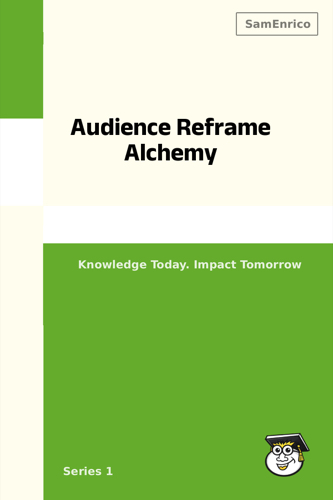
Audience Reframe Alchemy eBook
Transform perceived judges into collaborators usin
by Schell Tonda
Transform perceived judges into collaborators using empathy pivots.
Formats
Free sample
Chapter 1: The Ghost in the Room–- Every professional has felt it. You walk into a conference room, a performance review, a client meeting, or even a family dinner. Before you say a word, you scan the faces. You are looking for the judge. Not the helpful critic.
Not the curious skeptic. The judge. The one whose crossed arms, tight lips, or averted gaze seems to say: I have already decided about you, and the verdict is not good.Your stomach tightens. Your voice gets slightly higher. You start over‑explaining.
You laugh too loudly at nothing. You preemptively apologize. You have not even made your argument yet, and you are already defending it. This is the ghost in the room. It is not the other person.
It is the version of them you have constructed in your head—a version that is far more harsh, far more attentive, and far more hostile than the real human being sitting across from you.This chapter is about exorcising that ghost. Before you can change how a judge sees you, you must change how you see the judge. And to do that, you need to understand something that most communication books get backwards: the person who seems to be judging you is almost never thinking about you at all. They are thinking about themselves.The Neuroscience of Feeling Judged Let us start with a hard truth. When you feel judged, you are not being weak.
You are not being overly sensitive. You are being human. And your humanity is backed by millions of years of evolution.Functional magnetic resonance imaging studies have shown that social rejection—being excluded, criticized, or judged negatively—activates the same brain regions as physical pain. Specifically, the dorsal anterior cingulate cortex and the anterior insula light up whether you are being burned by hot coffee or burned by a colleague’s harsh words. Your brain literally cannot tell the difference between a broken bone and a broken reputation.This is not a metaphor.
It is a biological fact.In one landmark study, participants who were excluded from a simple ball‑tossing game showed neural activity indistinguishable from participants who had painful pressure applied to their skin. The brain’s alarm system does not distinguish between threats to your body and threats to your social standing because, for a social species like ours, they are the same thing. A million years ago, being rejected by your tribe meant death. No shelter. No food.
No protection from predators. Your brain is still wired for that world, even though the “tribe” today is a quarterly business review.This explains why we react so poorly to judgment. When you feel a judge’s glare, your amygdala—the brain’s rapid‑response threat detector—hijacks your prefrontal cortex, the seat of rational thought. You literally become dumber in the moment. Your working memory shrinks.
Your verbal fluency drops. You say things you regret. You forget points you had rehearsed. This is not a failure of preparation. It is a failure of neurology, and it happens to everyone from first‑year associates to Fortune 500 CEOs.The Judge Is Also Afraid This is the single most important reframe in this entire book.
The person who seems to be scrutinizing you is almost certainly not a calm, confident arbiter of your worth. They are, in nearly every case, an anxious human being projecting their own fears onto you.Consider the data. In study after study, when people are asked to evaluate others, their harshness correlates directly with their own insecurity. The executive who eviscerates a junior employee’s presentation is often terrified of looking weak to their boss. The parent who judges their child’s career choices is often mourning the path they themselves did not take.
The client who attacks your proposal with relentless negativity is often covering for the fact that they do not understand it and are afraid to admit it.This is not speculation. It is observable pattern.Psychologists call this “projection bias.” When we cannot tolerate our own anxiety, we externalize it. We find someone else to carry the weight of our fear. The judge in your meeting is not a neutral evaluator. They are a person drowning in their own unspoken worries—about their job security, about their reputation, about the meeting they just came from, about the email they have not answered.
And you, the presenter, are simply the nearest target.Think back to the most hostile judge you have ever faced. Now ask yourself: what was going on in their life at that time? Were they under pressure? Had they just been criticized themselves? Were they afraid of something that had nothing to do with you?
In almost every case, the answer is yes.This does not excuse cruelty. But it does explain it. And explanation is the first step toward transformation.The Distinction That Changes Everything: Judgment vs. Discernment If you take only one concept from this chapter, make it this one. There is a profound difference between judgment and discernment, and most people collapse the two.
Learning to distinguish them will rewire how you hear every critique for the rest of your life.Judgment is past‑oriented, categorical, and self‑protective. It sounds like: “You always miss deadlines.” “Your team never delivers.” “This is just like last time.” Judgment shuts down curiosity. It announces a verdict without a trial. It is the language of someone who has already decided and is now simply looking for evidence to confirm their decision.Discernment is future‑oriented, curious, and collaborative. It sounds like: “What happened last time that led to the delay, and what would need to change this time?” “Help me understand what was different about the projects that succeeded.” “What would have to be true for this to work?”Here is the key insight: When you hear judgment, you do not have to accept the frame.
You can gently, skillfully convert judgment into discernment by asking the right question. And the right question almost always begins with the word “what” or “how.”For example:Judgment: “This budget is unrealistic.”Your pivot to discernment: “What specifically about the budget concerns you most?”Judgment: “You are not a team player.”Your pivot: “What would a team player be doing differently that I am not doing?”Notice what you did there. You did not defend. You did not argue. You did not accept the label.
You simply asked for specifics. And in doing so, you transformed a vague, past‑oriented attack into a concrete, future‑oriented conversation. You turned judgment into discernment.The Internal Monologue That Sabotages You Before you ever speak to a judge, you have already had an entire conversation with them inside your head. And that internal conversation is almost always wrong.Psychologists call this the “spotlight effect.” In a famous study, researchers asked college students to wear an embarrassing t‑shirt—featuring a large photo of a disliked celebrity—and then walk into a room full of strangers. The students were certain that nearly half the people in the room would notice the shirt and judge them.
In reality, only about twenty percent noticed. And of those, most did not care.We systematically overestimate how much others notice…
This is the end of the free sample. Get the eBook to keep going. Buy now
About this book
Details
- Author
- Schell Tonda
- Publisher
- SamEnrico
- Language
- English
- Genre
- Non-Fiction, Mental Wealth, Social Neuroscience
- Released
- 2026-06-06
- Pages (approx.)
- 124
- Available as
- eBook, Audiobook

Read better in the ZLOADR app
Your eBooks on your phone or tablet. Sign in with your SamEnrico account and start reading.
More by Schell Tonda
 Emotionally Immature Parents Recovery WorkbookSchell Tonda$11.99Emotionally Immature Parents Recovery WorkbookSchell Tonda$11.99
 Child Star Lawsuits Against ParentsSchell Tonda$11.99
 Breath Awareness for SleepSchell Tonda$11.99
 Stress and Relationship Future PlanningSchell Tonda$11.99
 The Drowned Choir of the Mary CelesteSchell Tonda$11.99
 Understanding Louis–bar SyndromeSchell Tonda$17.99
 How to Start a Supermarkets BusinessSchell Tonda$11.99
 Family and Children SpendingSchell Tonda$12.99
 Crypto Business LLC For Non ResidentsSchell Tonda$12.99
 Flutter Mobile App DeveloperSchell Tonda$11.99
You may also like
 Hong Kong Handover 1997Dunn Johnnie$11.99
 Zumba For Postnatal Recovery CourseNeal Christian$11.99
 Zumba for BeginnersLadner Nikia$11.99
 YouTube Comment Mining GuideHumes Pandora$12.99
 Worry Box MeditationCarlin Rudy$11.99
 Workplace Stress MeditationNguyen Lynn$11.99
 Workplace Stress and Sleep RepairHawley Ivory$11.99
 Workplace Perfectionism CureDelaney Jeffry$11.99
 Workplace Injustice Anger GuideWallen Isabelle$11.99
 Work Addiction and Burnout LinkGreenwood Ester$11.99
 Women in Yoga and WellnessBeattie Galina$11.99
 Women in Stand Up ComedyChun Evangeline$11.99