
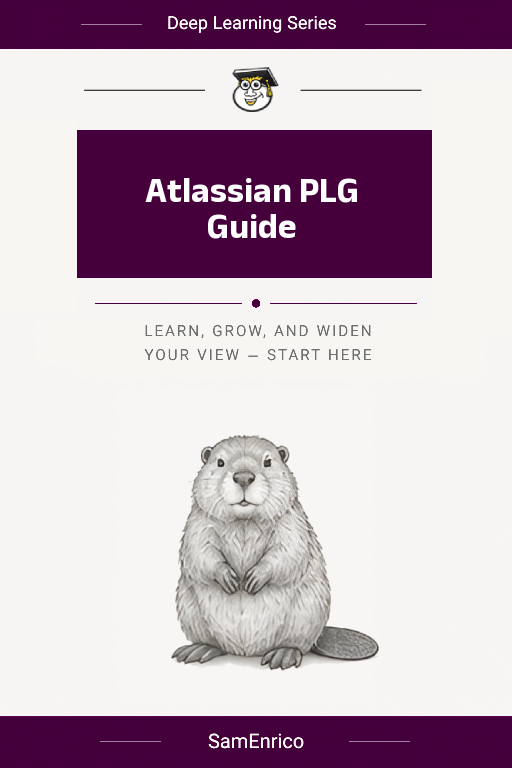
Non-FictionStrategic AtlasGTM Strategy
Atlassian PLG Guide eBook
Analyze self-service Jira and Confluence, credit c
by Handy Bibi
Analyze self-service Jira and Confluence, credit card friction, and low-touch scaling across dev teams.
Formats
Free sample
Chapter 1: The Dual Engine--Every software company eventually faces a moment of terrifying clarity. You have built a product that solves a real problem. Your early users love it. Your investors are asking about scale. And then you hit the wall.The wall looks different depending on where you started.
If you began with a self-service model, you have thousands of users paying by credit card, but the Fortune 500 companies you desperately want as customers won't even return your sales calls. They want SOC2 reports. They want SAML SSO. They want a dedicated account manager who will fly to their headquarters and sit through a procurement review. Your self-service engine, which seemed so efficient at $10 per user per month, cannot reach these buyers.If you began with a sales-led model, you have a handful of enterprise logos and a growing army of sales development representatives, but your product is invisible to the millions of developers who could adopt it today.
Your free trial requires a phone number. Your pricing page says "Contact Sales." Your product is locked behind a demo that nobody wants to schedule. Your sales-led engine, which seemed so necessary for complex deals, cannot scale to the long tail.This wall has a name. It is called the PLG versus SLG false choice. And it has destroyed more Saa S companies than any pricing mistake or feature gap ever will.Atlassian never hit this wall.
Not because they were lucky, and not because they were smarter than everyone else. They avoided the wall because they recognized something that most founders realize too late, or not at all: the choice between product-led growth and sales-led growth is a false dichotomy invented by people who have never successfully scaled a software company.The truth is that you need both engines running in parallel, feeding each other, covering each other's blind spots. One engine captures the bottom of the funnel—the individual developer, the five-person startup, the team inside a larger organization that wants to solve a problem without waiting for procurement. The other engine captures the top of the funnel—the CIO, the VP of Engineering, the procurement specialist who needs to buy software the "right" way.Atlassian serves over 300,000 customers, from solo developers to the world's largest banks. They have fewer than 2,000 salespeople.
The math is impossible unless you understand the dual engine. This chapter dismantles the false choice and provides a playbook for building two growth engines that reinforce rather than cannibalize each other.The Myth of the Single Growth Engine Let us begin with a blunt statement: a pure PLG company cannot sell to the Fortune 500, and a pure SLG company cannot scale to 300,000 customers. This is not a failure of execution. It is a structural reality.Pure PLG companies optimize for low friction. Sign up in sixty seconds.
Pay by credit card. Start using the product immediately. This works beautifully for individuals and small teams. But enterprise buyers do not want low friction. They want controlled friction.
They want approvals. They want security reviews. They want a paper trail. When a PLG company tries to serve enterprise customers through the same self-service funnel, one of two things happens. Either the company refuses to add enterprise features, and the enterprise customers never come.
Or the company adds enterprise features, and the self-service experience becomes bloated and confusing for the individual developers who made the company successful in the first place.Pure SLG companies face the opposite problem. They optimize for high-touch relationships. Every deal involves a salesperson, a solutions architect, a legal review, and a procurement negotiation. This works for the first hundred enterprise customers. But the cost of sales does not scale down.
A sales-led company cannot profitably serve a five-person team that would happily pay $500 per year. The acquisition cost alone would exceed the lifetime value. So the sales-led company ignores the long tail, ceding that market to competitors who will eventually grow up the stack and eat their lunch.The data is stark. According to analysis of over 1,000 B2B Saa S companies, pure PLG companies achieve a median net revenue retention of 110% but a median enterprise logo count of fewer than 50. Pure SLG companies achieve a median enterprise logo count of over 200 but a median net revenue retention of 95% and a customer acquisition cost three to five times higher than their PLG peers.Atlassian's numbers tell a different story.
Over 300,000 customers. Net revenue retention consistently above 120%. Customer acquisition cost as a percentage of revenue that is less than half the industry average for enterprise software. These numbers are not anomalies. They are the natural result of running two engines simultaneously.The Bottom Engine: Self-Service as a Customer Acquisition Machine The bottom engine is the one that most PLG enthusiasts talk about.
It is the engine of low friction, credit card payments, and viral adoption. But the bottom engine at Atlassian is more sophisticated than the simple "freemium" model that many companies attempt and fail to execute.Atlassian's bottom engine has three layers. The first layer is the free tier. Jira and Confluence are available for free to teams of up to ten users. This is not a trial.
It is not time-limited. It is a permanent free version with real functionality. A development team can run its entire workflow on free Jira for years. This is a deliberate strategy. Atlassian does not want to force users into a paid plan before they have extracted value.
They want users to become dependent on the product. They want the free tier to be genuinely useful, not a teaser that frustrates users into upgrading.The second layer is the team tier. At eleven users, or when a team needs advanced permissions or longer retention of history, the product requires a credit card. The team tier costs roughly five to ten dollars per user per month. It is still self-service.
No sales call. No demo. No approval process. The user who started on the free tier can upgrade in under sixty seconds. This is critical.
The friction between free and paid must be lower than the friction of switching to a competitor. If upgrading is a hassle, users will find alternatives.The third layer is the business tier. At around fifty users, or when a team needs SAML SSO, compliance reporting, or priority support, the product requires a conversation with a sales development representative. But note: this is not a hard handoff. The user can still pay by credit card if they want.
The sales development representative is offered as an option, not a requirement. Many teams at fifty users are happy to stay self-service. They do not need a salesperson. They just need the product to work.The genius of this three-layer model is that it captures value at every stage of a company's growth. A five-person startup pays nothing.
A fifteen-person team pays by credit card. A fifty-person company might talk to a salesperson. A five-hundred-person enterprise will have a dedicated account executive. The product grows with the customer, and the sales motion grows with the deal size.This is not a funnel. A funnel implies that users start at the top and inevitably move down.
That is not what happens at Atlassian. Many users stay on the free tier forever. Many teams stay on the…
This is the end of the free sample. Get the eBook to keep going. Buy now
About this book
Details
- Author
- Handy Bibi
- Publisher
- SamEnrico
- Language
- English
- Genre
- Non-Fiction, Strategic Atlas, GTM Strategy
- Released
- 2026-06-01
- Pages (approx.)
- 154
- Available as
- eBook, Audiobook

Read better in the ZLOADR app
Your eBooks on your phone or tablet. Sign in with your SamEnrico account and start reading.
More by Handy Bibi
 Merv Griffin Game Show KingHandy Bibi$11.99
 Nobel Laureates in Material ScienceHandy Bibi$11.99
 Sexual Harassment Anger Processing CourseHandy Bibi$11.99
 Job Loss Financial CopingHandy Bibi$11.99
 The Task Batching Efficiency GuideHandy Bibi$11.99
 The Iron Discipline: Frederick the Great and the Birth of Prussian ExcellenceHandy Bibi$11.99
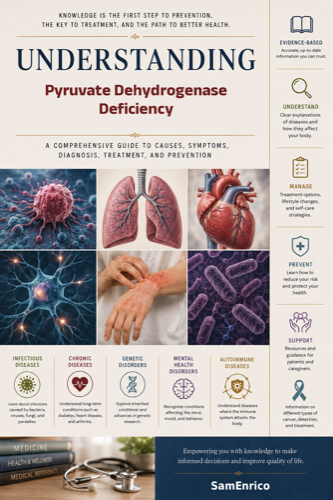 Understanding Pyruvate Dehydrogenase DeficiencyHandy Bibi$17.99
 Payment Gateways African ExportersHandy Bibi$12.99
 GardeningHandy Bibi$11.99
 How to Start a Ornamental Tree and Shrub Growing Business (Beginners Guide)Handy Bibi$11.99
You may also like
 Hong Kong Handover 1997Dunn Johnnie$11.99
 Zumba For Postnatal Recovery CourseNeal Christian$11.99
 Zumba for BeginnersLadner Nikia$11.99
 YouTube Comment Mining GuideHumes Pandora$12.99
 Worry Box MeditationCarlin Rudy$11.99
 Workplace Stress MeditationNguyen Lynn$11.99
 Workplace Stress and Sleep RepairHawley Ivory$11.99
 Workplace Perfectionism CureDelaney Jeffry$11.99
 Workplace Injustice Anger GuideWallen Isabelle$11.99
 Work Addiction and Burnout LinkGreenwood Ester$11.99
 Women in Yoga and WellnessBeattie Galina$11.99
 Women in Stand Up ComedyChun Evangeline$11.99