
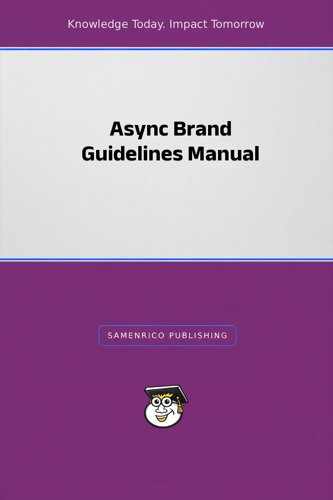
Async Brand Guidelines Manual
Document logo usage, color palettes, and voice rul
by Logue Kimbra
Document logo usage, color palettes, and voice rules for async access by distributed marketing teams.
Formats
About this book
Free sample
Chapter 1: The PDF Lie--–- In 2021, a mid-sized B2B software company with a fully distributed marketing team across eleven time zones launched a new brand identity. They spent $180,000 on research, design, and asset creation. They built a beautiful 147-page PDF brand guideline document with custom illustrations, dozens of logo lockups, and a carefully crafted tone of voice section. They emailed it to every employee, pinned it in Slack, and added it to their company Notion workspace. Six months later, a senior marketing manager in Singapore posted a Linked In ad using the old logo – the one that had been deprecated four months earlier.
The new head of brand, based in Austin, discovered it when a customer tweeted: “Did you guys rebrand back? Confused.” The company had to pull the ad, reprint 2,000 tradeshow banners, and explain to their CMO why $40,000 of marketing spend had effectively been lit on fire. The brand guidelines existed. They were beautiful. They were also completely useless.This is not a story about careless employees or lazy marketers.
It is a story about a broken system. The PDF – and every static, monolithic, one-size-fits-all brand guideline format – is fundamentally incompatible with how distributed teams actually work. When your marketing team spans Sydney, Bangalore, London, and San Francisco, when a designer in Berlin cannot interrupt a copywriter in Buenos Aires to ask “which blue do we use for error states?”, when a social media manager in Manila needs an answer at 3 AM their time, the traditional brand guide becomes an expensive decorative object.The problem is not that people ignore brand guidelines. The problem is that brand guidelines, in their traditional form, ignore how people actually work.The False Promise of Static Documents For decades, brand guidelines followed a predictable pattern: a design agency would create a beautiful document – usually a PDF, sometimes a printed book – filled with rules, examples, and prohibitions. The document would be emailed to everyone, stored on a shared drive, and then largely forgotten until someone needed to argue about whether a specific shade of blue was “brand compliant.”This model worked…
This is the end of the free sample. Get the eBook to keep going. Buy now
Contents
- Chapter 1
- Chapter 2
- Chapter 3
- Chapter 4
- Chapter 5
- Chapter 6
- Chapter 7
- Chapter 8
- Chapter 9
- Chapter 10
- Chapter 11
- Chapter 12
Details
- Author
- Logue Kimbra
- Publisher
- SamEnrico
- Language
- English
- Genre
- Non-Fiction, Business Brief, Branding, Marketing
- Released
- 2026-06-07
- Pages (approx.)
- 154
- Available as
- eBook, Audiobook

Read better in the ZLOADR app
Your eBooks on your phone or tablet. Sign in with your SamEnrico account and start reading.
More by Logue Kimbra
 Emotional Intelligence HandbookLogue Kimbra$11.99
 David Lynch FoundationLogue Kimbra$11.99
 Precipitated Withdrawal PreventionLogue Kimbra$11.99
 Imposter Syndrome in EntrepreneurshipLogue Kimbra$11.99
 The Unseen Speech: How a Forgotten Oration Almost Changed the Course of WWIILogue Kimbra$11.99
 The Frozen Cure: The Arctic Quest for the Northern ElixirLogue Kimbra$11.99
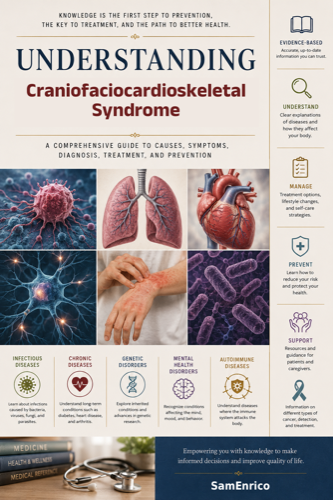 Understanding Craniofaciocardioskeletal SyndromeLogue Kimbra$17.99
 How to Start a Presbyterian Church Business (Beginners Guide)Logue Kimbra$11.99
 World Bank Consultant GuideLogue Kimbra$12.99World Bank Consultant GuideLogue Kimbra$12.99
 Office Lease Space ReductionLogue Kimbra$12.99
 Fulfillment Operations ManagerLogue Kimbra$11.99