
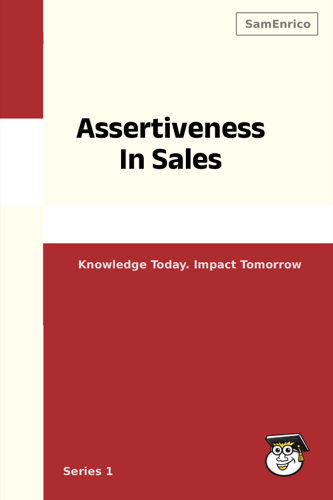
Assertiveness In Sales eBook
Persuades without pushiness, handles objections fi
Persuades without pushiness, handles objections firmly.
Formats
Free sample
Chapter 1: The Shepherd's Paradox...--Most salespeople wake up every morning trapped inside a lie. The lie says you have two choices in every conversation with a buyer: you can be pushy and win the deal but lose the relationship, or you can be passive and keep the relationship but lose the deal. This false binary has destroyed more careers, cost more commissions, and created more sleepless nights than any objection, any rejection, any economic downturn in the history of commerce.The truth is that neither the wolf nor the sheep wins consistently. The wolf—aggressive, loud, relentless—closes deals today and burns bridges tomorrow. The sheep—nice, quiet, apologetic—keeps relationships but starves.
And somewhere between these two exhausted armies stands a third way, a path that almost no one teaches, a method that has been hiding in plain sight for centuries.This book is about that third way. It is about the art of being firm without being feared, direct without being rude, confident without being arrogant. It is about what I call assertive salesmanship—the ability to lead a buyer to a decision without ever making them feel like they are being sold.But before we can learn the tactics, the scripts, the body language, and the closing techniques that make up the assertive sales method, we must first dismantle the lie. We must understand why the wolf and the sheep both fail. And we must meet the shepherd.The Wolf's Funeral Let us start with the wolf.
You know this salesperson. Perhaps you have been this salesperson. The wolf believes that selling is a battle of wills, that buyers are obstacles to be overcome, and that the only measure of success is the signed contract. The wolf interrupts, talks over, pushes past objections rather than addressing them. The wolf uses high-pressure tactics, manufactured urgency, and the kind of relentless persistence that would be called harassment in any other context.Here is what the wolf gets right: action.
The wolf is not afraid to ask for the sale. The wolf does not hesitate. The wolf understands that selling requires momentum and that momentum requires courage.Here is what the wolf gets wrong: everything else.The wolf burns relationships. The wolf creates buyers who feel manipulated, who regret their purchases, who tell their friends and colleagues to avoid the wolf at all costs. The wolf may hit quota this quarter, but the wolf's pipeline is always empty because no one wants to take a second call.
The wolf wins battles and loses wars.I once watched a wolf sell a $50,000 software package to a small business owner. The wolf used every pressure tactic in the book: limited-time discount, only three licenses left at this price, your competitors are already signing. The business owner signed. And then the business owner spent the next six months complaining about the wolf to anyone who would listen. When renewal came, the business owner switched vendors at a higher cost just to avoid another conversation with the wolf.
The wolf made a commission and lost a customer for life.The wolf's problem is not energy or ambition. The wolf's problem is philosophy. The wolf sees selling as taking. And no one likes to be taken from.The Sheep's Graveyard Now consider the sheep. You also know this salesperson.
Perhaps you have been this salesperson. The sheep believes that selling is a service, that buyers are doing you a favor by listening, and that the best way to sell is to be helpful, patient, and endlessly accommodating. The sheep apologizes for taking up time, hesitates before asking for the commitment, and backs off at the first sign of resistance.Here is what the sheep gets right: relationships. The sheep is likable. The sheep is trustworthy.
The sheep would never manipulate a buyer or push them into a bad decision.Here is what the sheep gets wrong: everything else.The sheep does not close. The sheep leaves money on the table. The sheep confuses kindness with weakness and assumes that if they just keep serving, the buyer will eventually reward them with a purchase. But buyers rarely reward sheep. Buyers respect sheep, even like sheep, but they do not buy from sheep because sheep do not lead.I once watched a sheep spend three months nurturing a $10,000 sale.
The sheep sent articles, made follow-up calls, offered free consultations, and never once asked for the order. The buyer appreciated the sheep. The buyer told the sheep, "You have been so helpful." Then the buyer bought from a wolf who called once, asked hard questions, and closed the deal in twenty minutes. The sheep was devastated. The sheep had done everything right except the one thing that matters: ask.The sheep's problem is not character or integrity.
The sheep's problem is courage. The sheep is afraid of rejection. And the sheep's fear becomes a self-fulfilling prophecy.The Shepherd Emerges Between the wolf's aggression and the sheep's passivity stands the shepherd. The shepherd is a figure who appears in almost every human culture, almost every wisdom tradition, almost every story about leadership. The shepherd does not drive the flock with fear, and the shepherd does not follow the flock wherever it wanders.
The shepherd leads. The shepherd knows the terrain. The shepherd protects the flock from wolves. And the shepherd never chases.The shepherd model of sales is built on three profound insights that will shape every chapter of this book.First, the shepherd understands that buyers want to be led, not pushed. A wolf pushes.
A sheep follows. A shepherd leads. When you lead, you are not taking from the buyer and you are not begging from the buyer. You are offering direction. Buyers are drowning in options, confused by conflicting information, paralyzed by the fear of making a bad decision.
The shepherd says, "I know the way. Walk with me."Second, the shepherd knows that authority comes from competence, not volume. The wolf shouts. The sheep whispers. The shepherd speaks clearly and calmly because the shepherd has walked this path before.
The shepherd does not need to pressure because the shepherd has earned the right to guide. Authority in sales is not about dominance. It is about demonstrated expertise combined with genuine care.Third, the shepherd is not afraid of wolves. Every shepherd knows that wolves exist. Objections, rejections, competitors, budget constraints—these are the wolves of sales.
The sheep pretends wolves do not exist and gets eaten. The wolf tries to become the biggest wolf and creates a forest of enemies. The shepherd studies wolves. The shepherd builds fences. The shepherd carries a staff.
The shepherd is prepared.The shepherd salesperson does not manipulate. The shepherd does not beg. The shepherd leads. And when you lead effectively, the flock follows not because they are pushed but because they trust.The Benjamin Franklin Lesson To understand how the shepherd leads, we must travel back to eighteenth-century Philadelphia and meet a young Benjamin Franklin. Franklin was brilliant, ambitious, and, by his own admission, insufferable.
He loved to argue. He loved to be right. And he loved to demolish anyone who disagreed with him using what he called "the…
This is the end of the free sample. Get the eBook to keep going. Buy now
About this book
Details
- Author
- Houck Mitchel
- Publisher
- SamEnrico
- Language
- English
- Genre
- Non-Fiction, Self-Help, Sales Skills
- Released
- 2026-06-09
- Pages (approx.)
- 140
- Available as
- eBook, Audiobook

Read better in the ZLOADR app
Your eBooks on your phone or tablet. Sign in with your SamEnrico account and start reading.
More by Houck Mitchel
 Financial Stress of Terminal IllnessHouck Mitchel$11.99
 Everyday Mindfulness for NewbiesHouck Mitchel$11.99
 Methane SIBO TreatmentHouck Mitchel$11.99
 Pornography Effect Self EsteemHouck Mitchel$11.99
 Free School Breakfast ClubHouck Mitchel$11.99
 Nightmare and DissociationHouck Mitchel$11.99
 Reformation Eucharist Controversy CourseHouck Mitchel$11.99
 Facebook Marketplace FOMOHouck Mitchel$11.99
 The Luminaries of Timbuktu: When Africa's Geniuses Won the Nobel PrizeHouck Mitchel$11.99
 Fenrir's Howl: The Wolf That Shaped the WorldHouck Mitchel$11.99
 The Lost City of Nan Madol: Unraveling the Pacific's Stone MysteryHouck Mitchel$11.99
 Understanding Acral Dysostosis DyserythropoiesisHouck Mitchel$17.99
You may also like
 Sales Nonverbal Persuasion GuideGamble Madelyn$11.99
 Active Listening For SalesFrantz Ozie$11.99
 Sales Relationship Building GuideDraper Vanesa$11.99
 The Distraction Proof Sales CallTisdale Keneth$11.99
 Closing Sales AssertivelyIsaacson Winford$11.99
 Name Memory for Sales PeopleWhite Irving$11.99
 Relationship Building for SalespeoplePlatt Tamiko$11.99
 Difficult Conversations For SalesHumphries Garth$11.99
 Sales Persuasion Closing TechniquesVeal Christin$11.99
 Small Talk for SalespeopleLujan Ngan$11.99
 NVC For Sales ConversationsGreen Noah$11.99
 Assertiveness in Sales GuideBradshaw Rod$11.99