
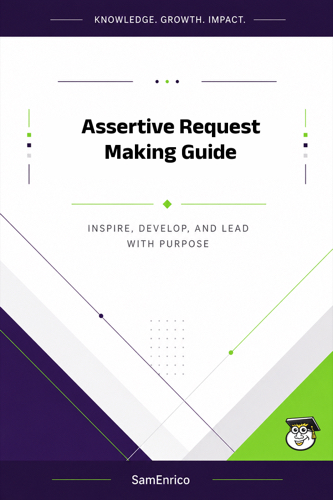
Assertive Request Making Guide Audiobook
Ask for what you need directly without demanding o
Ask for what you need directly without demanding or hinting.
Formats
Free sample
Chapter 1: The Mind-Reading Myth--–- Every morning, Sarah pours her coffee, sits across from her husband of twelve years, and thinks, If he loved me, he would know. Know that she needs him to pick up the kids on Tuesdays. Know that the silence in the car is exhaustion, not anger. Know that she is drowning in invisible labor and waiting—always waiting—for him to notice. And every evening, when he does not notice, she feels a quiet resentment curdle into something heavier.
She says nothing. She hints. She sighs. She moves the laundry basket to his side of the bed. She texts, “Busy day?” instead of “I need you to pick up dinner.” She is a kind, intelligent, well-meaning person who has mastered every form of indirect communication except one: the direct request.Across town, a manager named David stares at an overdue report from a junior employee.
He needs it by 3 PM. He opens an email, types “Just checking in on that report…” and deletes it. Too pushy. He types “No rush, but whenever you have a moment…” and sends it. The employee reads “no rush” and prioritizes something else.
The report arrives at 6 PM. David stays late, resentful. He told himself he was being polite. In truth, he was being afraid—afraid of sounding demanding, afraid of being disliked, afraid of the tiny, temporary discomfort of saying, “I need this by 3 PM. Can you do it?”Across the country, a woman named Elena wants a raise.
She has not asked in four years. She has documented her achievements in a private folder. She has rehearsed the conversation in the shower. But every time she considers knocking on her boss’s door, she hears a voice: If you have to ask, you don’t deserve it. Good employees get noticed.
Good work speaks for itself. So she waits. Her boss, who is not a mind reader, gives the raise to someone who asked.These three people are not weak. They are not bad communicators. They are suffering from what this chapter will call the Mind-Reading Myth—the single most expensive cognitive error in human relationships.
The myth is simple, seductive, and almost always wrong: If someone cares about me, they should know what I need without my having to ask.This chapter will dismantle that myth. It will show you why hinting fails, why silence is not safety…
This is the end of the free sample. Get the Audiobook to keep going. Buy now
About this book
Details
- Author
- Tomlin Chadwick
- Publisher
- SamEnrico
- Language
- English
- Genre
- Non-Fiction, Self-Help, Asking Skills
- Released
- 2026-06-11
- Pages (approx.)
- 153
- Available as
- eBook, Audiobook

Listen in the VoxFlicks app
Audiobooks and audio dramas wherever you go. Sign in with your SamEnrico account and press play.
More by Tomlin Chadwick
 Major Depressive Disorder HandbookTomlin Chadwick$11.99
 Stage Parent Psychological TollTomlin Chadwick$11.99
 F22 Raptor PilotTomlin Chadwick$11.99
 DoorDash Fast Pay Setup GuideTomlin Chadwick$11.99
 Citation Rules for Theses and DissertationsTomlin Chadwick$11.99
 UK VAT Registration for Farmers and Agricultural Businesses CourseTomlin Chadwick$11.99
 Mentorship For BalanceTomlin Chadwick$11.99Mentorship For BalanceTomlin Chadwick$11.99
 Resentment In FriendshipTomlin Chadwick$11.99
 The Scorpion King's Gambit: Tuthmosis III and the Battle of MegiddoTomlin Chadwick$11.99
 The Crown and the Crisis: How Queen Elizabeth II Navigated BrexitTomlin Chadwick$11.99
 The Synth Underworld: How a Secret Lab in Shanghai Changed the WorldTomlin Chadwick$11.99