
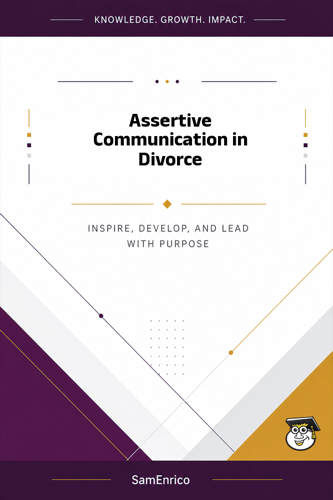
Assertive Communication in Divorce eBook
Negotiate settlements and co-parent without hostil
Negotiate settlements and co-parent without hostility.
Formats
Free sample
Chapter 1: The Two Graves--–- Every divorce digs two graves. One for your money. One for your children’s sense of safety. And you get to choose which one you jump into first.Most people enter divorce convinced they have two options: be nice or be nasty. They try being nice first—saying yes to things they should never agree to, giving away assets to avoid a fight, apologizing for existing.
When that fails (and it always fails), they swing hard in the opposite direction. They become nasty—threatening, name-calling, documenting every perceived slight, turning every text message into a weapon. Both approaches feel like survival. Both are actually self-destruction.This book exists because there is a third option. It is not compromise.
It is not “winning.” It is something much stranger and much more powerful. It is the ability to stand firmly in what you need while offering absolutely nothing for the other person to push against. It is the difference between a reaction and a response. It is the difference between sending that 2 a.m. novel of a text message and sleeping peacefully knowing you have said nothing you will regret.Welcome to assertive communication in divorce.The Myth of the “Good Divorce”Before we build anything, we have to clear away the wreckage of what you have probably been told.
Therapists, well-meaning friends, and even some mediators will tell you that the goal is a “good divorce.” They will say you need to “co-parent as friends” and “put the kids first” and “communicate with respect.” All of this sounds lovely. All of this is impossible when you are dealing with someone who has lied to you, hidden money, or made you fear for your safety.The research on divorce outcomes tells a different story. A landmark study published in the Journal of Family Psychology followed 1,200 divorced parents over a decade. The parents who reported the lowest conflict after five years were not the ones who tried to be friends. They were the ones who established clear, business-like boundaries and stopped expecting emotional reciprocity from their ex.
In other words, the “good divorce” is not a warm divorce. It is a boring one.The top ten best-selling books on divorce and high-conflict communication—from BIFF: Quick Responses to High-Conflict People to The Co-Parenting Handbook to Getting to Yes—all converge on a single uncomfortable truth: your feelings are irrelevant to the outcome. What matters is what you say, how you say it, and whether you can train yourself to stop reacting.The Two Graves: Nice vs. Nasty Let us name the two graves explicitly so you can see which one you are currently standing in front of.Grave One: The Nice Graveyard This is where people go who believe that if they are kind enough, patient enough, and forgiving enough, their ex will eventually treat them fairly. The nice person gives away the furniture, then the car, then the custody time.
They say “I don’t want to fight” while signing away their retirement savings. They apologize for asking for documentation. They accept phone calls at 10 p.m. to “talk about the kids” when really it is just another hour of being yelled at.The legal term for this is “unconscionable agreement.” The human term is “financial ruin disguised as virtue.”I worked with a woman named Sarah (all names changed, but the story is real). Sarah believed deeply in being a “good person” through her divorce.
Her husband had had an affair and moved in with his new partner three weeks after leaving. Sarah said nothing. He asked to keep the house. Sarah agreed. He asked for every other weekend with their daughter.
Sarah agreed. He asked Sarah to cover the full cost of their daughter’s therapy because “you were the one who stayed home with her.” Sarah agreed.Eighteen months later, Sarah was living in a one-bedroom apartment, working two jobs, and crying in her car after every handoff. Her ex had bought a new boat. Her daughter was refusing to see her because “Dad says you gave up on us.”Being nice did not protect Sarah. It destroyed her.Grave Two: The Nasty Graveyard This is where people go who believe that the only way to survive is to attack first, attack often, and never show weakness.
The nasty person responds to every email within four minutes with a numbered list of grievances. They file motions for everything—a late pickup, a misspelled name on a form, a birthday party they were not invited to. They record phone calls. They demand supervised visitation over a disagreement about summer camp.The legal term for this is “vexatious litigation.” The human term is “custodial suicide.”Family court judges are not stupid. They see hundreds of cases a year.
They can spot a high-conflict parent within the first five minutes of testimony. And they know something that the nasty person refuses to accept: children need stability, not justice. A judge will almost always side with the parent who seems reasonable, even if that parent is factually wrong, over the parent who is factually right but emotionally volatile.I worked with a man named David. His ex had moved their children to a different school district without his permission—a clear violation of their parenting agreement. David was right.
He was legally correct. And he was also furious. He sent seventeen emails in one day, each one longer and angrier than the last. He filed an emergency motion. He showed up to the hearing with a three-ring binder of evidence.The judge looked at the binder.
Then she looked at David. “Sir,” she said, “you have scared your children. I am modifying custody to give your ex sole decision-making authority for ninety days while you attend anger management.”David was right. And David lost everything.The Third Option: Assertive Is Not What You Think Now we arrive at the strange middle path. Assertive communication in divorce is not aggressive.
It is not passive. It is not even “balanced.” It is something else entirely.Assertive communication means you say exactly what you need, in the fewest words possible, without apology and without attack. It means you refuse to explain yourself to someone who will only use your explanations as ammunition. It means you become as boring as a gray rock and as firm as a lawyer.Here is the definition we will use throughout this book:Assertive divorce communication is the practice of stating your position clearly, setting a boundary around your emotional energy, and refusing to engage with anything that is not a logistical fact.Notice what is missing from that definition. There is no “understanding the other person’s perspective.” There is no “finding common ground.” There is no “healing the relationship.” Those are noble goals for intact marriages or low-conflict co-parenting relationships.
They are dangerous fantasies for anyone reading this book.The Gray Rock Meets BIFF Standard You will hear two acronyms repeatedly in the coming chapters. Let me introduce them now.Gray Rock is a technique borrowed from the world of narcissistic abuse recovery. The idea is simple: become as boring as a gray rock. When your…
This is the end of the free sample. Get the eBook to keep going. Buy now
About this book
Details
- Author
- Lord Laurette
- Publisher
- SamEnrico
- Language
- English
- Genre
- Non-Fiction, Self-Help, Divorce
- Released
- 2026-06-08
- Pages (approx.)
- 152
- Available as
- eBook, Audiobook

Read better in the ZLOADR app
Your eBooks on your phone or tablet. Sign in with your SamEnrico account and start reading.
More by Lord Laurette
 Religious Trauma Self Worth GuideLord Laurette$11.99
 Procrastination Breaking Academic GuideLord Laurette$11.99
 Morning Stretch Routine GuideLord Laurette$11.99
 TikTok Body Comparison RecoveryLord Laurette$11.99
 The Ghosts of the SS Edmund Fitzgerald: The Storm That Swallowed 29 MenLord Laurette$11.99
 Understanding MyxedemaLord Laurette$17.99
 Consumer Collections SpecialistLord Laurette$11.99
 Citation Rules for Law StudentsLord Laurette$12.99
 Promotion Business Case WorkbookLord Laurette$12.99
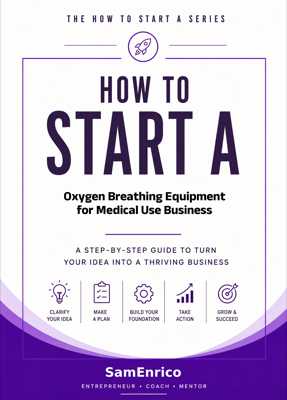 How to Start a Oxygen Breathing Equipment for Medical Use Business (Beginners Guide)Lord Laurette$11.99
You may also like
 The Stress Free Divorce Co ParentingDugan Elton$11.99
 Parental Stress And DivorceBarnhart Nickole$11.99
 Loving Kindness for Divorce RecoveryQuezada Isis$11.99
 Divorce Loneliness Recovery GuideLadd Drema$11.99
 Divorce Insomnia HelpSizemore Giuseppe$11.99
 The Divorce Settlement TalkLilley Felisha$11.99
 NVC for Divorcing CouplesFord June$11.99
 Assertiveness for Divorce ProceedingsLaws Lucina$11.99
 Anger at Ex Spouse CognitiveSlater Leandra$11.99
 Teen Parent Divorce GuideHamm Suzie$11.99
 Parental Divorce Self Care GuideRollins Wes$11.99
 NVC For Divorce GuideRing Bambi$11.99