
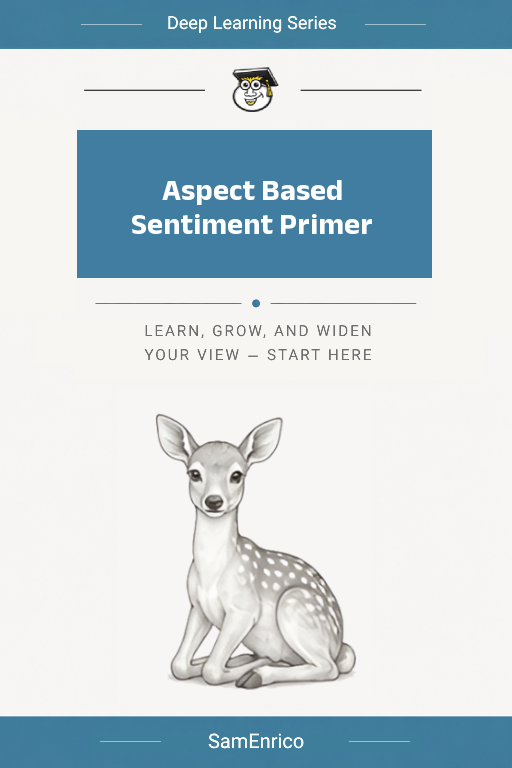
Non-FictionAI OperatorReputation ManagementAspect Guide
Aspect Based Sentiment Primer
Analyze sentiment toward specific brand attributes
Analyze sentiment toward specific brand attributes like price, quality, service, and features using AI fine-grained analysis. Includes attribute extraction, driver scoring, and improvement prompts.
Formats
About this book
Free sample
Chapter 1: The 4.2-Star Trap--–- The email arrived at 11:47 PM on a Tuesday. Maria Chen, founder of a mid-sized hotel chain called Safe Stay, stared at her laptop screen in her home office. The subject line read: "Q3 Board Update – Urgent." She opened it. The board had attached a single chart: market share over 18 months. The line was a smooth, accelerating downward curve.
Safe Stay had dropped from 22 percent to 14 percent in a year and a half. Revenue was down thirty million dollars.What made the chart terrifying was not the drop itself. It was the fact that Maria had no idea why.Her team tracked everything. They had daily occupancy reports, weekly Net Promoter Scores (NPS), monthly customer satisfaction surveys, and a five-star rating system on every booking platform. The average rating across all properties was 4.2 stars.
That number had not moved in two years. It sat at 4.2 when market share was climbing. It sat at 4.2 when market share began falling. It sat at 4.2 now, as Safe Stay bled customers to a competitor with a 3.9-star rating."How is this possible?" Maria asked herself. She was not alone.
Every quarter, thousands of business leaders look at the same paradox: acceptable or even good aggregate metrics masking a slow-motion collapse. The problem is not bad data. The problem is the wrong kind of data.This chapter dismantles the most dangerous assumption in modern business: that knowing the overall sentiment of your customers is enough. It introduces a fundamental shift in how we measure customer opinion, moving from vague aggregates to precise, actionable components. By the end, you will understand why a 4.2-star rating is not just insufficient but actively misleading, and why the solution lies in answering one simple question that most companies never ask: what, exactly, do customers love and hate?The Great Averaging Fallacy Every rating system suffers from what statisticians call the "averaging fallacy." When you take many individual judgments and reduce them to a single number, you lose all information about the distribution of those judgments.
A 4.2-star average could mean that 80 percent of customers gave five stars and 20 percent gave one star. Or…
This is the end of the free sample. Get the eBook to keep going. Buy now
Contents
- Chapter 1
- Chapter 2
- Chapter 3
- Chapter 4
- Chapter 5
- Chapter 6
- Chapter 7
- Chapter 8
- Chapter 9
- Chapter 10
- Chapter 11
- Chapter 12
Details
- Author
- Quintero Tatum
- Publisher
- SamEnrico
- Language
- English
- Genre
- Non-Fiction, AI Operator, Reputation Management, Aspect Guide
- Released
- 2026-05-29
- Pages (approx.)
- 144
- Available as
- eBook, Audiobook

Read better in the ZLOADR app
Your eBooks on your phone or tablet. Sign in with your SamEnrico account and start reading.
More by Quintero Tatum
 Music Touring Career BreakQuintero Tatum$11.99
 Lactobacillus Plantarum BrainQuintero Tatum$11.99
 Disappointment in Military ServiceQuintero Tatum$11.99
 The Family International EscapeQuintero Tatum$11.99
 Breaking the Work Addiction Cycle GuideQuintero Tatum$11.99
 The Silent Revolution: How a Teenager Toppled a DictatorQuintero Tatum$11.99
 Understanding Launois–bensaude AdenolipomatosisQuintero Tatum$17.99
 Logistics As A Service GuideQuintero Tatum$12.99
 Catalpa HarvestingQuintero Tatum$11.99
 A Beginners Guide to Dorn (Volume 1)Quintero Tatum$11.99
You may also like
 Hong Kong Handover 1997Dunn Johnnie$11.99
 Zumba For Postnatal Recovery CourseNeal Christian$11.99
 Zumba for BeginnersLadner Nikia$11.99
 YouTube Comment Mining GuideHumes Pandora$12.99
 Worry Box MeditationCarlin Rudy$11.99
 Workplace Stress MeditationNguyen Lynn$11.99
 Workplace Stress and Sleep RepairHawley Ivory$11.99
 Workplace Perfectionism CureDelaney Jeffry$11.99
 Workplace Injustice Anger GuideWallen Isabelle$11.99
 Work Addiction and Burnout LinkGreenwood Ester$11.99
 Women in Yoga and WellnessBeattie Galina$11.99
 Women in Stand Up ComedyChun Evangeline$11.99