
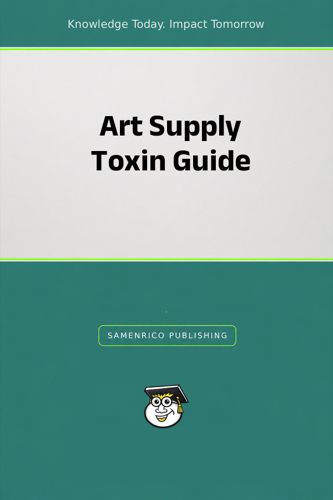
Non-FictionHealth & Wellness / Art Safety
Art Supply Toxin Guide
Avoids heavy metals in paints, solvents in glues,
by Smyth Alba
Avoids heavy metals in paints, solvents in glues, and pigment dusts.
Formats
About this book
Free sample
Chapter 1: The Silent Studio...--–- Every artist remembers the first time they fell in love with the smell of turpentine. That sharp, sweet vapor rising from a coffee can on a cluttered desk—it meant creation was happening. It meant oils were flowing, pigments were mixing, and something beautiful was about to emerge from nothing. For generations, that scent has been romanticized as the perfume of the studio, the olfactory signature of genuine craft. But what if that smell wasn't the aroma of art, but the breath of a slow poison?
What if the very materials that give your work life are quietly stealing your own?This book exists because of a disturbing truth that the art world has been reluctant to confront: the supplies that allow us to create masterpieces are often the same supplies that shorten our lives. Not dramatically, not overnight, but insidiously—year after year, exposure after exposure. The painter who develops unexplained tremors in her fifties. The ceramicist who can't walk up a flight of stairs without gasping for air. The printmaker whose chronic headaches finally force him to abandon the studio he built with his own hands.
These are not random tragedies. They are the predictable outcomes of working with materials whose dangers were known, documented, and ignored.The Historical Evidence You Were Never Told Let us begin with a uncomfortable question: Why did so many of the Old Masters die young? We tend to romanticize the short, feverish lives of artists like Caravaggio (died 38), Raphael (37), Georges Seurat (31), and Vincent van Gogh (37). We attribute their deaths to bohemian excess, to syphilis, to poverty, to madness. And those factors certainly played a role.
But there is another, quieter explanation that has emerged from modern forensic analysis: heavy metal poisoning.Take the case of the Roman scribes. Archaeological examination of remains from ancient Pompeii and Herculaneum has revealed staggeringly high levels of lead in the bones of individuals who worked with writing implements. The Roman scribes had a common practice: they would lick the tips of their lead-tipped styluses to keep the point moist and the…
This is the end of the free sample. Get the eBook to keep going. Buy now
Contents
- Chapter 1
- Chapter 2
- Chapter 3
- Chapter 4
- Chapter 5
- Chapter 6
- Chapter 7
- Chapter 8
- Chapter 9
- Chapter 10
- Chapter 11
- Chapter 12
Details
- Author
- Smyth Alba
- Publisher
- SamEnrico
- Language
- English
- Genre
- Non-Fiction, Health & Wellness / Art Safety
- Released
- 2026-06-06
- Pages (approx.)
- 132
- Available as
- eBook, Audiobook

Read better in the ZLOADR app
Your eBooks on your phone or tablet. Sign in with your SamEnrico account and start reading.
More by Smyth Alba
 Alcoholism and Trauma ConnectionSmyth Alba$11.99
 Helplessness AngerSmyth Alba$11.99
 The Death of a ParentSmyth Alba$11.99
 The Lion of Carrhae: Surena's Last Stand Against RomeSmyth Alba$11.99
 How to Produce Clarinet ReedsSmyth Alba$11.99
 US Address for Non Resident BankingSmyth Alba$12.99
 Skijoring With HorsesSmyth Alba$11.99
 How to Become a Handle MakerSmyth Alba$11.99
You may also like
 Hong Kong Handover 1997Dunn Johnnie$11.99
 Zumba For Postnatal Recovery CourseNeal Christian$11.99
 Zumba for BeginnersLadner Nikia$11.99
 YouTube Comment Mining GuideHumes Pandora$12.99
 Worry Box MeditationCarlin Rudy$11.99
 Workplace Stress MeditationNguyen Lynn$11.99
 Workplace Stress and Sleep RepairHawley Ivory$11.99
 Workplace Perfectionism CureDelaney Jeffry$11.99
 Workplace Injustice Anger GuideWallen Isabelle$11.99
 Work Addiction and Burnout LinkGreenwood Ester$11.99
 Women in Yoga and WellnessBeattie Galina$11.99
 Women in Stand Up ComedyChun Evangeline$11.99