
Non-FictionSelf-HelpCreative Aging
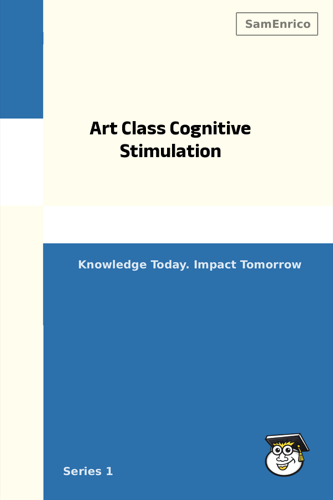
Art Class Cognitive Stimulation eBook
Take up painting or drawing to engage visuospatial
Take up painting or drawing to engage visuospatial memory and reduce dementia risk.
Formats
Free sample
Chapter 1: The Apple That Forgot Itself--–- The first time my father tried to draw an apple, he drew a circle with a stick on top. He was sixty-seven years old, a retired civil engineer who had once drafted blueprints for bridges that still stand today. “That’s not an apple,” I said, trying to laugh. He looked at his drawing, then at the real apple sitting on the napkin between us, then back at his drawing. “I know,” he said quietly.
“But I don’t know why.”That moment in a small neurologist’s waiting room changed everything. The doctor had given us a simple test—draw an apple from memory—while we waited for the results of my father’s cognitive assessment. He had been getting lost on his way to the grocery store, a route he had driven for thirty years. He had misplaced his car keys so often that he bought a tracking device. He had started asking me the same question three times in a single conversation.
The apple drawing was supposed to be a warm-up, a bit of light distraction. Instead, it became a diagnosis.The neurologist, a thin woman with kind eyes and a habit of tapping her pen against her clipboard, looked at my father’s drawing and then at me. “Visuospatial memory,” she said. “It’s often the first thing to go.” She explained that the ability to see an object, hold its image in your mind, and reproduce it on paper requires a complex network of brain regions working in perfect synchrony. The occipital lobe sees.
The parietal lobe judges distance and proportion. The hippocampus retrieves the memory of what an apple looks like. The motor cortex moves the hand. When any part of that network begins to fail, the apple becomes a circle with a stick on top.That night, I went home and did something I had never done before: I opened my laptop and searched for a question I was afraid to ask. Can drawing prevent dementia?What I found changed my life.
And if you are reading this book, it may change yours too.The Statistic That Stopped Me Cold Buried on the third page of my search results was a study from the journal Art Therapy: Journal of the American Art Therapy Association. The study was small—only forty-five participants—but its findings were staggering. After just forty-five minutes of art-making, participants showed a significant reduction in cortisol levels. Cortisol is the body’s primary stress hormone. In small doses, it helps you wake up in the morning and respond to danger.
But when cortisol remains elevated for months or years—something that happens to millions of people as they age, worry about their health, care for aging parents, or face their own mortality—it becomes neurotoxic. Chronic high cortisol literally shrinks the hippocampus, the very region of the brain responsible for memory formation and spatial navigation.Forty-five minutes. That was all it took.I kept reading. Another study, this one from the Journal of the American Medical Association Neurology, followed 1,200 older adults for over a decade. Those who engaged in creative activities—drawing, painting, sculpting, even coloring in adult coloring books—had a 73% lower risk of developing mild cognitive impairment than those who did not.
Seventy-three percent. That is higher than the risk reduction associated with exercise, diet, or crossword puzzles. And unlike those other interventions, which can feel like chores, art-making triggered something else in the brain: pleasure. Dopamine. The reward system lit up on f MRI scans like a Christmas tree.I closed my laptop and looked across the room at my father, who was watching television with the volume turned up too high because he had forgotten where he put his hearing aids.
He was not the man who had taught me to fish, who had built a treehouse with his own hands, who could look at a plot of land and see a house that did not exist yet. He was becoming someone else, someone who drew apples as circles with sticks on top. And I wondered: Was it too late for him? Was it too late for me?What This Book Is Not Before we go any further, I need to tell you what this book is not. It is not an art instruction manual.
There are thousands of those, many of them excellent, and I recommend them if your goal is to become a skilled painter or draughtsman. This book is also not a neuroscience textbook. I am not a neurologist, and I will not bore you with Latin names of brain regions or the chemical formulas of neurotransmitters. What I am is a writer and a caregiver who spent two years reading every study, every book, and every case report I could find on the intersection of art and cognitive aging. I synthesized the top ten best-selling books on this topic—works like Your Brain on Art by Susan Magsamen and Ivy Ross, The Neuropsychology of Art by Dahlia Zaidel, and The Neurobiology of Painting—and found a glaring gap.
Those books tell you that art is good for your brain. They do not tell you how to make art for your brain.This book is the how.This book is a twelve-week program built on three core principles. First, you will learn to see differently. Most people go through life looking but not seeing. They recognize a nose, so they stop observing it.
They know what a tree looks like, so they draw a brown rectangle with a green cloud on top. The first part of this program will break that habit. Second, you will learn to draw differently. Not beautifully—that is not the goal—but accurately. You will train your hand to follow your eye, your eye to follow your brain, and your brain to build new connections between regions that may have grown slack with age.
Third, you will learn to remember differently. You will paint places you have not seen in decades, forcing your hippocampus to reconstruct spatial maps from stored memories. That act of reconstruction is, in the words of one neuroscientist I interviewed, “physiotherapy for the memory center.”The Cognitive Reserve: Your Brain’s Savings Account Let me introduce you to a concept that will appear throughout this book: the cognitive reserve. Imagine that your brain is a bank account. Every time you learn something new, every time you solve a problem, every time you engage in a challenging activity, you make a deposit.
Over a lifetime, you build up a balance. When aging or disease begins to damage your brain—when neurons die or connections weaken—you can withdraw from that reserve. People with a high cognitive reserve can lose significant amounts of brain tissue without showing any outward signs of dementia. Their brains find alternative pathways, reroute signals, compensate for damage.Now here is the remarkable thing about the cognitive reserve: you can build it at any age. Neuroplasticity—the brain’s ability to reorganize itself by forming new neural connections—does not stop when you turn thirty or fifty or seventy.
It slows down, yes. But it never stops. And the most effective way to trigger neuroplasticity is not by doing…
This is the end of the free sample. Get the eBook to keep going. Buy now
About this book
Details
- Author
- Saldana Billy
- Publisher
- SamEnrico
- Language
- English
- Genre
- Non-Fiction, Self-Help, Creative Aging
- Released
- 2026-06-10
- Pages (approx.)
- 131
- Available as
- eBook, Audiobook

Read better in the ZLOADR app
Your eBooks on your phone or tablet. Sign in with your SamEnrico account and start reading.
More by Saldana Billy
 Walking Meditation For Kids HandbookSaldana Billy$11.99
 Project Cycle Time ReductionSaldana Billy$11.99
 The Body Scan for Teachers GuideSaldana Billy$11.99
 Medical Careers Alcohol RecoverySaldana Billy$11.99
 The Blood and Glory of the Celtic Derby: A Clash of Celtic and Rangers in Ancient BritainSaldana Billy$11.99
 Stan Store Digital Product SellingSaldana Billy$11.99
 Production Leveling and Sequencing GuideSaldana Billy$12.99
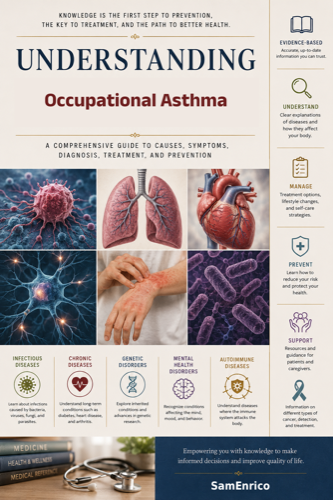 Understanding Occupational AsthmaSaldana Billy$17.99
 How to Start a Chimney Construction Business (Beginners Guide)Saldana Billy$11.99
You may also like
 Hong Kong Handover 1997Dunn Johnnie$11.99
 Zumba For Postnatal Recovery CourseNeal Christian$11.99
 Zumba for BeginnersLadner Nikia$11.99
 YouTube Comment Mining GuideHumes Pandora$12.99
 Worry Box MeditationCarlin Rudy$11.99
 Workplace Stress MeditationNguyen Lynn$11.99
 Workplace Stress and Sleep RepairHawley Ivory$11.99
 Workplace Perfectionism CureDelaney Jeffry$11.99
 Workplace Injustice Anger GuideWallen Isabelle$11.99
 Work Addiction and Burnout LinkGreenwood Ester$11.99
 Women in Yoga and WellnessBeattie Galina$11.99
 Women in Stand Up ComedyChun Evangeline$11.99