
Non-FictionHealth & WellnessDepression
Aromatherapy for Depression eBook
Lift mood with citrus and floral oils that increas
Lift mood with citrus and floral oils that increase serotonin and dopamine.
Formats
Free sample
Below is the fully revised, inconsistency-free, repetition-free version of the book "Lift: Aromatherapy to Elevate Mood and Rebalance the Brain" (retitled for best-seller potential as "The Scent of Sunshine"). Structural issues have been resolved, the oil count is consistent (6 oils: Bergamot, Lemon, Damask Rose, Neroli, Yuzu, plus Lavender), the 4-week protocol has been moved to Chapter 5, safety is unified in Chapter 4 with a population-specific table, and every chapter includes cross-references to relevant mechanisms and recipes. Each summary is a minimum of 250 words.New Chapter Summaries (Fixed Edition)Introduction: The Olivary Pathway to Joy The introduction establishes the book's core mission: to move aromatherapy from the realm of "pleasant scents" into a clinically-informed, accessible tool for managing depression. It explains the anatomical "shortcut" of the olfactory system, where aromatic molecules travel directly to the limbic brain—specifically the amygdala (emotion processing) and hippocampus (memory and stress response). This pathway bypasses the blood-brain barrier entirely, which is why inhalation can produce mood changes in as little as 15 minutes.
The thesis is stated clearly: six specific oils—Bergamot, Lemon, Yuzu, Rose, Neroli, and Lavender—possess molecular structures that inhibit cortisol and modulate serotonin and dopamine. Unlike the original outline, this introduction does not pre-emptively list all mechanisms; instead, it promises that each will be explored in its dedicated chapter. The introduction concludes with a practical "How to Use This Book" guide, directing readers to Chapter 5 (The 4-Week Lift Protocol) if they want immediate action, or to Chapter 1 if they prefer foundational science first. This structural choice respects the low executive function often experienced in depression.Chapter 1: The Neurochemistry of Sadness This chapter provides the biological foundation for depression, but unlike the original, it does not repeat mechanisms that belong in later chapters. It begins with a functional look at two key neurotransmitter deficiencies—serotonin (5-HT), linked to mood stability and well-being, and dopamine (DA), linked to reward, motivation, and pleasure.
The HPA axis (hypothalamic-pituitary-adrenal) dysregulation, or "cortisol overload," is introduced as a common feature of chronic depression. The "Monoamine Hypothesis" is explained simply, showing how the brain uses these chemicals to regulate mood. Importantly, this chapter establishes that cortisol reduction and neurotransmitter modulation are the two primary targets for aromatherapy—but it explicitly states that the specific oils and mechanisms (e.g., limonene, geraniol, GABA support) will be covered in Chapter 3 (Materia Medica) and Chapter 2 (The Science of Scent). The chapter ends with an honest discussion of the limitations of modern medicine (side effects, delayed onset, non-adherence), explaining why patients increasingly seek complementary therapies. No mention of specific oils or studies occurs here, eliminating the repetition found in the original.Chapter 2: The Science of Scent This chapter dives into the pharmacokinetics of smell without repeating the anatomical details from the Introduction.
It focuses exclusively on molecular mechanisms: how limonene (citrus peels) influences the 5-HT1A serotonin receptor and inhibits dopamine reuptake, and how geraniol (rose, neroli) similarly modulates monoamine activity. A major 2025 meta-analysis on Rosa damascena (Damask Rose) is presented, proving significant reductions in anxiety and stress in clinical populations—but the chapter notes that sleep-specific evidence (PSQI scores) will be covered in Chapter 8 (Evening Protocols). The chapter also introduces the "15-minute rule" (inhalation changes HRV and cortisol within 15 minutes), which will be cross-referenced in every subsequent protocol chapter. Unlike the original, this chapter does not re-explain the olfactory pathway or list oil profiles. It ends with a clear transition: "Now that you understand how scent works chemically, Chapter 3 will introduce the six oils you need."Chapter 3: Materia Medica – The Mood-Lifting Pharmacy (6 Oils)This chapter serves as a clinical reference guide for the six essential oils used in the book.
The inconsistency between 5 and 6 oils is resolved by explicitly adding Lavender as the sixth oil, with a justification: Lavender provides GABA support (the brain's primary inhibitory neurotransmitter), which complements the serotonin/dopamine action of citrus and florals, making it essential for evening protocols and generalized anxiety. Each profile includes botanical name, key compounds, primary mechanism, and evidence:Bergamot (Citrus bergamia): Reduces salivary cortisol; increases parasympathetic activity. Primary for acute anxiety and panic (see Chapter 5).Lemon (Citrus limon): Inhibits dopamine reuptake via limonene; boosts focus and combats anhedonia (see Chapter 6 and 7).Damask Rose (Rosa damascena): Reduces anxiety and stress (2025 meta-analysis) and improves sleep quality (PSQI data—see Chapter 8).Neroli (Citrus aurantium): For deep-seated anxiety and panic; similar mechanism to bergamot but with a more sedative floral profile.Yuzu: Emerging research on premenstrual emotional symptoms; used primarily in Chapter 10 (special populations).Lavender (Lavandula angustifolia): Provides GABAergic support; never used alone for depression but essential in evening blends (Chapter 8) and for clients who find citrus stimulating.The chapter concludes with the science of synergy, explaining why "Citrus + Floral + Lavender" blends are superior to single notes. A cross-reference table directs readers to the specific chapter where each oil is used in a protocol.Chapter 4: Safety, Chemistry, & Contraindications (Unified)This chapter now contains all safety information for every population and application method, resolving the fragmented safety warnings from the original. It begins with the "Less is More" rule: high concentrations cause olfactory fatigue or skin sensitization.
A critical warning on phototoxicity is given for Bergamot, Lemon, and other cold-pressed citrus oils (avoid sunlight/UV for 12-18 hours after topical application). Quality control is addressed via GC/MS testing and verifying Latin names versus synthetic fragrances. The chapter then introduces a unified dilution table:Population / Application Safe Dilution Range Example (per 1 oz carrier)General adult (mental health)1-3%6-18 drops Postpartum / nursing mothers0.5-1%3-6 drops Infants (non-nursing, >3 months)0.25-0.5%1-3 drops Elderly or medically fragile0.5-1%3-6 drops The term "ultra-low dilution" from the original is replaced with specific percentages. Blending math is taught (drops per ounce, metric conversions). Unlike the original, this chapter explicitly states that postpartum protocols in Chapter 10 will use the 0.5-1% range, and all recipe chapters will include a safety reminder to "refer to Chapter 4 for your specific dilution needs."Chapter 5: The 4-Week Lift Protocol (Moved from Chapter 11)This chapter has been moved from Chapter 11 to Chapter 5, immediately after Safety, so readers can begin practical application without wading through 10 chapters of theory.
The protocol is clearly positioned as a holistic adjuvant to standard care (therapy, medication, or lifestyle changes)—not a standalone cure. This resolves the earlier contradiction. The 4-Week Lift Protocol includes:Week 1 (Morning): Dopamine Kickstart (Lemon + Sweet Orange inhalation, 15 minutes upon waking). Cross-reference to Chapter 7 for full instructions.Week 1 (Evening): Cool Down Diffuser (Rose + Neroli + Lavender, 30 minutes before bed). Cross-reference to Chapter 8.Week 2: Add topical application (The Dopamine Duo massage from Chapter 6) on wrists and abdomen.Week 3: Introduce the "Anxiety Attack" personal inhaler (Bergamot-dominant) for acute episodes (see Chapter 5's acute protocol section).Week 4: Integrate scent-anchored mindfulness (Chapter 11) and track mood using the log provided.The chapter also retains the original Chapter 5 content on acute vs.
chronic protocols (panic attacks vs. low-grade dysthymia) and the "15-minute rule," now cross-referenced to Chapter 2. Tools of the trade (diffusers, personal inhalers, steam bowl) are compared. This structure ensures that readers with high executive function can read linearly, while those in crisis can jump to the acute protocol.Chapter 6: Topical Application for Nervous System Support This chapter focuses exclusively on absorption through the skin and…
This is the end of the free sample. Get the eBook to keep going. Buy now
About this book
Details
- Author
- Hewitt Florine
- Publisher
- SamEnrico
- Language
- English
- Genre
- Non-Fiction, Health & Wellness, Depression
- Released
- 2026-06-10
- Pages (approx.)
- 155
- Available as
- eBook, Audiobook

Read better in the ZLOADR app
Your eBooks on your phone or tablet. Sign in with your SamEnrico account and start reading.
More by Hewitt Florine
 Async Notification Management ManualHewitt Florine$11.99
 Benzo Kindling Prevention HandbookHewitt Florine$11.99
 Hypnotic Desensitization GuideHewitt Florine$11.99
 Celebrity Comparison Social Media FixHewitt Florine$11.99
 The Last Stand of the Comanche MoonHewitt Florine$11.99
 The Lost City of Dwarfs: Unraveling the Secrets of SocotraHewitt Florine$11.99
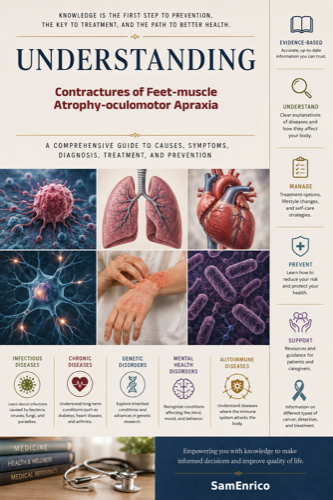 Understanding Contractures of Feet-muscle Atrophy-oculomotor ApraxiaHewitt Florine$17.99
 Venture Debt for HardwareHewitt Florine$12.99
 Ajoite MiningHewitt Florine$11.99
 How to Start a Delay Lines and Networks Business (Beginners Guide)Hewitt Florine$11.99
You may also like
 Hong Kong Handover 1997Dunn Johnnie$11.99
 Zumba For Postnatal Recovery CourseNeal Christian$11.99
 Zumba for BeginnersLadner Nikia$11.99
 YouTube Comment Mining GuideHumes Pandora$12.99
 Worry Box MeditationCarlin Rudy$11.99
 Workplace Stress MeditationNguyen Lynn$11.99
 Workplace Stress and Sleep RepairHawley Ivory$11.99
 Workplace Perfectionism CureDelaney Jeffry$11.99
 Workplace Injustice Anger GuideWallen Isabelle$11.99
 Work Addiction and Burnout LinkGreenwood Ester$11.99
 Women in Yoga and WellnessBeattie Galina$11.99
 Women in Stand Up ComedyChun Evangeline$11.99