
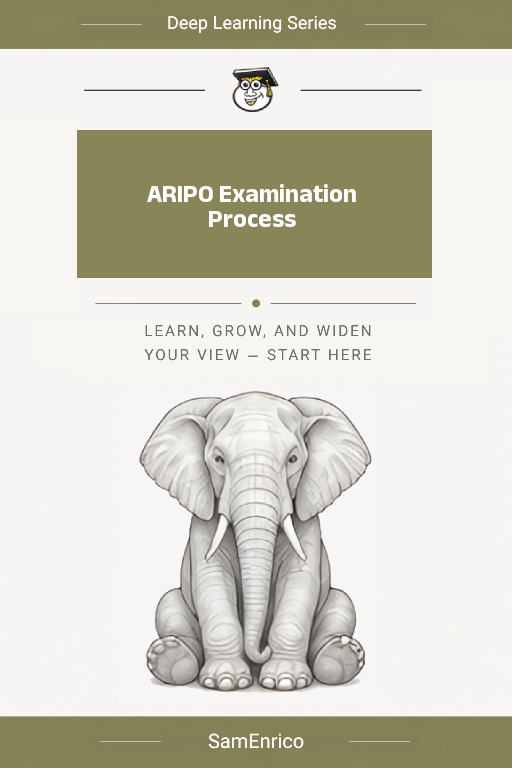
ARIPO Examination Process eBook
Understand ARIPO examination of trademark applicat
by Booker Brady
Understand ARIPO examination of trademark applications. Substantive and formal examination procedures.
Formats
Free sample
Chapter 1: The Regional Mirage–- The email arrived on a Tuesday morning, addressed to the General Counsel of a mid-sized European cosmetics company we’ll call Belleza International. The subject line was deceptively simple: “ARIPO Registration – Update.” Belleza had filed a single trademark application for its flagship skincare line six months earlier, covering twelve African countries through the African Regional Intellectual Property Organization. The law firm had assured them that ARIPO was “the African equivalent of the EU trademark.” One application. One fee. One registration.
One continent protected.The email told a different story. Belleza’s application had been formally accepted by the ARIPO office in Harare, Zimbabwe, and had proceeded to substantive examination in each of the twelve designated states. Here is what happened next:In Botswana, the mark was refused because it was deemed descriptive of the goods – a finding the company believed was incorrect, but which would cost $12,000 to appeal. In Uganda, the mark was accepted without conditions. In Zimbabwe, the mark received conditional acceptance requiring disclaimers that would narrow its scope significantly.
In Malawi, the registrar simply never responded within the required time period, so the mark was deemed accepted by tacit approval, but with no guarantee that a prior conflicting mark would not later emerge. In Liberia, the application was refused based on a prior registration that Belleza’s search had missed entirely. In the remaining seven states, the applications were still pending, with no clear timeline for resolution.Belleza had spent 18,000onthe ARIPOfilingandassociatedlegalfees.Theynowfacedapatchworkofoutcomesthatwouldrequireanadditional18,000 on the ARIPO filing and associated legal fees. They now faced a patchwork of outcomes that would require an additional 18,000onthe ARIPOfilingandassociatedlegalfees.Theynowfacedapatchworkofoutcomesthatwouldrequireanadditional45,000 to manage, including separate appeals in Botswana and Liberia, independent searches in Malawi where tacit approval provided no certainty, and ongoing monitoring in the seven states where examiners had not yet issued decisions. The “single application” had never been a single registration.
It was twelve simultaneous national applications wearing a trench coat.This chapter dismantles the foundational myth of the ARIPO system: that a regional application equals regional protection. Understanding the distinction between procedural unity and substantive fragmentation is the single most important factor in determining whether ARIPO works for your brand or against it. By the end of this chapter, you will have a decision matrix that tells you, with numeric precision, whether filing through ARIPO will save you money and reduce risk – or multiply both.The Banjul Protocol: Cooperation, Not Unification The African Regional Intellectual Property Organization was established by the Lusaka Agreement of 1976, but the relevant treaty for trademarks is the Banjul Protocol, adopted in 1993 and subsequently revised, most significantly with the amendments effective March 1, 2026. The Banjul Protocol creates a system of cooperation among member states, not a system of unification. This distinction is not academic.
It is the difference between the European Union Intellectual Property Office (EUIPO) system and the ARIPO system, a difference that destroys the value of the “African EU trademark” analogy the moment you examine it closely.Under the EUIPO system, a European Union Trade Mark (EUTM) is a unitary right. It applies automatically and uniformly across all 27 member states. If a court in Germany finds the mark invalid, it is invalid everywhere. If you renew it, it renews everywhere. If you license it, the license applies across the entire EU unless you specify otherwise.
The EUIPO examines the application once, substantively, and makes a single binding decision.Under the Banjul Protocol, by contrast, each designated member state retains full sovereignty over trademark examination within its territory. The ARIPO office in Harare performs only a formal examination – checking that the application is complete, that fees are paid, and that the mark is not obviously incapable of functioning as a trademark (for example, a single letter or a purely descriptive phrase without evidence of acquired distinctiveness). Once the formal examination is passed, ARIPO transmits the application to each designated state. Then the real work begins.Each designated state examines the application independently under its own national trademark law. There is no requirement that states coordinate their examinations, share databases, or harmonize their outcomes.
A mark can be accepted in Uganda, refused in Botswana, and conditionally accepted in Zimbabwe – all arising from the same ARIPO application. There is no appeal from Botswana’s refusal to any ARIPO tribunal. The only appeal is to the courts of Botswana, applying Botswana law.This is why the “one application” framing is dangerously misleading. Procedurally, you file one document and pay one basic fee. Legally, you are launching twelve to twenty simultaneous national applications, each with its own timeline, its own examination standards, its own opposition procedures, and its own renewal requirements.
The efficiency is in filing, not in outcome.The Strategic Question: When Does ARIPO Make Sense?Given the fragmentation of substantive examination, the threshold question for any trademark owner is not “How do I file an ARIPO application?” but “Should I file an ARIPO application at all?” The answer depends on three variables, which together form the Decision Matrix for Regional Filing.Variable One: The Number of Intended Markets ARIPO’s fee structure creates a break-even point. The basic filing fee (as of 2026) is approximately 350forthefirstclassofgoodsorservices,plusdesignationfeesforeachmemberstateyouselect.Designationfeesvarybystatebuttypicallyrangefrom350 for the first class of goods or services, plus designation fees for each member state you select. Designation fees vary by state but typically range from 350forthefirstclassofgoodsorservices,plusdesignationfeesforeachmemberstateyouselect.Designationfeesvarybystatebuttypicallyrangefrom50 to $300 per state per class.Compare this to filing separate national applications in each country. In Botswana, for example, a straight national filing might cost 400to400 to 400to600 in official fees plus local agent fees of 200to200 to 200to400. In Uganda, national filing might cost 300to300 to 300to500.
In Zimbabwe, 350to350 to 350to550. For two or three states, national filings are often cheaper or roughly comparable to ARIPO, because the ARIPO basic fee adds a layer of cost without eliminating the need for local agents.For five or more states, ARIPO typically becomes cost-effective on official fees alone. The basic fee is spread across more jurisdictions, and the designation fees are generally lower than separate national filing fees in most member states. However – and this is a critical however – the cost savings on official fees must be weighed against the increased complexity of managing disparate outcomes. If you file for twelve states and receive refusals in three, the cost of responding to those refusals (appeals, evidence of use, limitation of goods, or consent agreements) can quickly erase any savings from the initial filing.The break-even analysis is therefore not merely a calculation of filing costs.
It is a calculation of expected management costs based on the examination rigor of the states you intend to designate. Which brings us to the second variable.Variable Two: Examination Rigor by State Not all ARIPO member states examine trademarks with the same intensity. Based on empirical analysis of examination outcomes across the Banjul Protocol member states, we can classify them into three tiers, detailed fully in the Appendix. For the purposes of this chapter, the critical distinction is between strict substantive examiners and limited examiners.Strict substantive examiners – including Botswana, Ghana, Liberia, Namibia, Tanzania, Uganda, Zambia, and Zimbabwe – conduct thorough searches of national trademark registers, examine marks against absolute grounds (descriptiveness…
This is the end of the free sample. Get the eBook to keep going. Buy now
About this book
Details
- Author
- Booker Brady
- Publisher
- SamEnrico
- Language
- English
- Genre
- Non-Fiction, Business Brief, IP Protection
- Released
- 2026-05-30
- Pages (approx.)
- 155
- Available as
- eBook, Audiobook

Read better in the ZLOADR app
Your eBooks on your phone or tablet. Sign in with your SamEnrico account and start reading.
More by Booker Brady
 The Student Group Project GuideBooker Brady$11.99
 The Active Listener's JournalBooker Brady$11.99
 DBT Interpersonal OverlapBooker Brady$11.99
 The Gentle Parental Anger WorkbookBooker Brady$11.99
 The Email List Segmentation GuideBooker Brady$11.99
 The Blood of the Silk Road: Han China's War for the West (133 BC - 89 AD)Booker Brady$11.99
 Nekrasovite MiningBooker Brady$11.99
 Green Credit Penalty AvoidanceBooker Brady$12.99
 Understanding Tethered Spinal Cord DiseaseBooker Brady$17.99
 How to Start a NAAFI Headquarters Business (Beginners Guide)Booker Brady$11.99
You may also like
 Intellectual Property Customs GuideBueno Donald$11.99
 Alibaba Intellectual Property GuideCordova Palmira$11.99
 Madrid Refusal Response GuideVenegas Dorene$12.99
 ARIPO Representative GuideGooden Raye$12.99
 WIPO Trademark Registration GuideMoseley Latesha$12.99
 Trademark Search WIPOBeasley Sammie$12.99
 Trademark Search ARIPOSavoy Matthew$12.99
 OAPI vs ARIPO GuideLarsen Marissa$12.99
 Madrid Representative GuideHwang Lucius$12.99
 Madrid Irregularities GuideBeals Merle$12.99
 Madrid Examination ProcessSalas Cori$12.99
 Madrid Application ProcessMccune Dane$12.99