
Angola Independence War
Three rival movements fight Portuguese and then ea
Three rival movements fight Portuguese and then each other for power.
Formats
About this book
Free sample
Chapter 1: The Third Empire...–- When the Portuguese first sailed into the mouth of the Congo River in 1482, they did not come as colonizers. They came as traders, explorers, and hopeful allies. Diogo Cão, a shadowy figure in the service of King João II, erected a stone pillar at the river’s mouth—a padrão claiming the land for Portugal in the same breath that he knelt before the Manikongo, the powerful king of the Kongo. For nearly four centuries, this strange, asymmetrical relationship evolved: the Kongo kings converted to Christianity, sent their sons to study in Lisbon, and even adopted Portuguese noble titles. But by the late nineteenth century, the charade of partnership dissolved.
At the Berlin Conference of 1884–1885, where European powers carved Africa like a slaughtered ox, Portugal was awarded Angola not because it had conquered the interior, but because it had claimed it first. The problem, which would fester for ninety years and explode into one of Africa’s longest and most brutal wars, was that the Portuguese had never actually ruled most of the territory they now supposedly owned.The story of Angola’s independence war does not begin with machine guns, Cuban soldiers, or CIA conspiracies. It begins with a legal fiction so absurd, so violently hypocritical, that it shaped every battle, every alliance, and every betrayal that followed. That fiction was called Lusotropicalism—the myth that Portugal alone, among European colonizers, had transcended racism and created a harmonious, multi-racial empire. And the reality was the Indigenato—a system of apartheid-by-another-name that denied citizenship, dignity, and humanity to the vast majority of Angolans, while training a tiny, bitter elite to despise both their colonizers and their own rural countrymen.
The fracture between the assimilados (the “assimilated” urban few) and the indígenas (the “natives,” the rural masses) is the original sin of modern Angola. It is the crack in the foundation upon which every subsequent tragedy was built.The Myth of Racial Democracy To understand why three separate liberation movements emerged in Angola, rather than one united front, one must first understand how Portugal…
This is the end of the free sample. Get the eBook to keep going. Buy now
Contents
- Chapter 1
- Chapter 2
- Chapter 3
- Chapter 4
- Chapter 5
- Chapter 6
- Chapter 7
- Chapter 8
- Chapter 9
- Chapter 10
- Chapter 11
- Chapter 12
Details
- Author
- Edgar Ruthanne
- Publisher
- SamEnrico
- Language
- English
- Genre
- Non-Fiction, History, Civil War
- Released
- 2026-06-09
- Pages (approx.)
- 126
- Available as
- eBook, Audiobook

Read better in the ZLOADR app
Your eBooks on your phone or tablet. Sign in with your SamEnrico account and start reading.
More by Edgar Ruthanne
 The Assertiveness Journal MethodEdgar Ruthanne$11.99
 Lucknow Residency SiegeEdgar Ruthanne$11.99
 Pregnenolone Memory GuideEdgar Ruthanne$11.99
 Persuasive Vendor SelectionEdgar Ruthanne$11.99
 Anxiety Driven Parent AngerEdgar Ruthanne$11.99
 Workplace Emotion GuideEdgar Ruthanne$11.99
 Representativeness Heuristic RisksEdgar Ruthanne$11.99
 Comfort Discomfort IndicatorsEdgar Ruthanne$11.99
 Specters in the Courtroom: The Forgotten Witchcraft Case That Divided a ColonyEdgar Ruthanne$11.99
 Scipio and Sophia: Love Letters from the Punic WarsEdgar Ruthanne$11.99
 The Alchemist of the Nile: The Lost Secrets of the Black PharaohsEdgar Ruthanne$11.99
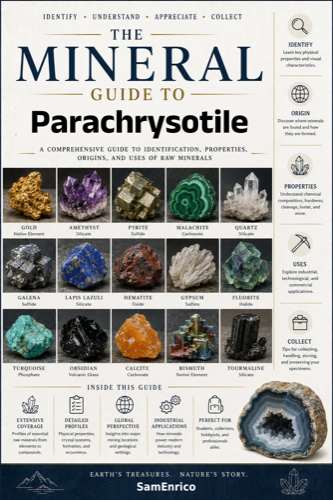 The Mineral Guide to ParachrysotileEdgar Ruthanne$11.99
You may also like
 Hong Kong Handover 1997Dunn Johnnie$11.99
 Zumba For Postnatal Recovery CourseNeal Christian$11.99
 Zumba for BeginnersLadner Nikia$11.99
 YouTube Comment Mining GuideHumes Pandora$12.99
 Worry Box MeditationCarlin Rudy$11.99
 Workplace Stress MeditationNguyen Lynn$11.99
 Workplace Stress and Sleep RepairHawley Ivory$11.99
 Workplace Perfectionism CureDelaney Jeffry$11.99
 Workplace Injustice Anger GuideWallen Isabelle$11.99
 Work Addiction and Burnout LinkGreenwood Ester$11.99
 Women in Yoga and WellnessBeattie Galina$11.99
 Women in Stand Up ComedyChun Evangeline$11.99