
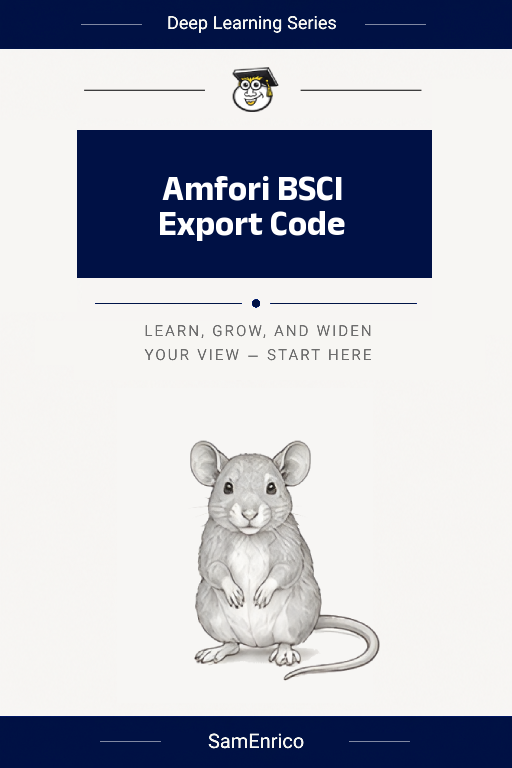
Amfori BSCI Export Code
Adhere to Amfori BSCI Code of Conduct for export m
Adhere to Amfori BSCI Code of Conduct for export manufacturing, meeting European social compliance requirements for textiles and hard goods.
Formats
About this book
Free sample
Chapter 1: The License to Ship--The first thing every factory manager must understand about BSCI is that it does not issue a certificate. There is no plaque to hang on the wall, no framed document to display in the reception area. What you receive is an audit report uploaded to the amfori Sustainability Platform, which your buyers can access directly. This distinction is critical because it changes the nature of the relationship. A certificate suggests a one-time achievement—something you earn and then possess.
A report suggests an ongoing state of compliance—something that must be maintained and verified continuously. Your buyers are not interested in whether you passed once. They are interested in whether you are compliant every day, because their own compliance depends on yours.The BSCI report contains a rating from A (Outstanding) to E (Unacceptable). A or B ratings are valid for two years. C ratings are valid for one year.
D and E ratings are essentially failures requiring immediate remediation and re-audit. The rating is not a badge of honor. It is a passport. An A or B opens doors across Europe. A C keeps you in the supply chain but under scrutiny.
A D or E closes doors.This chapter covers the fundamental architecture of the BSCI system: what it is, what it is not, how buyers control your audit fate, why one audit serves many customers, and how the risks differ between textile and hard goods factories. By the end, you will understand whether BSCI is right for your factory and what you are committing to by pursuing compliance.The RSP Hold: Why Your Buyer Controls Your Audit Fate The RSP (Responsibility) is the most misunderstood concept in BSCI. Simply put, the RSP holder is the amfori member—usually your buyer—who has the right to trigger an audit and receive the report. You cannot simply decide to get audited and send the report to a buyer. The buyer must "claim" you in the amfori platform and grant you a Site ID.This creates a power dynamic that many factories find uncomfortable.
Your buyer decides when you are audited. Your buyer chooses the audit type (semi-announced with a 14-day to 4-week window…
This is the end of the free sample. Get the eBook to keep going. Buy now
Contents
- Chapter 1
- Chapter 2
- Chapter 3
- Chapter 4
- Chapter 5
- Chapter 6
- Chapter 7
- Chapter 8
- Chapter 9
- Chapter 10
- Chapter 11
- Chapter 12
Details
- Author
- Needham Wilford
- Publisher
- SamEnrico
- Language
- English
- Genre
- Non-Fiction, Business Brief
- Released
- 2026-06-01
- Pages (approx.)
- 125
- Available as
- eBook, Audiobook

Read better in the ZLOADR app
Your eBooks on your phone or tablet. Sign in with your SamEnrico account and start reading.
More by Needham Wilford
 PPE Selection GuideNeedham Wilford$11.99
 Charaka Samhita SummaryNeedham Wilford$11.99
 Ben Hogan Silent AssassinNeedham Wilford$11.99
 Automotive Supplier Precedent ManualNeedham Wilford$11.99
 Malaysia DE Rantau VisaNeedham Wilford$11.99
 The Airport Employee SlaveNeedham Wilford$11.99
 Veterans Alcohol RecoveryNeedham Wilford$11.99
 Postpartum OCD SignsNeedham Wilford$11.99
 The Great Victorian Land Scam: How a London Banker Built a Paper EmpireNeedham Wilford$11.99
 The Crystal Cartel: How a Small-Town Pharmacy Became a Meth EmpireNeedham Wilford$11.99
 Service Providers Guide to Home AutomationNeedham Wilford$11.99
 How to Produce a Horta (Mining)Needham Wilford$11.99
You may also like
 Franchising Your Local Brand Across Borders Child Labor LawsWilson Ida$11.99
 Franchising Your Local Brand Across Borders Beneficial OwnershipGordon Debbie$11.99
 Franchising Your Local Brand Across Borders Trade SecretsKeener Tatum$11.99
 Franchising Your Local Brand Across Borders Performance DashboardsCota Lisette$11.99
 Franchising Your Local Brand Across Borders Parallel ImportsBailey Wallace$11.99
 Franchising Your Local Brand Across Borders Packaging RegulationsRandle Adaline$11.99
 Franchising Your Local Brand Across Borders Know Your CustomerMyers Adam$11.99
 Franchising Your Local Brand Across Borders Human TraffickingFranklin Lee$11.99
 Franchising Your Local Brand Across Borders Government IncentivesLogsdon Beckie$11.99
 Franchising Your Local Brand Across Borders Carbon FootprintMcfarlane Margot$11.99
 Franchising Your Local Brand Across Borders Bribery LawsStarr Cortney$11.99
 Franchising Your Local Brand Across Borders Best Practice SharingBryson Vernia$11.99