
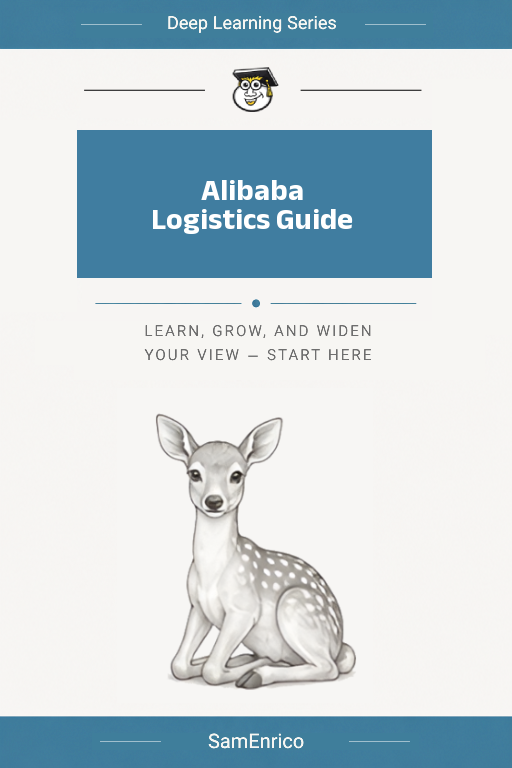
Non-FictionStrategic AtlasEcommerce Logistics
Alibaba Logistics Guide Audiobook
Explore Cainiao Network, smart warehouses, and rur
Explore Cainiao Network, smart warehouses, and rural last-mile that powers Chinese e-commerce ecosystem.
Formats
Free sample
Chapter 1: The Day Logistics Broke...--– November 11, 2011, started like any other Singles' Day at Alibaba's headquarters in Hangzhou. By midnight, the servers were overheating. By 2 AM, the order rate had surpassed every stress test the engineering team had run. By dawn, Jack Ma was awake, not because of the sales number—which would eventually reach 5.2 billion yuan, a staggering 456% increase over the previous year—but because of something far more terrifying. The logistics system had stopped working.In a warehouse on the outskirts of Shenzhen, a manager named Chen Wei watched his conveyor belt buckle under the weight of 20,000 packages per hour, three times its rated capacity.
Boxes piled up at the sorting chutes until they formed a wall ten feet high. Couriers who had been promised overtime pay were now sleeping in their trucks, having worked 36 hours straight with no end in sight. A customer in rural Sichuan who ordered a winter coat on November 11 received it on January 7 of the following year. By then, spring had already arrived.The 2011 Logistics Crisis, as it came to be known inside Alibaba, was not a failure of effort. It was a failure of design.
And it revealed a fundamental truth that Jack Ma had been avoiding for years: Alibaba could control the digital marketplace, but it could not control the physical world. The company that had built the largest e-commerce ecosystem in China had outsourced its most critical function—delivery—to a patchwork of independent couriers with no unified standards, no shared data, and no incentive to cooperate.This chapter tells the story of that crisis and the paradoxical realization that emerged from it: that the future of e-commerce would not be won by the company with the most trucks, but by the company with the most intelligence. It introduces the core tension that defines Alibaba's logistics transformation—the battle between owning assets and orchestrating networks—and lays the groundwork for every chapter that follows. By the end of this chapter, you will understand why the world's largest retailer does not own a single delivery truck, and how that decision became the foundation of a logistics revolution.The Contradiction at the Heart of Alibaba To understand the logistics crisis of 2011, one must first understand the business model that created it. Alibaba, unlike Amazon or JD.com, did not start as a retailer.
It started as a matchmaker. Taobao, launched in 2003, connected individual sellers to individual buyers. Tmall, launched in 2008, did…
This is the end of the free sample. Get the Audiobook to keep going. Buy now
About this book
Details
- Author
- Vallejo Eugenia
- Publisher
- SamEnrico
- Language
- English
- Genre
- Non-Fiction, Strategic Atlas, Ecommerce Logistics
- Released
- 2026-05-29
- Pages (approx.)
- 157
- Available as
- eBook, Audiobook

Listen in the VoxFlicks app
Audiobooks and audio dramas wherever you go. Sign in with your SamEnrico account and press play.
More by Vallejo Eugenia
 Zaire Mobutu Authenticity GuideVallejo Eugenia$11.99
 Disability Status Fitness AccessVallejo Eugenia$11.99
 Equifax Senate Hearings TranscriptVallejo Eugenia$11.99
 The Imposter Syndrome Anxiety LinkVallejo Eugenia$11.99
 Metta for MusiciansVallejo Eugenia$11.99
 The Age of Reason: Voltaire’s War of IdeasVallejo Eugenia$11.99
 A Beginners Guide to Dart Wars (Volume 1)Vallejo Eugenia$11.99
 AI Color Grading GuideVallejo Eugenia$12.99
 Understanding Mps Iii-dVallejo Eugenia$17.99
 Naturopathic DoctorVallejo Eugenia$11.99
You may also like
 Hong Kong Handover 1997Dunn Johnnie$11.99
 Zumba For Postnatal Recovery CourseNeal Christian$11.99
 Zumba for BeginnersLadner Nikia$11.99
 YouTube Comment Mining GuideHumes Pandora$12.99
 Worry Box MeditationCarlin Rudy$11.99
 Workplace Stress MeditationNguyen Lynn$11.99
 Workplace Stress and Sleep RepairHawley Ivory$11.99
 Workplace Perfectionism CureDelaney Jeffry$11.99
 Workplace Injustice Anger GuideWallen Isabelle$11.99
 Work Addiction and Burnout LinkGreenwood Ester$11.99
 Women in Yoga and WellnessBeattie Galina$11.99
 Women in Stand Up ComedyChun Evangeline$11.99