
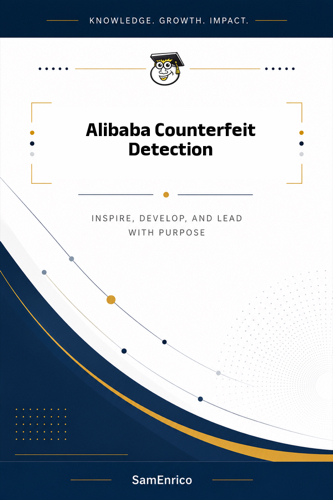
Non-FictionBusiness BriefAnti-counterfeit
Alibaba Counterfeit Detection eBook
Identifies fake or substandard products before ord
Identifies fake or substandard products before ordering.
Formats
Free sample
Chapter 1: The Great Digital Bazaar--–- On a rainy Tuesday morning in Shenzhen, a factory manager named Mr. Chen does something that would shock most Western buyers. He unlocks a steel cabinet containing fifty identical smartphones, each packaged in what appears to be authentic retail boxing. Forty-nine of them are destined for unsuspecting Amazon FBA sellers across Europe and North America. The fiftieth phone—the one with a tiny blue dot of nail polish on the underside of the battery cover—is the only authentic unit in the entire batch.
That single phone will be photographed, documented, and used as the "sample" for every future buyer who requests proof of quality. The other forty-nine will ship as counterfeits, indistinguishable from the genuine article to anyone who does not know where to look for that blue dot.This is not a hypothetical scenario. This is the reality of sourcing on Alibaba, the world's largest B2B marketplace, where counterfeiters have evolved from crude copycats into sophisticated operations that routinely outmaneuver buyers, platforms, and even customs authorities. The purpose of this book is not to scare you away from Alibaba—the platform offers legitimate access to thousands of honest manufacturers. The purpose is to transform you from a passive buyer who hopes for authenticity into an active investigator who verifies it before a single dollar changes hands.The core philosophy that drives every technique, checklist, and protocol in this book is simple but radical: shift from reactive dispute resolution to proactive pre-shipment verification.
Most buyers operate on what I call the "hope and pray" model. They find a listing with attractive photos, exchange a few pleasant messages with a responsive supplier, place a large order, and then pray that what arrives matches what was promised. When counterfeit goods inevitably appear, they spend months fighting disputes, filing chargebacks, and leaving negative reviews—all of which could have been prevented by thirty minutes of proper verification before ordering.This chapter establishes the landscape you are operating within. It explains why Alibaba is fundamentally different from consumer platforms like Amazon or e Bay, why the "anonymity of factory IDs" creates unique risks, and how the seduction of low prices blinds even experienced buyers to obvious red flags. By the time you finish this chapter, you will understand the true scale of the counterfeiting problem, the specific mechanisms counterfeiters use to exploit platform dynamics, and the critical mindset shift required to become a successful, fraud-resistant buyer.The Scale of the Shadow Economy To understand counterfeit detection on Alibaba, you must first understand the numbers.
The Organisation for Economic Co-operation and Development (OECD) estimates that international trade in counterfeit and pirated goods amounts to approximately 4.3 percent of world trade—nearly half a trillion dollars annually. Alibaba Group, as the dominant player in cross-border B2B e-commerce, handles a disproportionate share of these transactions, not because the company encourages counterfeiting, but because the sheer volume of third-party listings makes comprehensive pre-screening impossible.The platform hosts over ten million active sellers, each capable of listing thousands of products. Alibaba's own annual reports acknowledge receiving hundreds of thousands of intellectual property infringement notices. For every notice filed, there are ten counterfeit listings that go unreported because the rights holder never discovers them or because the buyer lacks the legal standing to file a takedown request.Here is what these statistics mean for you as a buyer. In any given product category—whether you are sourcing electronics, apparel, automotive parts, or industrial components—you will encounter both legitimate manufacturers and sophisticated counterfeit operations.
The difference between the two is rarely visible in the listing itself. Counterfeiters have learned to mimic every superficial marker of trust: they purchase Gold Supplier badges, generate fake customer reviews, create elaborate factory tour videos using rented spaces, and maintain responsive customer service teams trained to deflect suspicion.The most successful counterfeit operations do not sell obvious fakes. They sell what industry insiders call "Grade A Replicas"—products that are externally indistinguishable from authentic goods, using counterfeit packaging, holograms, and serial numbers that fool casual inspection. These operations do not target bargain hunters looking for impossibly low prices. They target professional buyers who believe they are savvy enough to spot a fake, precisely because those buyers let their guard down.Why Alibaba Is Not Amazon If you have sourced products from Amazon or e Bay in the past, you may believe you already understand how to spot counterfeit sellers.
This belief is dangerous. Alibaba operates on a fundamentally different model that makes counterfeit detection more challenging, not less.On Amazon, you are primarily buying from Amazon itself (first-party) or from third-party sellers whose inventory is often commingled through Fulfillment by Amazon (FBA). When inventory is commingled, an authentic product sent by a legitimate seller can be stored in the same bin as a counterfeit product sent by a fraudulent seller. A buyer who orders from the legitimate seller may receive the counterfeit unit from the shared bin. This is a serious problem, but it is a different problem.
On Amazon, the platform itself becomes a vector for counterfeit distribution.Alibaba, by contrast, is a pure marketplace connecting buyers directly with sellers. Alibaba never touches the inventory. The platform provides listing infrastructure, payment processing through Trade Assurance, and dispute resolution services, but the physical goods move directly from the seller's factory or warehouse to the buyer. There is no commingling. There is no Amazon-warehouse intermediary.
This means that when you buy from a counterfeit seller on Alibaba, the platform's systems cannot accidentally substitute a fake for a genuine item. The seller must deliberately choose to deceive you.This sounds like a positive distinction, and in some ways it is. You are not at risk of random platform-induced counterfeiting. However, the absence of commingling creates a different risk: the platform has no physical control over inventory, which means its verification mechanisms are entirely administrative. Alibaba cannot inspect what it never possesses.
The burden of verification falls entirely on you, the buyer.Furthermore, Alibaba's business model depends on seller volume. Unlike Amazon, which has aggressively restricted new seller registrations in certain categories, Alibaba maintains a relatively open registration process. This creates a low barrier to entry for counterfeiters. A fraudulent operation shut down on Monday can register a new entity on Tuesday using a different business license and resume selling by Wednesday. The "whack-a-mole" problem that Chapter 9 addresses in detail is a structural feature of the platform, not a temporary enforcement gap.The second critical difference is transaction size.
Amazon transactions typically range from twenty to two hundred dollars. Alibaba transactions, especially for professional buyers, often range from five thousand to fifty thousand dollars or more. The financial incentive for counterfeiters is correspondingly larger. A counterfeiter who successfully deceives a single buyer on Amazon might profit a few hundred dollars. A counterfeiter who deceives a single buyer on Alibaba can profit tens of thousands of dollars from a single order.
This economic reality attracts more sophisticated, better-funded counterfeit operations with dedicated customer service teams, professional photography studios, and even legal departments that craft listing language to avoid liability.The Anonymity of Factory IDs One of the most confusing aspects of Alibaba…
This is the end of the free sample. Get the eBook to keep going. Buy now
About this book
Details
- Author
- Bourque Jolyn
- Publisher
- SamEnrico
- Language
- English
- Genre
- Non-Fiction, Business Brief, Anti-counterfeit
- Released
- 2026-06-08
- Pages (approx.)
- 151
- Available as
- eBook, Audiobook

Read better in the ZLOADR app
Your eBooks on your phone or tablet. Sign in with your SamEnrico account and start reading.
More by Bourque Jolyn
 The 48 Hour JumpstartBourque Jolyn$11.99
 Pain Meditation MistakesBourque Jolyn$11.99
 Boundary Setting For ExecutivesBourque Jolyn$11.99
 Napping for Night OwlsBourque Jolyn$11.99
 Small Talk for Book ClubsBourque Jolyn$11.99
 Zumba for KidsBourque Jolyn$11.99
 Lithium Treatment GuideBourque Jolyn$11.99
 The Silk Road Heist: How a Textile Artist Smuggled Forbidden Fabrics to FreedomBourque Jolyn$11.99
 Child Loss And Social WithdrawalBourque Jolyn$11.99
 The Timbuktu Tally Masters: Counting the Stars and Gold of MaliBourque Jolyn$11.99
 The Collapse of Wirecard: How a Fintech Empire Evaporated OvernightBourque Jolyn$11.99
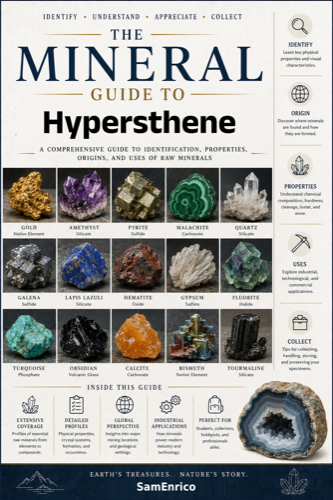 The Mineral Guide to HyperstheneBourque Jolyn$11.99
You may also like
 Hong Kong Handover 1997Dunn Johnnie$11.99
 Zumba For Postnatal Recovery CourseNeal Christian$11.99
 Zumba for BeginnersLadner Nikia$11.99
 YouTube Comment Mining GuideHumes Pandora$12.99
 Worry Box MeditationCarlin Rudy$11.99
 Workplace Stress MeditationNguyen Lynn$11.99
 Workplace Stress and Sleep RepairHawley Ivory$11.99
 Workplace Perfectionism CureDelaney Jeffry$11.99
 Workplace Injustice Anger GuideWallen Isabelle$11.99
 Work Addiction and Burnout LinkGreenwood Ester$11.99
 Women in Yoga and WellnessBeattie Galina$11.99
 Women in Stand Up ComedyChun Evangeline$11.99