
Non-FictionHealth & WellnessGI Bleeding
Alcohol Withdrawal GI Bleeding
Prevent esophageal varices rupture.
Prevent esophageal varices rupture.
Formats
About this book
Free sample
Chapter 1: The Fragile Vessel...--–- The human esophagus was never designed to withstand the pressure of a failing liver. Under normal circumstances, this muscular tube carries food and liquid from the pharynx to the stomach with rhythmic, effortless contractions. Its walls are thin, pliable, and rich with submucosal veins that drain into the portal system. But when the liver hardens with scar tissue—a condition known as cirrhosis—the rules of physiology change abruptly and dangerously. Blood that should flow freely through the portal vein instead backs up like a river dammed by debris.
That backup pressure seeks escape routes, and the most vulnerable escape route is the network of veins at the bottom of the esophagus. Over months or years, these veins dilate, twist, and bulge into the lumen. They become esophageal varices. And when the pressure inside them exceeds the elastic limit of the vessel wall, they rupture. The result is a medical emergency with a mortality rate of 15 to 30 percent for each bleeding episode.But here is the question that most textbooks fail to ask: why do varices rupture at specific moments rather than continuously?
The answer lies not just in the structural weakness of the vessel but in the acute, transient spikes of pressure that push an already fragile system over the edge. In patients with alcohol-related cirrhosis, the most powerful and predictable trigger of those pressure spikes is the syndrome that occurs when they stop drinking. Alcohol withdrawal syndrome—with its surges of catecholamines, tachycardia, hypertension, and sympathetic overdrive—turns a stable varix into a ticking bomb. The first 48 to 72 hours of detoxification are not merely uncomfortable; they are hemodynamically volatile. Heart rates climb above 100 beats per minute.
Blood pressure rises. Cardiac output increases. And the hepatic venous pressure gradient, the gold standard measure of portal pressure, can rise sharply enough to convert a non-bleeding varix into a ruptured one.This chapter establishes the core pathophysiological link between alcohol withdrawal syndrome and variceal rupture. It reviews the mechanics of portal hypertension, explains the concept of the hepatic venous pressure gradient, and details the catecholamine surge…
This is the end of the free sample. Get the eBook to keep going. Buy now
Contents
- Chapter 1
- Chapter 2
- Chapter 3
- Chapter 4
- Chapter 5
- Chapter 6
- Chapter 7
- Chapter 8
- Chapter 9
- Chapter 10
- Chapter 11
- Chapter 12
Details
- Author
- Pinkerton Ariane
- Publisher
- SamEnrico
- Language
- English
- Genre
- Non-Fiction, Health & Wellness, GI Bleeding
- Released
- 2026-06-11
- Pages (approx.)
- 150
- Available as
- eBook, Audiobook

Read better in the ZLOADR app
Your eBooks on your phone or tablet. Sign in with your SamEnrico account and start reading.
More by Pinkerton Ariane
 Education Sector Cyber IncidentsPinkerton Ariane$11.99
 The New Job Confidence GuidePinkerton Ariane$11.99
 Lobi Bateba Figure LorePinkerton Ariane$11.99
 The Silent Howl: How a Belgian Malinois Uncovered a Cyber Terror Plot in DubaiPinkerton Ariane$11.99
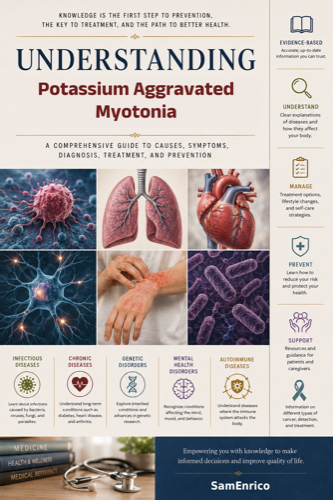 Understanding Potassium Aggravated MyotoniaPinkerton Ariane$17.99
 Cloud Services Platform ArchitectPinkerton Ariane$11.99
 GA4 Conversion Setup GuidePinkerton Ariane$12.99
 Mattress Industry GuidePinkerton Ariane$12.99
 How to Become a Lathe HandPinkerton Ariane$11.99
You may also like
 Hong Kong Handover 1997Dunn Johnnie$11.99
 Zumba For Postnatal Recovery CourseNeal Christian$11.99
 Zumba for BeginnersLadner Nikia$11.99
 YouTube Comment Mining GuideHumes Pandora$12.99
 Worry Box MeditationCarlin Rudy$11.99
 Workplace Stress MeditationNguyen Lynn$11.99
 Workplace Stress and Sleep RepairHawley Ivory$11.99
 Workplace Perfectionism CureDelaney Jeffry$11.99
 Workplace Injustice Anger GuideWallen Isabelle$11.99
 Work Addiction and Burnout LinkGreenwood Ester$11.99
 Women in Yoga and WellnessBeattie Galina$11.99
 Women in Stand Up ComedyChun Evangeline$11.99