
Non-FictionConsumer Mind ReportBeverage
Alcohol Purchase Patterns eBook
Analyze Boomer wine and spirit loyalty against Gen
by Edge Lakita
Analyze Boomer wine and spirit loyalty against Gen Z non-alcoholic trends.
Formats
Free sample
Chapter 1: The Silver Wallet...--The hotel ballroom smelled of polished oak and expensive cologne. It was 2025, and four hundred beverage executives had gathered for the annual industry forecast. On the screen, a consultant was explaining why premiumization—the strategy of charging more for the same product—would save them all. The audience nodded. They always nodded.Outside, three blocks away, a line of several dozen young people stretched down a city sidewalk.
They were waiting to enter a pop-up "sober bar" that served $14 hop waters and CBD-infused sparkling teas. The venue had sold out in eleven minutes. There was no alcohol inside. No one seemed to mind.These two scenes, happening simultaneously in the same city, capture the impossible position of the modern alcohol industry. The people with the money—the ones buying the $50 bottles of Cabernet and the $120 limited-edition bourbons—are inside the conference center, nodding at slides about premiumization.
The people with the cultural influence—the ones deciding what is cool, what is acceptable, and what is obsolete—are outside, waiting to pay fourteen dollars for a drink with zero alcohol and a vague promise of calm.This chapter is about the people inside the conference center. More specifically, it is about the generation that still holds the purse strings: the Boomers.If you work in alcohol—whether you make it, market it, distribute it, or sell it—you need to understand Boomers not as a demographic footnote but as the economic engine of your current business. They are the Silver Wallet. They control the majority of alcohol spending in the United States. They are loyal, habitual, and increasingly worried about their health.
And they are not going to be here forever.The argument of this chapter is straightforward but uncomfortable: Boomers are not the future, but they are the present. Any strategy that ignores them is financial suicide. Any strategy that relies only on them is long-term suicide. The task is to understand them well enough to harvest their value during the narrow window that remains—a window that, as we will see in later chapters, closes decisively between 2029 and 2031.The Making of the Forever Wine Mentality To understand Boomer alcohol consumption, you must first understand how they were trained to buy wine. Because wine, more than beer or spirits, is the category where Boomer habits are most distinctive and most entrenched.The Boomer generation came of age in the 1970s and 1980s, precisely when the American wine market was being transformed by a handful of influential writers and importers.
Robert Parker, the critic who invented the 100-point scale, taught Boomers that wine could be judged like a standardized test. The Wine Spectator taught them that collecting bottles was a respectable hobby, not a sign of excess. And importers like Robert Mondavi taught them that Napa Valley could produce wines as serious as Bordeaux.What emerged was what I call the "Forever Wine" mentality. This is not a metaphor. It is a specific cognitive framework that Boomers apply to every wine purchase, whether they realize it or not.Here is how the Forever Wine mentality works.
When a Boomer picks up a bottle of wine, they are unconsciously scanning for a set of traditional quality signals. Is there a vintage year on the label? Not a recent one—a vintage that suggests age and patience, like 2016 or 2018. Does the bottle come from a recognized region? Burgundy, Bordeaux, Napa, Barolo, Chianti Classico.
Is the bottle heavy? Does it have a punt—that deep indentation in the bottom—that suggests the glassblower cared about craftsmanship? Does it close with cork, not screw-top? Is the alcohol level between 13.5% and 14.5%? Does the label use serif fonts, gold foil, and imagery of chateaus or vineyards?If you are under forty, reading this list probably feels like reading a foreign language.
That is the point. These signals were constructed over decades by marketers who understood that Boomers wanted reassurance, not experimentation. Every cork, every heavy bottle, every gold-foil chateau drawing was a tiny insurance policy: This is real wine. You are not being fooled. You have good taste.The tragedy, for the industry, is that these signals mean nothing to consumers under forty.
A Gen Z consumer looks at a heavy bottle with a cork and sees waste. They look at a chateau on a label and see exclusion. They look at a vintage year and ask, "Is this still good to drink?"—not understanding that the vintage is supposed to be a selling point, not a warning.But for now, the Forever Wine mentality remains extraordinarily profitable. Boomers still buy wine the way they were taught to buy it in 1985. They trust the signals.
They pay the premiums. And as long as they do, the mid-tier wine brands—the $18 to $25 bottles that are too expensive for daily casual drinking but not expensive enough for serious collectors—continue to exist.The Gallup Wake-Up Call The Forever Wine mentality, however, is colliding with an inconvenient reality: Boomers are increasingly convinced that alcohol is bad for them.For decades, the conventional wisdom among older drinkers was that moderate drinking—a glass of wine with dinner, a whiskey before bed—was not just harmless but actively beneficial. The French Paradox, popularized on 60 Minutes in 1991, suggested that red wine explained why the French had low rates of heart disease despite a rich diet. Boomers internalized this message. A glass of red wine became medicine, not indulgence.That narrative has collapsed.Gallup, the polling organization, has tracked American attitudes toward alcohol for decades.
In 2019, only 25% of adults over 55 believed that moderate drinking was unhealthy. By 2023, that number had jumped to 45%. Nearly half of older drinkers now believe that their evening glass of wine is doing them harm.This is not a small shift. It is a seismic change in health perception among the generation that drinks the most. And it is accelerating.What caused this?
Several factors. The rise of the "sober curious" movement, led by younger generations, has changed the cultural conversation around alcohol. But more directly, a series of high-profile studies have undermined the French Paradox. A 2018 Lancet study concluded that no amount of alcohol is safe. A 2022 meta-analysis found that previous claims about alcohol's heart benefits were likely confounded by other lifestyle factors.
And the World Health Organization now classifies alcohol as a Group 1 carcinogen—the same category as tobacco and asbestos.Boomers are paying attention. Not because they read The Lancet—most do not—but because their doctors are telling them. A primary care physician who would have shrugged at a patient's nightly wine in 2015 is now actively recommending reduction. And Boomers, who are heavy users of healthcare, listen to their doctors.There is another factor, one that few in the beverage industry are talking about: GLP-1 drugs.Ozempic, Wegovy, Mounjaro, and other drugs in the same class have exploded in popularity among older, affluent Americans. These drugs were approved for diabetes and weight loss, but they have a remarkable side effect: they reduce alcohol cravings.
Patients on GLP-1s report losing interest in drinking. The effect is so pronounced that clinical trials are now underway to test GLP-1s as a treatment for alcohol use…
This is the end of the free sample. Get the eBook to keep going. Buy now
About this book
Details
- Author
- Edge Lakita
- Publisher
- SamEnrico
- Language
- English
- Genre
- Non-Fiction, Consumer Mind Report, Beverage
- Released
- 2026-06-10
- Pages (approx.)
- 136
- Available as
- eBook, Audiobook

Read better in the ZLOADR app
Your eBooks on your phone or tablet. Sign in with your SamEnrico account and start reading.
More by Edge Lakita
 Delegation for ExecutivesEdge Lakita$11.99
 Imposter Syndrome For HistoriansEdge Lakita$11.99
 Distraction Autopsy Protocol GuideEdge Lakita$11.99
 Brain Imaging of PsychopathsEdge Lakita$11.99
 Retirement Income CalculatorEdge Lakita$11.99
 Free Testosterone GuideEdge Lakita$11.99
 Ragnarok’s Last Stand: The Defiance of Surtr the Fire GiantEdge Lakita$11.99
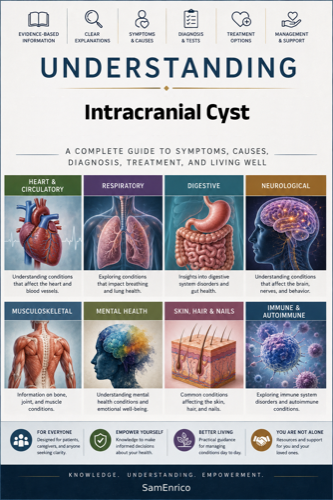 Understanding Intracranial CystEdge Lakita$11.99
 A Collector's Handbook to the Cadillac Series 10Edge Lakita$11.99
 Plagiarism Avoidance Prompt KitEdge Lakita$12.99
 Bootcamp Technical Interview PrepEdge Lakita$12.99
 How to Produce Furniture PolishEdge Lakita$11.99
You may also like
 Hong Kong Handover 1997Dunn Johnnie$11.99
 Zumba For Postnatal Recovery CourseNeal Christian$11.99
 Zumba for BeginnersLadner Nikia$11.99
 YouTube Comment Mining GuideHumes Pandora$12.99
 Worry Box MeditationCarlin Rudy$11.99
 Workplace Stress MeditationNguyen Lynn$11.99
 Workplace Stress and Sleep RepairHawley Ivory$11.99
 Workplace Perfectionism CureDelaney Jeffry$11.99
 Workplace Injustice Anger GuideWallen Isabelle$11.99
 Work Addiction and Burnout LinkGreenwood Ester$11.99
 Women in Yoga and WellnessBeattie Galina$11.99
 Women in Stand Up ComedyChun Evangeline$11.99