
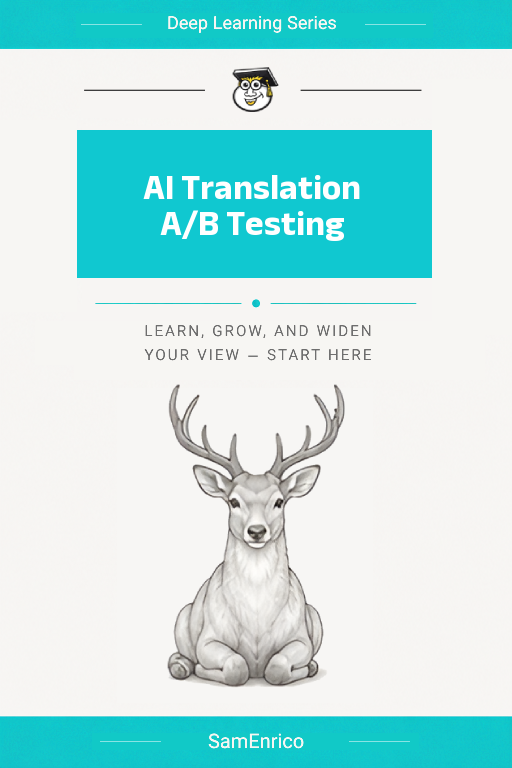
AI Translation A/B Testing Audiobook
Run multivariate tests on AI-translated content va
Run multivariate tests on AI-translated content variants. Optimize conversion by testing tone, formality, and cultural adaptation levels.
Formats
Free sample
Chapter 1: The $100M Blind Spot--–- Priya stared at the dashboard, her coffee growing cold beside her keyboard. Three months of work. Two hundred thousand dollars in ad spend. A meticulously planned Japan launch with every checkbox ticked. And the numbers on her screen made no sense.The fitness app Lingua Fit had conquered the US market with its cheerful, high-energy messaging.
“Amazing progress!” the app cheered when users completed a workout. “You’re on fire!” it celebrated after a seven-day streak. In English, this voice had driven millions of downloads and a 4.8-star rating.Priya had done everything right for the Japan expansion. She’d hired native Japanese translators to review the AI-generated localization. She’d run focus groups in Tokyo.
She’d followed every best practice in the industry playbook.Yet the dashboard told a brutal story: 92% uninstall rate within 24 hours. Average session duration: forty-seven seconds. Support tickets flooding in with one recurring phrase: “This app is childish.”She didn’t know it yet, but Priya had just discovered what this book calls The Translation Trap—the systematic failure that occurs when companies mistake linguistic accuracy for persuasive effectiveness. It is a trap that costs the global economy trillions annually, and it is only getting worse as AI translation tools become more fluent and more deceptive in their perfection.This chapter will show you why literal translation fails, how to recognize the difference between fluency and persuasion, and why moving from simple A/B testing to multivariate testing of cultural variables is the only path out of the trap.The Fluency Trap: When Perfect Grammar Destroys Trust The problem with modern AI translation is counterintuitive. We assume that better grammar equals better communication.
We assume that if an AI can produce flawless sentences in Japanese, German, or Arabic, those sentences will persuade Japanese, German, or Arabic speakers.Both assumptions are wrong.The most dangerous translations are not the ones filled with errors. The most dangerous translations are the ones that are grammatically perfect but culturally wrong. They pass every automated quality check. They score high on BLEU (Bilingual Evaluation Understudy), the standard metric that compares translations to reference texts. They look, to any non-native speaker, like they should work.And then they fail catastrophically.Here is what happened to Lingua Fit.
Their AI translated “Amazing progress!” directly to “Subarashii!” in Japanese. This is a perfectly accurate translation. “Subarashii” does mean “amazing”…
This is the end of the free sample. Get the Audiobook to keep going. Buy now
About this book
Details
- Author
- Bustamante Kieth
- Publisher
- SamEnrico
- Language
- English
- Genre
- Non-Fiction, AI Operator
- Released
- 2026-06-01
- Pages (approx.)
- 145
- Available as
- eBook, Audiobook

Listen in the VoxFlicks app
Audiobooks and audio dramas wherever you go. Sign in with your SamEnrico account and press play.
More by Bustamante Kieth
 Twelve Step Meditation PracticesBustamante Kieth$11.99
 Stress and Domestic PartnershipBustamante Kieth$11.99
 Decades of Emotional Stability PlanBustamante Kieth$11.99
 Body Scan for Stress ReductionBustamante Kieth$11.99
 The Trickster and the Round Table: Anansi’s Quest for CamelotBustamante Kieth$11.99
 How to Produce Body Wash and SOAPBustamante Kieth$11.99
 How to Start a Film Made of Plastic Business (Beginners Guide)Bustamante Kieth$11.99
 Card Dealing (Professional)Bustamante Kieth$11.99
You may also like
 Hong Kong Handover 1997Dunn Johnnie$11.99
 Zumba For Postnatal Recovery CourseNeal Christian$11.99
 Zumba for BeginnersLadner Nikia$11.99
 YouTube Comment Mining GuideHumes Pandora$12.99
 Worry Box MeditationCarlin Rudy$11.99
 Workplace Stress MeditationNguyen Lynn$11.99
 Workplace Stress and Sleep RepairHawley Ivory$11.99
 Workplace Perfectionism CureDelaney Jeffry$11.99
 Workplace Injustice Anger GuideWallen Isabelle$11.99
 Work Addiction and Burnout LinkGreenwood Ester$11.99
 Women in Yoga and WellnessBeattie Galina$11.99
 Women in Stand Up ComedyChun Evangeline$11.99