
Non-FictionAI OperatorCourse Design
AI Syllabus Generator eBook
Create complete course syllabi with policies, sche
by Cobbs Juli
Create complete course syllabi with policies, schedules, and grading breakdowns.
Formats
Free sample
Chapter 1: The Fourteen-Hour Trap--It was two weeks before the fall semester, and Professor Elena Vasquez sat staring at a blank syllabus template on her laptop screen. She had already taught “Introduction to Comparative Politics” eleven times. She had three previous syllabi saved in her folders. And yet, here she was again: fourteen hours into the task, still tweaking the attendance policy, still recalculating grade weights, still wondering if her learning objectives were actually measurable or just performative academic prose. Her students wouldn’t read most of it anyway.
Last semester’s anonymous feedback confirmed what she already suspected: “The syllabus is too long. I couldn’t find the late work policy.” Another student wrote: “Why is this 12 pages? I just want to know what’s due and when.”Elena is not alone. Across universities, community colleges, and corporate training departments, the same scene plays out thousands of times each semester. Faculty members sink an average of fifteen to twenty hours into syllabus construction, only to produce a document that students barely read, frequently misunderstand, and often ignore entirely.
The syllabus has become a ritual of academic labor—high effort, low return, and increasingly disconnected from how actual humans consume information in the twenty-first century.This book exists because that ritual is broken. And generative artificial intelligence is not just a tool to speed it up. It is an opportunity to rethink what a syllabus is for, who it serves, and how it can work as a living document rather than a bureaucratic artifact. But before we dive into prompts and platforms, we need to understand the trap. Because you cannot automate a broken process.
You must first understand why the traditional syllabus fails, why your time is being stolen, and how a different approach—one grounded in learning science and powered by AI—can give you back those fourteen hours while actually improving student outcomes.The Burden of the Blank Page Let us begin with an honest accounting of time. In 2019, a survey of 257 faculty members across eleven institutions found that the average instructor spent approximately 18.7 hours creating a single course syllabus from scratch. Even those using templates reported an average of 9.2 hours per syllabus. Where does all that time go? Not into pedagogy, as it turns out.
The same survey revealed that instructors spent roughly 40 percent of their syllabus creation time on formatting, aligning page numbers, adjusting tables, and wrestling with their institution’s required boilerplate language. Another 25 percent went into drafting and re-drafting policies—late work, academic integrity, attendance, accommodations—often copying from previous courses but still needing to adjust dates and course-specific details. Only about 15 percent of that time was spent on the genuinely pedagogical work of articulating learning objectives, sequencing content, and designing assessments that align with outcomes.This is the fourteen-hour trap. You are not spending eighteen hours designing learning experiences. You are spending eighteen hours formatting, pasting boilerplate, and worrying about whether the grading breakdown adds up to 100 percent.The trap has three jaws that close around your time.
The first is structural: most learning management systems require syllabi to be uploaded as PDFs, which encourages a static, print-oriented mindset. The second is cultural: many departments and accrediting bodies demand specific language, credit-hour statements, and disability accommodation notices that must be included verbatim. The third is psychological: the syllabus is often the first formal communication with students, so instructors feel pressure to make it comprehensive, legally defensible, and pedagogically sound all at once.None of these pressures are unreasonable on their own. But together, they create a document that tries to be everything at once: a contract, a roadmap, a schedule, a policy manual, a philosophical statement, and a first impression. No single document can serve all these masters well.
And when you try to force it, you end up with something that pleases no one.The Reader Who Isn’t Reading Let us look at the evidence from the other side of the desk. A landmark 2018 study of 278 undergraduate students across four universities tracked how students actually interacted with their course syllabi. The researchers used eye-tracking software and follow-up interviews. The results were damning. On average, students spent less than 90 seconds reviewing a syllabus upon first receipt.
After the first week, 43 percent of students never opened the syllabus again. When asked specific questions about course policies—late work deductions, exam weighting, attendance requirements—only 31 percent could locate the correct information within two minutes. Most tellingly, when syllabi were made available in both traditional PDF and a condensed one-page infographic format, student comprehension of key policies improved by 62 percent in the infographic condition.The traditional syllabus is not just inefficient. It is actively hostile to how modern students process information. Gen Z and adult learners have been shaped by mobile interfaces, search functions, and modular content.
They do not read linearly. They scan, search, and ask. A twelve-page PDF with dense paragraphs and nested bullet points is a cognitive barrier, not a teaching tool.Consider how a student actually uses a syllabus. They have a specific question: “When is the midterm?” “How much is the final worth?” “What happens if I turn something in late?” They do not want to read an essay about your teaching philosophy. They want an answer.
And if your syllabus buries that answer on page eight between the academic integrity statement and the disability accommodations, the student will either guess incorrectly, ask you directly (creating email volume you do not want), or ignore the policy entirely.This is not a failure of student effort. It is a failure of document design. And it is a failure that AI can help fix—not by writing more text, but by helping you structure information in ways that align with how human beings actually read.Case Study One: The Lost Policy Let me give you a concrete example. A few years ago, I consulted with a mid-sized public university that was experiencing an unusual number of grade disputes in their introductory psychology course. The course had 450 students across four sections.
In one semester alone, twenty-three students formally appealed their final grades. The primary complaint? No one knew the late work policy.I reviewed the syllabus. It was fourteen pages long. The late work policy appeared on page six, in a paragraph that began with the heading “Assignment Submission Protocols.” The policy itself was clearly written: “Assignments submitted within 24 hours of the deadline will receive a 10 percent deduction.
Submissions between 24 and 48 hours late will receive a 25 percent deduction. Submissions more than 48 hours late will not be accepted.” That is a perfectly reasonable policy. But here is the problem: on page two, the syllabus also said, “All deadlines are firm unless otherwise specified.” And on page nine, under “Technology Issues,” it said, “Technical problems are not an excuse for late work.” Students were confused. Was the late work policy an exception to the firm deadlines? Or did the late work policy only apply to excused absences?
The document contradicted itself, not in content but in tone. And no student was going to cross-reference three separate sections across fourteen pages to resolve the ambiguity.We solved the problem in two ways. First, we moved the late…
This is the end of the free sample. Get the eBook to keep going. Buy now
About this book
Details
- Author
- Cobbs Juli
- Publisher
- SamEnrico
- Language
- English
- Genre
- Non-Fiction, AI Operator, Course Design
- Released
- 2026-06-09
- Pages (approx.)
- 136
- Available as
- eBook, Audiobook

Read better in the ZLOADR app
Your eBooks on your phone or tablet. Sign in with your SamEnrico account and start reading.
More by Cobbs Juli
 Egyptian Immigrant EntrepreneursCobbs Juli$11.99
 Co Parenting Stress Management GuideCobbs Juli$11.99
 HGH and Injury RecoveryCobbs Juli$11.99
 The Eisenhower Matrix for LawyersCobbs Juli$11.99
 The Angel of Belisarius: Healing in the Shadow of the Great GeneralCobbs Juli$11.99
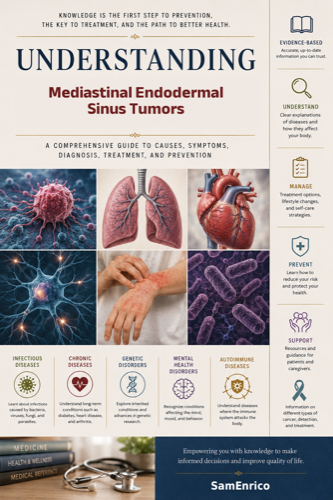 Understanding Mediastinal Endodermal Sinus TumorsCobbs Juli$17.99
 Executive Time Blocking ResetCobbs Juli$12.99
 German Raise Real World CasesCobbs Juli$12.99
 Procurement LeadCobbs Juli$11.99
 How to Become a Knife GrinderCobbs Juli$11.99
You may also like
 Hong Kong Handover 1997Dunn Johnnie$11.99
 Zumba For Postnatal Recovery CourseNeal Christian$11.99
 Zumba for BeginnersLadner Nikia$11.99
 YouTube Comment Mining GuideHumes Pandora$12.99
 Worry Box MeditationCarlin Rudy$11.99
 Workplace Stress MeditationNguyen Lynn$11.99
 Workplace Stress and Sleep RepairHawley Ivory$11.99
 Workplace Perfectionism CureDelaney Jeffry$11.99
 Workplace Injustice Anger GuideWallen Isabelle$11.99
 Work Addiction and Burnout LinkGreenwood Ester$11.99
 Women in Yoga and WellnessBeattie Galina$11.99
 Women in Stand Up ComedyChun Evangeline$11.99