
researchAI OperatorIntelligence Analysis
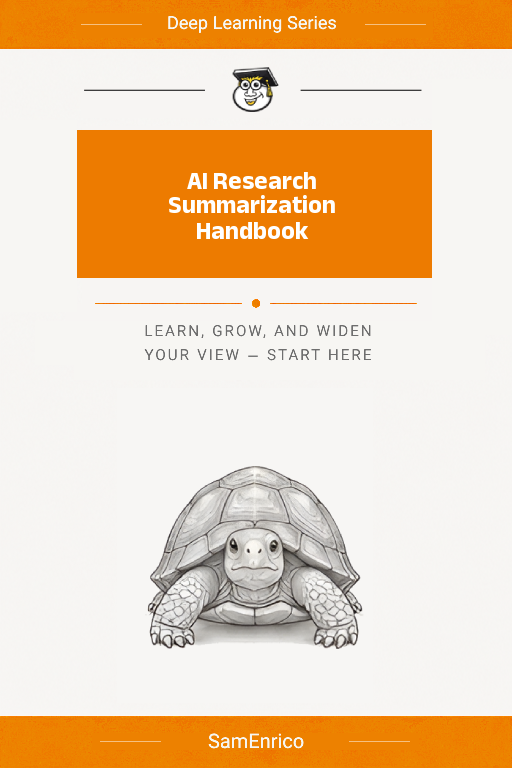
AI Research Summarization Handbook
Automate literature reviews and competitor intelli
by Petit Candra
Automate literature reviews and competitor intelligence using LLMs. Covers abstractive summarization, source citation, and key insight extraction for busy analysts.
Formats
About this book
Free sample
Chapter 1: The Overload Crisis--The email arrived at 6:47 PM on a Tuesday. Priya, a senior competitive intelligence analyst at a mid-sized pharmaceutical company, had been in back-to-back meetings since 8:30 AM. She had sixty-three unread messages, two missed calls from her boss, and a blinking Slack notification that read: "Do we have anything on Aurora Bio's Q3 pipeline? Board wants answers by Friday."She opened the folder she maintained on Aurora Bio. Inside were 147 documents: patent filings, earnings call transcripts, clinical trial results, investor presentations, and a scattering of news articles.
The oldest was from eighteen months ago. Priya had read exactly forty-two of them. The rest were unopened PDFs, saved in a rush of good intentions.She calculated the math, as she had done a hundred times before. Each document averaged twenty-five pages. At a professional reading speed of roughly 250 words per minute, accounting for comprehension and note-taking, each document required about forty minutes.
One hundred forty-seven documents would take ninety-eight hours. There were seventy-two hours until Friday.Priya closed the folder. She opened a new Power Point slide, typed "Aurora Bio – Preliminary Assessment," and then stared at the blinking cursor for twenty minutes. At 7:32 PM, she wrote: "Further analysis required." She sent the slide to her boss and went home.Three weeks later, Aurora Bio announced a major strategic pivot—a shift from adjuvant cancer therapies to monotherapies—that blindsided Priya's company. The stock dropped 12%.
The board wanted to know why no one had seen it coming. Priya's boss asked the same question. She didn't have an answer.But the data had been there. The shift from "adjuvant" to "monotherapy" had appeared in Aurora's language six months earlier, buried across twelve patent filings and three earnings calls. A human reading sequentially would have needed weeks to connect the dots.
An LLM, applied systematically, would have done it in hours.This book is for Priya. And for everyone like her.The Unreadable Tsunami Priya's problem is not unique. It is not even unusual. It is, in fact, the defining condition of professional knowledge work in 2026.Consider the scale of what any analyst in…
This is the end of the free sample. Get the eBook to keep going. Buy now
Contents
- Chapter 1
- Chapter 2
- Chapter 3
- Chapter 4
- Chapter 5
- Chapter 6
- Chapter 7
- Chapter 8
- Chapter 9
- Chapter 10
- Chapter 11
- Chapter 12
Details
- Author
- Petit Candra
- Publisher
- SamEnrico
- Language
- English
- Genre
- research, AI Operator, Intelligence Analysis
- Released
- 2026-06-01
- Pages (approx.)
- 129
- Available as
- eBook, Audiobook

Read better in the ZLOADR app
Your eBooks on your phone or tablet. Sign in with your SamEnrico account and start reading.
More by Petit Candra
 Failure Fear in ParentingPetit Candra$11.99
 Commuter Student Isolation HandbookPetit Candra$11.99
 The Caregiver Parkinsons GuidePetit Candra$11.99
 Carson Rachel's Love of Tide Pools GuidePetit Candra$11.99
 Smoking Cessation Dementia RiskPetit Candra$11.99
 The Furies' Wrath: How the Eumenides Shaped Justice in Ancient GreecePetit Candra$11.99
 The Duke Who Stole the Crown: The Scandalous Reign of the Regent’s ShadowPetit Candra$11.99
 Trash CollectorPetit Candra$11.99
 Promotion Case Language GuidePetit Candra$12.99
 Understanding Foix–chavany–Marie SyndromePetit Candra$17.99
 How to Start a Printing By Quick Printing Business (Beginners Guide)Petit Candra$11.99
You may also like
 Scientific Research On TM GuideMartens Nathanial$11.99
 Research Proposal Methodology Section MasteryPauley Debroah$11.99
 Research Proposal Appendix CompilationRaines Tyisha$11.99
 Academic Researcher Distraction GuideFord Virgil$11.99
 TM Research and ScienceCovert Nicki$11.99
 Social Anxiety Research ReviewRoberge Cole$11.99
 Research Proposal Significance Section GuideBock Tory$12.99
 Research Proposal Reviewer PsychologyLugo Tawanda$11.99
 Research Proposal Research Questions DesignLara Robbi$11.99
 Research Proposal References and CitationsPatten Shanice$11.99
 Research Proposal Mixed Methods DesignCameron Omega$11.99
 Research Proposal Data Management PlanAnderson Roberto$12.99