
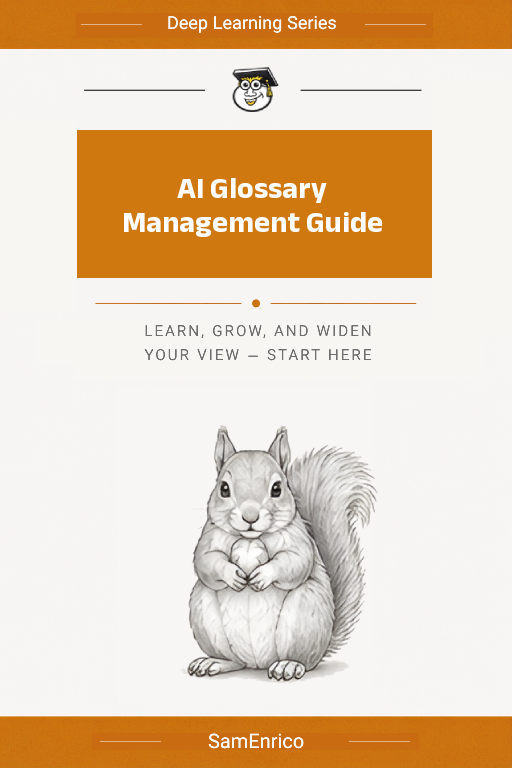
Non-FictionAI OperatorLanguage Services
AI Glossary Management Guide
Create and maintain translation glossaries and sty
by Mears Nubia
Create and maintain translation glossaries and style guides using AI for consistent terminology.
Formats
About this book
Free sample
Chapter 1: The Probabilistic Trap...--The email arrived at 2:47 AM on a Tuesday. Maria, the localization director for a fast-growing fintech company called Veridi, had just finished reviewing GPT-4's translation of 3,200 user interface strings for their new Spanish-language launch. She was excited—the AI had worked at lightning speed, delivering in hours what used to take her team weeks. The Spanish looked fluent. Natural.
Even elegant in places.Three weeks later, Veridi launched in Mexico and Spain simultaneously. The first support ticket arrived within four hours. A user in Mexico City wrote: "Why does your app call the payment page 'la caja' like a grocery store cash register? I clicked 'pago' on the first screen, then 'finalización' on the second. I gave up."The second ticket complained about the same inconsistency.
Then a third. Then twenty-three more. By the end of the first week, Veridi had lost an estimated $187,000 in abandoned carts—not because their product was broken, but because their AI translator had translated the simple English word "checkout" three different ways across three different screens. The AI had not been malicious. It had not been lazy.
It had been probabilistic.The Fluent Liar: Why Raw LLMs Cannot Be Trusted Large Language Models like GPT-4, Claude, and Gemini are extraordinary feats of engineering. They have ingested the majority of the public internet. They can write poetry, debug code, and summarize dense legal documents. They are, by almost any measure, fluent in dozens of languages. But fluency is not fidelity.When you ask a raw LLM to translate "checkout" from English to Spanish, the model does not consult a brand-approved termbase.
It does not remember that Veridi decided six months ago to use "pago" across all customer-facing surfaces. Instead, the model performs a statistical calculation: given the surrounding words and the vast corpus of Spanish text it was trained on, what is the most probable translation? In one sentence, "checkout" appears near "shopping cart," so the model chooses "caja." In another sentence, it appears near "credit card," so it chooses "pago." In a third, it appears near "complete purchase,"…
This is the end of the free sample. Get the eBook to keep going. Buy now
Contents
- Chapter 1
- Chapter 2
- Chapter 3
- Chapter 4
- Chapter 5
- Chapter 6
- Chapter 7
- Chapter 8
- Chapter 9
- Chapter 10
- Chapter 11
- Chapter 12
Details
- Author
- Mears Nubia
- Publisher
- SamEnrico
- Language
- English
- Genre
- Non-Fiction, AI Operator, Language Services
- Released
- 2026-06-01
- Pages (approx.)
- 148
- Available as
- eBook, Audiobook

Read better in the ZLOADR app
Your eBooks on your phone or tablet. Sign in with your SamEnrico account and start reading.
More by Mears Nubia
 Oculesics Eye Behavior GuideMears Nubia$11.99
 Workplace Smoking Ban SurvivalMears Nubia$11.99
 Religious Pilgrimage BoothsMears Nubia$11.99
 Gacy Sexuality and ViolenceMears Nubia$11.99
 The Vanishing Billions: The Inside Job That Shook IndiaMears Nubia$11.99
 How to Start a Carpentry (structural) Business (Beginners Guide)Mears Nubia$11.99
 Executive Team AssistantMears Nubia$11.99
 Learn to Play the SopilaMears Nubia$11.99
You may also like
 Hong Kong Handover 1997Dunn Johnnie$11.99
 Zumba For Postnatal Recovery CourseNeal Christian$11.99
 Zumba for BeginnersLadner Nikia$11.99
 YouTube Comment Mining GuideHumes Pandora$12.99
 Worry Box MeditationCarlin Rudy$11.99
 Workplace Stress MeditationNguyen Lynn$11.99
 Workplace Stress and Sleep RepairHawley Ivory$11.99
 Workplace Perfectionism CureDelaney Jeffry$11.99
 Workplace Injustice Anger GuideWallen Isabelle$11.99
 Work Addiction and Burnout LinkGreenwood Ester$11.99
 Women in Yoga and WellnessBeattie Galina$11.99
 Women in Stand Up ComedyChun Evangeline$11.99