
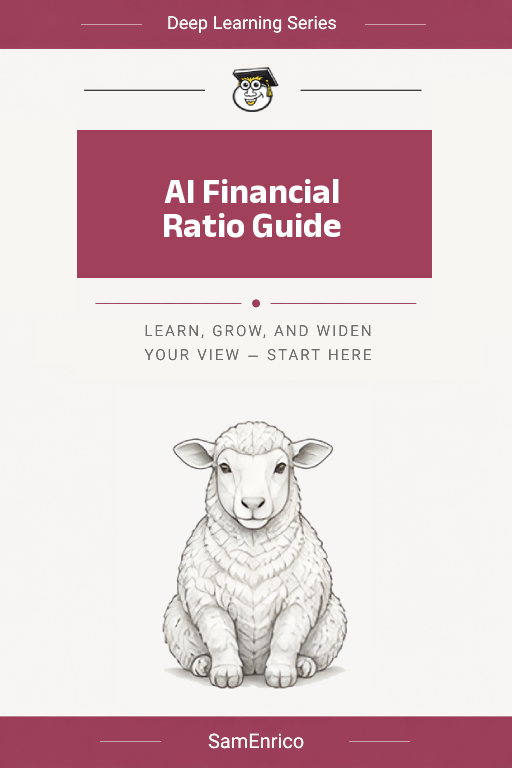
Non-FictionBusiness BriefRatio AI
AI Financial Ratio Guide
Calculate liquidity, solvency, and profitability r
Calculate liquidity, solvency, and profitability ratios automatically with AI benchmarking.
Formats
About this book
Free sample
Chapter 1: The Broken Spreadsheet--The CFO of a publicly traded company stared at her screen in disbelief. The current ratio she had just calculated—manually, from PDFs, at 11 PM on a Sunday—showed 1.8. Above the magical 2.0 threshold? No. But not in crisis territory either.
She signed off on the quarterly filing, approved a modest share buyback, and went to bed.Forty-seven days later, the company filed for Chapter 11.What happened? The current ratio hadn't lied. But it had been irrelevant. By the time she calculated it, the inventory that supported that ratio had already been pledged as collateral to a lender the CFO didn't even know existed. The accounts receivable that looked healthy on paper had aged past 120 days.
And the competitor who would undercut their pricing in the next quarter had already filed its own patent applications—public records that no ratio had ever been designed to capture.This is not a cautionary tale. It is the normal state of financial analysis in the 21st century.The Three Pillars You Thought You Knew Before we can fix what is broken, we must understand what we are trying to fix. Financial ratio analysis rests on three ancient pillars, each answering a different question about a company's financial health. These pillars will not change in this book. What will change is everything about how we measure them.Liquidity: Can You Pay Your Bills on Tuesday?Liquidity answers the most urgent question in finance: does this company have enough short-term assets to cover its short-term liabilities?
If a company fails a liquidity test, it may not survive the next payroll cycle.The standard bearer is the Current Ratio: Current Assets divided by Current Liabilities. A ratio above 1.0 means, in theory, that the company has more assets coming due in the next twelve months than liabilities. The old rule of thumb said 2.0 was healthy. That rule has killed more companies than bad debt.The sharper tool is the Quick Ratio (or Acid-Test Ratio): (Current Assets minus Inventory) divided by Current Liabilities. By removing inventory—which can take months to sell—the quick ratio reveals whether a…
This is the end of the free sample. Get the eBook to keep going. Buy now
Contents
- Chapter 1
- Chapter 2
- Chapter 3
- Chapter 4
- Chapter 5
- Chapter 6
- Chapter 7
- Chapter 8
- Chapter 9
- Chapter 10
- Chapter 11
- Chapter 12
Details
- Author
- Tipton Takisha
- Publisher
- SamEnrico
- Language
- English
- Genre
- Non-Fiction, Business Brief, Ratio AI
- Released
- 2026-06-01
- Pages (approx.)
- 148
- Available as
- eBook, Audiobook

Read better in the ZLOADR app
Your eBooks on your phone or tablet. Sign in with your SamEnrico account and start reading.
More by Tipton Takisha
 Failure Fear Exposure LadderTipton Takisha$11.99
 George Strait King of CountryTipton Takisha$11.99
 Humanities Major Stress HandbookTipton Takisha$11.99
 Thunberg Publicity Avoidance Paradox GuideTipton Takisha$11.99
 Forest Bathing Brain BenefitsTipton Takisha$11.99
 The Healing Hands of Asclepius: Ancient Greece's First Mental Health RevolutionTipton Takisha$11.99
 Understanding Fraser-like SyndromeTipton Takisha$17.99
 David Bach Latte Factor PrimerTipton Takisha$12.99
 Wool TradingTipton Takisha$11.99
 How to Become a Disk-and-tape-machine TenderTipton Takisha$11.99
You may also like
 Hong Kong Handover 1997Dunn Johnnie$11.99
 Zumba For Postnatal Recovery CourseNeal Christian$11.99
 Zumba for BeginnersLadner Nikia$11.99
 YouTube Comment Mining GuideHumes Pandora$12.99
 Worry Box MeditationCarlin Rudy$11.99
 Workplace Stress MeditationNguyen Lynn$11.99
 Workplace Stress and Sleep RepairHawley Ivory$11.99
 Workplace Perfectionism CureDelaney Jeffry$11.99
 Workplace Injustice Anger GuideWallen Isabelle$11.99
 Work Addiction and Burnout LinkGreenwood Ester$11.99
 Women in Yoga and WellnessBeattie Galina$11.99
 Women in Stand Up ComedyChun Evangeline$11.99