
Non-FictionHealth & WellnessGlandular Health
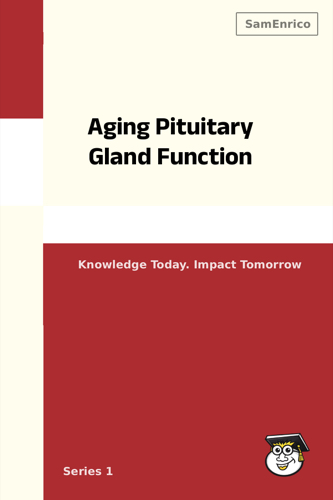
Aging Pituitary Gland Function eBook
Understand structural and functional decline of th
Understand structural and functional decline of the pituitary that reduces HGH output.
Formats
Free sample
Chapter 1: The Vanishing Fountain--You wake up tired. Not the tired that follows a late night or a hard workout—the tired that has become your new normal. Your alarm clock reads 7:00 AM, but you feel like you never truly slept. You drag yourself to the bathroom, catch a glimpse of your reflection, and wonder when your face started looking so... worn.
Not old, exactly. Just faded. Like a photograph left too long in sunlight.By noon, you are running on caffeine and willpower. Your afternoon meeting requires three attempts to remember the word "quarterly." You skip your workout—again—because the thought of changing clothes feels exhausting. By 8:00 PM, you are on the couch, scrolling mindlessly, watching your body slowly soften in places that used to be firm.
You tell yourself this is just what happens. You are, after all, getting older.But what if you are wrong?What if the fatigue, the brain fog, the stubborn belly fat, the lost muscle, the sleepless nights, and the creeping sense that your best years are behind you are not inevitable consequences of aging? What if they are symptoms—symptoms of a single, tiny organ the size of a pea that sits at the base of your brain? An organ you have probably never thought about, never seen in a diagram, and certainly never considered as the potential master key to your vitality?This chapter is about that organ. And by the time you finish reading it, you will understand why it matters more than almost anything else in your body.The Most Important Gland You Have Never Heard Of Nestled in a small bony cavity called the sella turcica—Latin for "Turkish saddle"—at the base of your skull, behind the bridge of your nose and directly below your hypothalamus, sits the pituitary gland.
Despite its diminutive size, roughly that of a kidney bean and weighing less than a gram, it has earned a formidable nickname: The Master Gland.Why master? Because it orchestrates the most complex endocrine symphony in the human body. The pituitary does not micromanage every cell. That would be impossible. Instead, it releases hormones that tell other glands what to do, when to do it, and how intensely.
Think of it as a conductor standing before an orchestra. The conductor does not play every instrument. But without the conductor, the first violinist does not know when to enter, the timpani misses its cue, and the music dissolves into chaos.Your body's endocrine system works exactly the same way. The thyroid gland waits for a signal from the pituitary before it releases metabolism-regulating hormones. The adrenal glands wait for a signal before releasing cortisol for stress response.
The ovaries and testes wait for signals before producing sex hormones. And the liver waits for a signal—specifically, Human Growth Hormone from the pituitary—before producing the growth factors that repair your muscles, strengthen your bones, and regenerate your skin.When the pituitary works well, you barely notice it. That is the hallmark of a masterfully conducted orchestra: you hear the music, not the conductor. But when the pituitary begins to falter, every section of the orchestra goes out of tune. You do not feel your pituitary failing.
You feel tired. You feel weak. You feel old. And you have no idea why.This book is about that failure. And more importantly, about what you can do about it.A Brief Anatomy Lesson: Two Glands in One To understand how the pituitary ages, you must first understand its peculiar structure.
The pituitary is actually two glands fused together—each with a different embryonic origin, different cell types, and different functions. This duality is not merely academic. It explains why some pituitary hormones decline with age while others remain stable, and why the treatments for pituitary failure must be targeted rather than general.The Anterior Pituitary (Adenohypophysis): This is the glandular front lobe, comprising roughly 80 percent of the gland's volume. It contains five distinct cell types, each producing a specific hormone. The somatotrophs produce Human Growth Hormone, the primary subject of this book.
The thyrotrophs produce Thyroid-Stimulating Hormone, which controls your metabolic rate. The corticotrophs produce Adrenocorticotropic Hormone, which controls your stress response. The gonadotrophs produce Follicle-Stimulating Hormone and Luteinizing Hormone, which control reproduction. And the lactotrophs produce prolactin, which controls milk production.Each of these hormones will appear repeatedly throughout these pages. For now, remember this: the anterior pituitary is the factory where HGH is manufactured, stored, and released.
When this factory ages, production slows, quality control falters, and the supply chain breaks down.The Posterior Pituitary (Neurohypophysis): This is the neural back lobe. Unlike the anterior pituitary, it does not produce its own hormones. Instead, it stores and releases two hormones actually manufactured in the hypothalamus: oxytocin, which facilitates bonding and uterine contractions, and antidiuretic hormone, which regulates water balance. The posterior pituitary is essentially a warehouse, not a factory.Why does this distinction matter? Because the two lobes age differently.
The posterior pituitary, being a passive storage site, remains relatively stable across the lifespan. The anterior pituitary, being an active factory, undergoes dramatic structural decline. That decline—the fibrosis, the cell death, the reduced blood flow—is the central mechanism driving the symptoms you are experiencing.The Hypothalamic Connection: Why Your Brain Runs the Show The pituitary does not act independently. It takes orders from a higher authority: the hypothalamus, a small but powerful region deep within your brain about the size of an almond. The hypothalamus is your body's command center.
It monitors your internal state—blood sugar, body temperature, stress levels, sleep-wake cycles, inflammation, and dozens of other variables—and sends chemical instructions to the pituitary via a specialized blood vessel system called the hypophyseal portal system.Think of it as a corporate hierarchy. The hypothalamus is the Chief Executive Officer. The pituitary is the Vice President of Operations. The CEO does not micromanage every employee, but the VP cannot act without the CEO's approval. When the CEO stops sending clear signals, the VP cannot execute.
When the CEO sends conflicting signals, the VP becomes paralyzed. And when the CEO simply stops trying, the entire company drifts.For HGH specifically, the hypothalamus releases two opposing signals. The first is Growth Hormone-Releasing Hormone, or GHRH—the gas pedal. When the hypothalamus senses low blood sugar, deep sleep, or intense exercise, it releases GHRH, which travels to the pituitary and tells the somatotrophs to release HGH. The second is somatostatin, or SST—the brake pedal.
When the hypothalamus senses high blood sugar, chronic stress, or certain inflammatory signals, it releases somatostatin, which tells the pituitary to stop releasing HGH.The balance between GHRH and somatostatin determines how much HGH enters your bloodstream at any given moment. In youth, the gas pedal is strong and responsive. A workout triggers a massive GHRH surge. Deep sleep triggers another. Fasting triggers another.
The brake pedal engages only when needed—after a meal, during illness, or during acute stress—then quickly releases.In aging, this balance shifts. The gas pedal becomes sluggish. The hypothalamus releases less GHRH in response to the same stimuli. At the same time, the brake pedal becomes chronically engaged. Somatostatin levels…
This is the end of the free sample. Get the eBook to keep going. Buy now
About this book
Details
- Author
- Edmond Evette
- Publisher
- SamEnrico
- Language
- English
- Genre
- Non-Fiction, Health & Wellness, Glandular Health
- Released
- 2026-06-11
- Pages (approx.)
- 146
- Available as
- eBook, Audiobook

Read better in the ZLOADR app
Your eBooks on your phone or tablet. Sign in with your SamEnrico account and start reading.
More by Edmond Evette
 Baghdad Round City PlanningEdmond Evette$11.99
 Panic Disorder Substance Induced GuideEdmond Evette$11.99
 The Gambling Addiction Recovery WorkbookEdmond Evette$11.99
 AI Cinematography Analysis CourseEdmond Evette$11.99
 The Last Flight of the Concorde: When Supersonic Dreams CrashedEdmond Evette$11.99
 Into the Amazon's Heart: The Perils and Triumphs of the Xingu River ExpeditionEdmond Evette$11.99
 Mig WelderEdmond Evette$11.99
 Ecommerce Startup Funding OutlookEdmond Evette$12.99
 Coding Bootcamp Dropout RatesEdmond Evette$12.99
 Understanding BronchiectasisEdmond Evette$17.99
 How to Become a Saw FilerEdmond Evette$11.99
You may also like
 Hong Kong Handover 1997Dunn Johnnie$11.99
 Zumba For Postnatal Recovery CourseNeal Christian$11.99
 Zumba for BeginnersLadner Nikia$11.99
 YouTube Comment Mining GuideHumes Pandora$12.99
 Worry Box MeditationCarlin Rudy$11.99
 Workplace Stress MeditationNguyen Lynn$11.99
 Workplace Stress and Sleep RepairHawley Ivory$11.99
 Workplace Perfectionism CureDelaney Jeffry$11.99
 Workplace Injustice Anger GuideWallen Isabelle$11.99
 Work Addiction and Burnout LinkGreenwood Ester$11.99
 Women in Yoga and WellnessBeattie Galina$11.99
 Women in Stand Up ComedyChun Evangeline$11.99