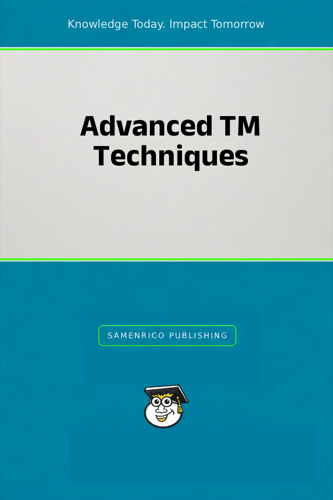
Advanced TM Techniques eBook
Explore sidhis and TM-Sidhi program after basic pr
by Laster Trey
Explore sidhis and TM-Sidhi program after basic practice.
Formats
Free sample
Chapter 1: Beyond the Mantra...--The first time you sat down to meditate, closed your eyes, and repeated that simple, meaningless sound, something shifted. Not dramatically—not like a lightning bolt or a religious conversion—but perceptibly. After twenty minutes, when you opened your eyes, the world looked slightly softer. The edge of your anxiety had dulled. The knot in your stomach had loosened.
You thought, "This works."And it did work. For weeks, then months, then perhaps years, the twice-daily practice of Transcendental Meditation delivered exactly what it promised: deep rest, reduced stress, better sleep, improved focus, and a gradual sense that you were no longer being tossed around by life's waves like a cork on the ocean. You became steadier. More resilient. Less reactive.But somewhere along the way—perhaps after six months, perhaps after six years—a quiet question began to form in the back of your mind.
It might have surfaced during a particularly chaotic day at work, when your boss dropped an impossible deadline on your desk and you felt your hard-won inner peace evaporate like morning fog. Or it might have appeared during an argument with your partner, when you heard yourself saying things you regretted, even as you said them, powerless to stop. Or perhaps it came during a moment of quiet reflection, when you realized that although you felt better than you used to feel, you still didn't feel... whole.The question is simple, and it is the reason you are holding this book: Is this all there is?Not in a despairing sense. You are not ungrateful.
The benefits of basic TM are real, documented, and life-changing for millions of people. But the promise of the Vedic tradition—the ancient source from which TM was drawn—was never merely stress reduction. The promise was enlightenment. The promise was a state of consciousness so stable, so integrated, so unshakable that no external circumstance could disturb your inner equilibrium. The promise was the ability to act spontaneously, perfectly, and effortlessly in every moment, without hesitation, without regret, and without the exhausting machinery of decision anxiety.If you have been practicing TM for at least six months—and especially if you have been practicing for years—you have likely noticed something important: the silence you access during meditation does not automatically follow you into activity.
You can have a profound, blissful, unbounded experience at 7:00 AM, and by 9:30 AM, after a difficult phone call and a spilled coffee, that silence is a distant memory. You are back in the trenches of reactivity, wondering what happened.This gap—the gap between your deepest meditative experiences and your ordinary daily life—is not a sign of failure. It is not evidence that you are doing something wrong or that TM "doesn't work" for you. It is, instead, an invitation. An invitation to go deeper.
An invitation to learn what the ancient masters of the Vedic tradition called the Sidhis—the technologies for stabilizing pure consciousness during activity, for cultivating spontaneous right action, and for transforming the fleeting glimpses of transcendence into a permanent, lived reality.This book is that invitation, extended in full.The Great Confusion: Coping vs. Culturing Before we go any further, we need to clarify something that the modern meditation industry has thoroughly muddled. There is a fundamental difference between using meditation as a coping mechanism and using it as a technology for culturing consciousness. Most people—including many longtime TM practitioners—do not fully appreciate this distinction, and failing to understand it is the primary reason why so many meditators plateau.Coping is about managing the symptoms of stress. When you use meditation to reduce anxiety, improve sleep, lower blood pressure, or feel more relaxed at work, you are coping.
There is nothing wrong with coping. Coping is necessary, useful, and often lifesaving. The world is stressful, and any tool that helps you navigate that stress without collapsing is valuable. Basic TM is an extraordinarily effective coping mechanism. The research on TM's effects on PTSD, hypertension, anxiety disorders, and substance abuse is robust and peer-reviewed.
If coping were all TM offered, it would still be worth learning.But coping has a ceiling. Coping assumes that stress is the problem and relaxation is the solution. It assumes that the goal is to return to a baseline of normal functioning after being knocked off balance. Coping does not ask the deeper question: What if the baseline itself could be elevated? What if, instead of merely recovering from stress, you could become someone who is not stressed by the same circumstances at all?
What if the goal was not to bounce back faster but to stop bouncing entirely?That is where culturing enters. Culturing is the systematic, technology-based development of the nervous system to support higher states of consciousness. Culturing does not merely manage symptoms; it transforms the underlying structure of perception, cognition, and action. When you are culturing consciousness, you are not trying to feel better. You are trying to become better—not in a moralistic, self-improvement sense, but in a neurological, physiological, and spiritual sense.
You are training your brain to maintain coherence under conditions that would previously have shattered your equilibrium.Here is the difference in practical terms. A meditator who is coping might have a difficult meeting at work, feel their heart rate spike and their jaw clench, and then go home and meditate for twenty minutes to "come down" from the experience. The meditation works. They feel better. Tomorrow, the same thing happens again.
They are on a treadmill of stress and recovery.A meditator who is culturing consciousness, by contrast, might sit through that same difficult meeting and notice that their heart rate does not spike. Their jaw remains relaxed. They hear the same hostile words, but those words land differently—not as a personal attack but as data. They respond appropriately, even compassionately, and when the meeting ends, they do not need to "recover" because they were never knocked off balance in the first place. The silence they cultivated during meditation has become a permanent background presence, a deep reservoir of equanimity that persists regardless of external conditions.This is not a fantasy.
This is not wishful thinking. This is the documented result of the advanced techniques and the TM-Sidhi program, and it is available to anyone willing to do the work.The Seven States of Consciousness: A Map You Were Never Given If you learned TM from a certified teacher, you probably heard something about "higher states of consciousness." But unless you took a advanced lecture series or read Maharishi's Science of Being and Art of Living, you may have only received a simplified version. Let us rectify that now.The Vedic tradition, as systematized by Maharishi Mahesh Yogi, describes seven distinct states of consciousness. Most human beings live in only the first three, occasionally glimpsing the fourth. The advanced techniques and Sidhis are designed to stabilize the fifth, sixth, and seventh.
Understanding this map is essential because it explains why basic TM alone cannot take you all the way.State 1: Waking Consciousness. This is your ordinary, everyday awareness. You are awake, your senses are functioning, and you are…
This is the end of the free sample. Get the eBook to keep going. Buy now
About this book
Details
- Author
- Laster Trey
- Publisher
- SamEnrico
- Language
- English
- Genre
- Non-Fiction, Self-Help, Advanced
- Released
- 2026-06-05
- Pages (approx.)
- 143
- Available as
- eBook, Audiobook

Read better in the ZLOADR app
Your eBooks on your phone or tablet. Sign in with your SamEnrico account and start reading.
More by Laster Trey
 Play Therapy For Disadvantaged Children GuideLaster Trey$11.99
 LTC Insurance Low Income GuideLaster Trey$11.99
 Gacy's Final InterviewLaster Trey$11.99
 The Catholic League AssassinationsLaster Trey$11.99
 FCPA Mining Sector CasesLaster Trey$11.99
 The Sobriety High Risk PlanLaster Trey$11.99
 Rewiring Miscarriage GuiltLaster Trey$11.99
 Chunking Math ConceptsLaster Trey$11.99
 Millionaire Misfits: The Unlikely Rise of the Celebrity IslandLaster Trey$11.99
 The Ancient Plague of the Indian Ocean: Unraveling the Mystery of the 'Sea of Death'Laster Trey$11.99
 The Double Helix Codebreakers: How the Human Genome Project Cracked Life's BlueprintLaster Trey$11.99
 Six Sigma Black Belt ProjectsLaster Trey$11.99