
Adoptive Parent Self Care Guide eBook
Address unique attachment and identity challenges
Address unique attachment and identity challenges with specialized self care.
Formats
Free sample
Chapter 1: The Silent Collapse--–- The morning it happened, I was standing in my pantry, alone in the dark, eating stale crackers. Not because I was hungry. Because my four-year-old had been screaming for forty-seven minutes—I knew the number because I had been counting, one second at a time, like a prisoner marking days on a wall. The screaming was about a banana. Not a banana that was missing, or a banana that had been eaten, but a banana that had been peeled incorrectly.
The peeling had happened at 7:13 AM. By 8:00 AM, the banana was long gone, consumed by the garbage disposal, but the screaming continued as if the banana were still there, still wrong, still a betrayal of cosmic proportions.I had tried everything. The deep breathing they tell you about in parenting books. The gentle voice. The "I see you're feeling frustrated" scripts.
The kneeling down to eye level. The hug she slapped away. The time-out she refused. The warning. The consequence.
The second warning. And then, somewhere around the thirty-minute mark, something inside me had snapped—not like a twig, but like a cable under tension for years, finally giving way. I had shouted. Not yelled. Shouted.
There is a difference, I told myself later, though my daughter's face had not registered the distinction. Her eyes had gone wide and陌生, and then she had screamed louder, because now she was not just angry about the banana. Now she was afraid of me.So I had walked away. I had closed the pantry door, sat down on a bag of potatoes, and put a cracker in my mouth. And in that dark, cramped space, surrounded by canned beans and the faint smell of onion, I had the thought that no parenting book had ever prepared me for: I don't want to do this anymore.Not just the morning.
Not just the banana. This. Any of it. All of it.I did not want to be a mother.That thought sat in my chest like a stone. It was too heavy to move and too shameful to share.
Because I was supposed to be grateful. I had waited years for this child. I had filled out mountains of paperwork, opened my home to social workers, spent thousands of dollars, and told everyone I knew that I was finally going to be a parent. And now, hiding in a pantry, I was eating crackers and fantasizing about a life where I lived alone in a small apartment with a cat and no one screamed at me about bananas.This is not the story we tell about adoptive parenthood. The story we tell is one of redemption and rescue, of love conquering all, of a child who finally finds their forever home and a parent who finally feels complete.
The story we tell is The Blind Side, not The Shining.But the research tells a different story. And if you are reading this chapter, I suspect you already know it.The Myth of the Instant Bond Here is what almost every adoptive parent is told, explicitly or implicitly, before they bring their child home: When you see them, you will just know. Your heart will open. Love will flood in. It will feel exactly like it would if they had come from your own body.This is a lie.
Not a malicious lie, necessarily. It is a lie born of good intentions and cultural fairy tales. But it is a lie nonetheless, and it causes real, measurable harm.The concept of "love at first sight" in adoption is borrowed from the biological birth narrative, where it is also largely fictional. Many biological parents do not feel an instant rush of bonding love when their child is born. They feel exhausted, overwhelmed, and sometimes strangely disconnected.
But there is a crucial difference: biological parents are rarely shamed for admitting this. They are told that bonding takes time, that postpartum depression is real, that it is normal to need to "get to know" their baby. Adoptive parents, by contrast, are handed an impossible script: You chose this. You jumped through hoops for this. Therefore, you must feel nothing but joy and gratitude.This script creates what I call the "Instant Bond" myth—the expectation that love should strike like lightning the moment a child enters your home.
And when that lightning does not strike, as it almost never does, the adoptive parent is left standing in the rubble of their own perceived failure.Let me be clear: Not feeling an instant bond does not make you a bad parent. It does not mean you made a mistake. It does not mean you are incapable of love. It means you are a normal human being who has been asked to form an intimate relationship with a small stranger who may be scared, dysregulated, and actively resisting your attempts to connect.In my clinical work and in the research literature, I have seen this pattern repeat hundreds of times. A family brings home a child—whether from foster care, international adoption, or domestic infant adoption—and the parent waits for the magical feeling to arrive.
Days pass. Weeks. Months. The child remains distant, or oppositional, or explosive. The parent grows increasingly anxious and self-critical.
What is wrong with me? they wonder. Why can't I love this child the way I'm supposed to?Nothing is wrong with you. Everything is wrong with the story you were told.The Stranger in Your Home Let me offer a reframe that has helped countless parents I have worked with. Imagine that a stranger—a person you have never met, with a completely different set of habits, triggers, and communication styles—is going to move into your home tomorrow.
They will sleep in your guest room, eat your food, and expect you to meet their emotional and physical needs. They may be scared, angry, or withdrawn. They may not speak your language, literally or figuratively. You have no shared history, no inside jokes, no shorthand. And yet, you are expected to feel toward this stranger the same way you feel toward someone you have known and loved for years.Ridiculous, right?
Impossible, even.And yet, this is exactly what we ask adoptive parents to do. Then we shame them when they struggle.The truth is that what you are feeling—the distance, the awkwardness, the lack of automatic warmth—is not a pathology. It is a predictable, normal, even healthy response to an unusual situation. Your brain does not know this child yet. Your nervous system has not learned to associate their face with safety and pleasure.
Those connections take time to build. They take repeated, positive interactions to build. They take thousands of small moments of attunement and repair.In other words, attachment is a process, not an event. And pretending otherwise only makes the process harder.I want you to pause here. I want you to notice how your body feels as you read these words.
Is there a tightness in your chest? A knot in your stomach? A voice in your head saying, But other parents make it look so easy? That voice is the shame…
This is the end of the free sample. Get the eBook to keep going. Buy now
About this book
Details
- Author
- Derrick Cherryl
- Publisher
- SamEnrico
- Language
- English
- Genre
- Non-Fiction, Self-Help, Adoption
- Released
- 2026-06-09
- Pages (approx.)
- 153
- Available as
- eBook, Audiobook

Read better in the ZLOADR app
Your eBooks on your phone or tablet. Sign in with your SamEnrico account and start reading.
More by Derrick Cherryl
 Personal Advisory BoardDerrick Cherryl$11.99
 Wong Kar Wai Mood GuideDerrick Cherryl$11.99
 Diablo Seasonal Grind GuideDerrick Cherryl$11.99
 Uber Driver Gold Platinum Diamond GuideDerrick Cherryl$11.99
 The Last Pharaoh's Gambit: Rescuing Nefertiti's ShadowDerrick Cherryl$11.99
 Sample Login TechnicianDerrick Cherryl$11.99
 Promotion Business Case Structure GuideDerrick Cherryl$12.99
 Working for the UN Security CouncilDerrick Cherryl$12.99
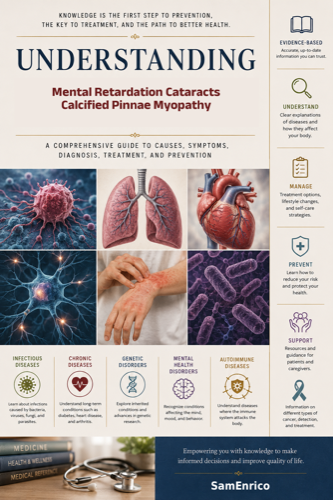 Understanding Mental Retardation Cataracts Calcified Pinnae MyopathyDerrick Cherryl$17.99
 How to Become a Sponge HookerDerrick Cherryl$11.99
You may also like
 Hong Kong Handover 1997Dunn Johnnie$11.99
 Zumba For Postnatal Recovery CourseNeal Christian$11.99
 Zumba for BeginnersLadner Nikia$11.99
 YouTube Comment Mining GuideHumes Pandora$12.99
 Worry Box MeditationCarlin Rudy$11.99
 Workplace Stress MeditationNguyen Lynn$11.99
 Workplace Stress and Sleep RepairHawley Ivory$11.99
 Workplace Perfectionism CureDelaney Jeffry$11.99
 Workplace Injustice Anger GuideWallen Isabelle$11.99
 Work Addiction and Burnout LinkGreenwood Ester$11.99
 Women in Yoga and WellnessBeattie Galina$11.99
 Women in Stand Up ComedyChun Evangeline$11.99