
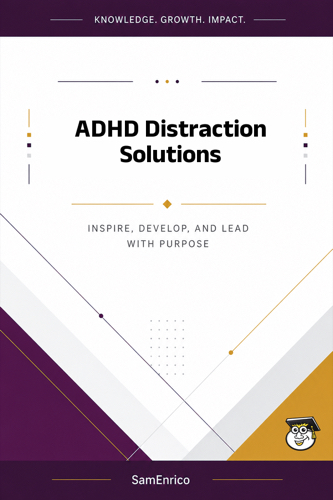
ADHD Distraction Solutions Audiobook
undefined
undefined
Formats
Free sample
Chapter 1: The Neurological Lie--We have been telling ourselves a lie. Not a small, harmless lie, but a corrosive one that has seeped into our bones and dictated decades of failed strategies. The lie sounds like this: If you cared enough, you would focus. If you tried harder, you would finish. If you weren't so lazy, you wouldn't keep getting distracted.
This lie is delivered by frustrated parents, disappointed teachers, critical bosses, and eventually, by the most relentless voice of all—our own inner monologue at two in the morning when yet another deadline has been missed and yet another project sits half-finished on the desk.The lie is elegant in its cruelty because it contains a grain of observable truth. Yes, you got distracted. Yes, the task remains undone. Yes, someone else without ADHD might have powered through. From these facts, the lie constructs its false conclusion: therefore, the problem is a lack of effort, a defect of character, a moral failure.
But what if the opposite were true? What if your distraction has never been about caring, laziness, or willpower at all?This chapter dismantles the lie at the foundation of every other solution in this book. Before you can implement a single strategy—before you can organize your environment, tame your phone, or master time blindness—you must understand what distraction actually is for the ADHD brain. The answer will surprise you. Distraction is not a deficit of attention.
It is a surplus of attention directed toward the wrong target, driven by a neurological system that operates on different rules than the neurotypical brain.Let me say that again because it matters: you do not have an attention deficit. You have an attention regulation problem. Your brain produces plenty of attention—often more than enough to hyperfocus on a single task for six hours straight. The problem is that your attention does not reliably go where you intend it to go. It goes where it wants to go, driven by a neurological reward system that prioritizes urgency, novelty, interest, and challenge over importance, deadlines, and obligation.This distinction is the difference between drowning and learning to swim.
If you believe you have a deficit, you will spend your life trying to summon more of something you already have in abundance. If you understand you have a regulation problem, you can begin to build systems that work with your…
This is the end of the free sample. Get the Audiobook to keep going. Buy now
About this book
Details
- Author
- Halcomb Pierre
- Publisher
- SamEnrico
- Language
- English
- Genre
- Non-Fiction, Self-Help / ADHD
- Released
- 2026-06-06
- Pages (approx.)
- 148
- Available as
- eBook, Audiobook

Listen in the VoxFlicks app
Audiobooks and audio dramas wherever you go. Sign in with your SamEnrico account and press play.
More by Halcomb Pierre
 Slot Machine Addiction Psychological HooksHalcomb Pierre$11.99
 Stimulant Withdrawal CareHalcomb Pierre$11.99
 The Workplace Self Esteem WorkbookHalcomb Pierre$11.99
 Stimulant Use in Trucking IndustryHalcomb Pierre$11.99
 Gambling Addiction And Legal TroubleHalcomb Pierre$11.99
 Illness Child Death GriefHalcomb Pierre$11.99
 Baby Funeral and MemorialHalcomb Pierre$11.99
 The Great Moon Hoax: When Aliens Fooled the World!Halcomb Pierre$11.99
 The Silk and Steel of Sengal: The Fashion Engineers of West AfricaHalcomb Pierre$11.99
 Growing AsystasiaHalcomb Pierre$11.99
 Student Health Insurance WorkHalcomb Pierre$12.99Student Health Insurance WorkHalcomb Pierre$12.99
You may also like
 Hong Kong Handover 1997Dunn Johnnie$11.99
 Zumba For Postnatal Recovery CourseNeal Christian$11.99
 Zumba for BeginnersLadner Nikia$11.99
 YouTube Comment Mining GuideHumes Pandora$12.99
 Worry Box MeditationCarlin Rudy$11.99
 Workplace Stress MeditationNguyen Lynn$11.99
 Workplace Stress and Sleep RepairHawley Ivory$11.99
 Workplace Perfectionism CureDelaney Jeffry$11.99
 Workplace Injustice Anger GuideWallen Isabelle$11.99
 Work Addiction and Burnout LinkGreenwood Ester$11.99
 Women in Yoga and WellnessBeattie Galina$11.99
 Women in Stand Up ComedyChun Evangeline$11.99