
Non-FictionSelf-HelpElder Care
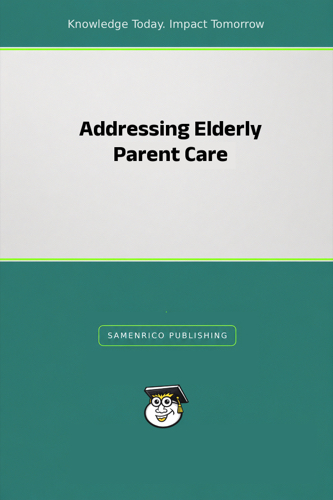
Addressing Elderly Parent Care eBook
Teaches driving cessation, assisted living, and in
Teaches driving cessation, assisted living, and inheritance discussions.
Formats
Free sample
Chapter 1: The Elephant in the Room--–- The ceiling fan spun lazily overhead, but Margaret wasn't watching it. She was staring at the stack of mail on her mother's kitchen table. Three months of unopened bills. A notice from the electric company threatening shutoff. A letter from the homeowners' association about unpaid dues.
Her mother, a retired schoolteacher who had never missed a payment in forty years, sat across from her, sipping tea and insisting everything was fine.Margaret had driven six hours from her home in another state because her mother had stopped answering the phone. When she arrived, she found the house cluttered, the refrigerator nearly empty, and her mother twenty pounds thinner than her last visit. The car had a new dent in the bumper. The cat's litter box hadn't been cleaned in days."I'm fine," her mother said. "You worry too much."Margaret wanted to scream.
She wanted to cry. She wanted to shake her mother and say, "You are not fine. Look at this place. Look at yourself." But she didn't. She smiled, nodded, and spent the weekend cleaning the house, paying the bills, and pretending that everything was normal.
Then she drove home, called her sister, and said the words that millions of adult children have said: "I think Mom needs help. I don't know what to do."This chapter is for Margaret. It is for every adult child who has stared at a stack of unpaid bills, a dented car, or a parent who has lost twenty pounds and heard the words "I'm fine." It is about learning to see the signs you have been avoiding, overcoming your own denial, and taking the first step toward a conversation that feels impossible.The Silent Crisis No One Talks About Let me give you a number that should stop you cold: seventy percent. According to the U.S. Department of Health and Human Services, nearly 70 percent of adults over age 65 will require some form of long-term care at some point in their lives.
That is seven out of ten parents. Seven out of ten mothers and fathers who will need help with bathing, dressing, medications, or simply managing their affairs.Here is another number: two years. Studies of family caregivers consistently find that the average family waits over two years—twenty-four months—after first noticing a warning sign before having a conversation with their parent about getting help. Two years of watching, worrying, and hoping the problem will fix itself. Two years of missed opportunities for early intervention.
Two years of decline that could have been slowed or managed.And here is the most heartbreaking number: forty percent. Forty percent of family caregivers report that they waited until a crisis—a fall, a car accident, a hospitalization, a financial catastrophe—before taking action. They did not choose to intervene. The crisis chose for them.Why do we wait? Why do intelligent, loving, responsible adult children watch their parents struggle and do nothing?
The answer is uncomfortable, and it is the central theme of this chapter: because we are in denial. And so are they.The Seven Warning Signs: What Are You Pretending Not to See?Before we can have any conversation, we must first admit that there is something to talk about. The following seven warning signs are drawn from geriatric medicine, social work, and the lived experience of thousands of families. You do not need all seven. One or two are enough to warrant concern.1.
Missed appointments and unpaid bills. This is often the earliest sign. Your parent was always organized, always on top of things. Now the mail is piling up. The calendar is blank.
Doctor's appointments are being missed. This is not laziness. It is often a sign of cognitive decline, depression, or being overwhelmed.2. Unexplained weight loss. Weight loss in older adults is never normal.
It can indicate depression (loss of appetite), dementia (forgetting to eat), physical illness (cancer, digestive issues), or simply an inability to shop and cook. A loss of ten pounds or more without dieting warrants immediate medical attention.3. New dents or scrapes on the car. This is the sign most often dismissed. "Oh, I bumped the mailbox." "Someone hit me in the parking lot." But new damage on an older adult's car, especially when combined with other signs, is a red flag for declining driving skills.
See Chapter 3 for the full driving cessation protocol.4. Deteriorating house clutter. The house that was always tidy is now cluttered. Laundry is piling up. Dishes are in the sink.
The yard is overgrown. This is not a moral failing. It is a sign that your parent is struggling to keep up with basic tasks.5. Medication mismanagement. You find expired medications in the cabinet.
You find pills on the floor. Your parent cannot tell you what they take or why. Medication errors are a leading cause of hospitalization in older adults.6. Social withdrawal. Your parent has stopped going to bridge club.
They don't answer the phone. They have stopped attending religious services or community events. Social withdrawal is a hallmark of depression, which affects nearly 20 percent of older adults, and can also signal cognitive decline.7. Changes in mood or personality. Your sweet, gentle mother has become irritable.
Your patient, kind father has become suspicious. Personality changes are never normal aging. They can indicate depression, dementia, or other medical conditions.Here is the most important thing to understand about these warning signs: your parent will not mention them. They may not even see them. Denial is a powerful psychological defense, and your parent is using it to protect their sense of independence.
Meanwhile, you are using your own denial to avoid a difficult conversation. This is the dance of mutual avoidance, and it is the single biggest barrier to getting your parent the help they need.The Psychology of Mutual Denial Denial is not simply "pretending something isn't happening." It is an unconscious psychological defense mechanism that protects us from unbearable anxiety. For your parent, the anxiety is about losing independence, becoming a burden, and facing their own mortality. For you, the anxiety is about conflict, guilt, and the terrifying role reversal of becoming your parent's caretaker.Let us look at each side of this dance.Your parent's denial: They tell themselves that the unpaid bills are a temporary oversight. The weight loss is just stress.
The clutter is because they have been busy. Every individual sign can be explained away. And because the decline is gradual—a pound a month, a missed appointment here, a forgotten pill there—they can maintain the fiction that nothing has really changed. Their brain is protecting them from a truth they are not ready to face.Your denial: You tell yourself that it is not that bad. That your parent has always been eccentric.
That the last visit was fine. That you are overreacting. Because if you admit the truth—that your parent is declining, that they need help, that you are going to have to have The Conversation—then you have to act. And acting means hard choices, hard conversations, and the possibility of conflict. So you wait.
You hope. You do nothing.This is the dance. And it can go on for years.But here is the truth that…
This is the end of the free sample. Get the eBook to keep going. Buy now
About this book
Details
- Author
- Vasquez Felipe
- Publisher
- SamEnrico
- Language
- English
- Genre
- Non-Fiction, Self-Help, Elder Care
- Released
- 2026-06-08
- Pages (approx.)
- 124
- Available as
- eBook, Audiobook

Read better in the ZLOADR app
Your eBooks on your phone or tablet. Sign in with your SamEnrico account and start reading.
More by Vasquez Felipe
 Growth Hormone Cheat SheetVasquez Felipe$11.99
 Vacation Recovery Without Catch UpVasquez Felipe$11.99
 Nicotine Withdrawal Timeline GuideVasquez Felipe$11.99
 Performance Review PalacesVasquez Felipe$11.99
 Dream Journaling for AddictionVasquez Felipe$11.99
 Danish Green Tax CreditsVasquez Felipe$11.99
 TM for School AdministratorsVasquez Felipe$11.99
 HGH And Longevity PathwaysVasquez Felipe$11.99
 The Weaver and the World: A Cherokee Cosmic TapestryVasquez Felipe$11.99
 The Silk Road Whisperer: How One Diplomat Broke the Ice Between EmpiresVasquez Felipe$11.99
 The High Stakes Heist: How a Casino Tycoon Outsmarted the MobVasquez Felipe$11.99
 The Dancer's Guide to LockingVasquez Felipe$11.99
You may also like
 Hong Kong Handover 1997Dunn Johnnie$11.99
 Zumba For Postnatal Recovery CourseNeal Christian$11.99
 Zumba for BeginnersLadner Nikia$11.99
 YouTube Comment Mining GuideHumes Pandora$12.99
 Worry Box MeditationCarlin Rudy$11.99
 Workplace Stress MeditationNguyen Lynn$11.99
 Workplace Stress and Sleep RepairHawley Ivory$11.99
 Workplace Perfectionism CureDelaney Jeffry$11.99
 Workplace Injustice Anger GuideWallen Isabelle$11.99
 Work Addiction and Burnout LinkGreenwood Ester$11.99
 Women in Yoga and WellnessBeattie Galina$11.99
 Women in Stand Up ComedyChun Evangeline$11.99