
Non-FictionSelf-HelpLaw EnforcementInterrogation
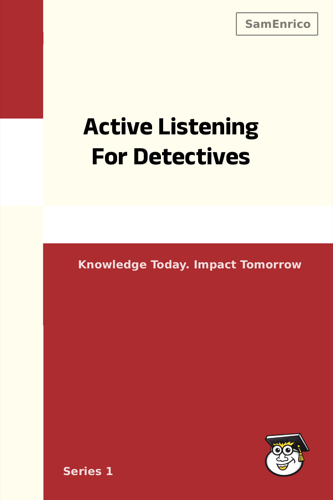
Active Listening For Detectives
Extract truthful statements and detect deception d
Extract truthful statements and detect deception during interrogations.
Formats
About this book
Free sample
Chapter 1: The 54% Problem--–- Every detective remembers the moment they were wrong. For Detective Elena Marquez, it happened in a windowless interview room in July, with the air conditioning rattling overhead and a father of three sitting across from her, accused of stealing from his own company. She had been certain he was lying. His eyes darted. His hands trembled.
He couldn't sit still. Everything she had been taught about deception screamed guilty. After ninety minutes of pressure, he confessed. Not to the theft—but to a gambling addiction he had hidden from his family for eight years. He was innocent of the embezzlement.
Another employee had committed the crime. Marquez had broken an innocent man, not because she was cruel, but because she was wrong. And she didn't know she was wrong because no one had ever taught her the difference between hearing a story and truly listening to one.The Statistic That Should Terrify You Decades of research across multiple countries and law enforcement agencies have produced a consistent, sobering finding. When trained professionals—police detectives, FBI agents, judges, intelligence officers, and even forensic psychologists—attempt to detect deception using traditional methods (gut feelings, body language observation, intuition, or "experience"), their accuracy hovers around 54 percent. That is statistically indistinguishable from a coin flip.
A person guessing randomly would be correct 50 percent of the time. After years of training, thousands of interviews, and the weight of professional authority, the average detective performs only four percentage points better than chance.Let that sink in.If you are a working detective reading this book, you have almost certainly sent innocent people to interrogation rooms, extracted false confessions, or dismissed truthful witnesses based on nothing more than a feeling you mistook for expertise. You have also let guilty people walk because you believed their rehearsed denials. This is not a moral failing. It is a training failing.
The methods most investigators rely on were developed in the 1970s and 1980s, before functional magnetic resonance imaging, before forensic linguistics, before the cognitive revolution in psychology. Those methods were based on anecdotes, not data.…
This is the end of the free sample. Get the eBook to keep going. Buy now
Contents
- Chapter 1
- Chapter 2
- Chapter 3
- Chapter 4
- Chapter 5
- Chapter 6
- Chapter 7
- Chapter 8
- Chapter 9
- Chapter 10
- Chapter 11
- Chapter 12
Details
- Author
- Kimball Kaylee
- Publisher
- SamEnrico
- Language
- English
- Genre
- Non-Fiction, Self-Help, Law Enforcement, Interrogation
- Released
- 2026-06-09
- Pages (approx.)
- 135
- Available as
- eBook, Audiobook

Read better in the ZLOADR app
Your eBooks on your phone or tablet. Sign in with your SamEnrico account and start reading.
More by Kimball Kaylee
 Imposter Syndrome for NeurodivergentsKimball Kaylee$11.99
 TM for Farmers GuideKimball Kaylee$11.99
 Affirmations for Giving ComplimentsKimball Kaylee$11.99
 The Worry Exposure Hierarchy GuideKimball Kaylee$11.99
 The Vault of the Visionaries: Brunel’s Impossible BridgeKimball Kaylee$11.99
 Understanding TracheobronchomalaciaKimball Kaylee$17.99
 Business Plan for Side HustlesKimball Kaylee$12.99
 Godot Replaces Unity GuideKimball Kaylee$12.99
 Train EngineerKimball Kaylee$11.99
 How to Start a Canned Broth Containing Meat or Vegetables or Both Business (Beginners Guide)Kimball Kaylee$11.99
You may also like
 Hong Kong Handover 1997Dunn Johnnie$11.99
 Zumba For Postnatal Recovery CourseNeal Christian$11.99
 Zumba for BeginnersLadner Nikia$11.99
 YouTube Comment Mining GuideHumes Pandora$12.99
 Worry Box MeditationCarlin Rudy$11.99
 Workplace Stress MeditationNguyen Lynn$11.99
 Workplace Stress and Sleep RepairHawley Ivory$11.99
 Workplace Perfectionism CureDelaney Jeffry$11.99
 Workplace Injustice Anger GuideWallen Isabelle$11.99
 Work Addiction and Burnout LinkGreenwood Ester$11.99
 Women in Yoga and WellnessBeattie Galina$11.99
 Women in Stand Up ComedyChun Evangeline$11.99