
Active Listening For Autism
Build connection using clear, patient, literal lis
Build connection using clear, patient, literal listening approaches.
Formats
About this book
Free sample
Chapter 1: The Bilingual Bridge--–- Most people believe they are good listeners. They nod at the right moments, maintain what they consider appropriate eye contact, and offer reassuring sounds like “uh-huh” and “right.” They think they are connecting. But if you are reading this book, you have likely discovered a painful truth: the listening rules you were taught work beautifully for neurotypical conversations and fail spectacularly when communicating with an autistic person. This is not because you are a bad listener. It is because you have been playing the wrong game by the wrong rulebook.Let us begin with a moment almost every parent, partner, or professional in the autism community knows intimately.
You ask a simple question: “How was school today?” The autistic person in your life looks away, says nothing, or gives a one-word answer: “Fine.” You wait. Nothing changes. You try again: “Did anything interesting happen?” Silence. You feel rejected, confused, and perhaps a little hurt. You assume they do not want to talk to you.
You walk away thinking the problem is their unwillingness to communicate.But what if the problem was your question? What if the silence was not rejection but processing time? What if the averted eyes were not avoidance but sensory relief? What if everything you learned about “good communication” was designed for a different brain entirely?This chapter will dismantle the myth of normal communication. You will learn why neurotypical conversational habits often feel aggressive or confusing to autistic individuals.
You will discover Barry Prizant’s foundational principle of asking “Why?” before trying to change any behavior. And you will begin the journey of reframing your role from a deficit-fixer to a bilingual bridge builder. The goal is not to make the autistic person communicate like you. The goal is to learn how to listen like them.The Myth of Universal Communication Rules Every culture has unspoken rules about conversation. In some neurotypical contexts, interrupting shows engagement.
In others, it shows rudeness. Eye contact signals honesty in one culture and aggression in another. These rules are arbitrary, learned, and absolutely not universal.…
This is the end of the free sample. Get the eBook to keep going. Buy now
Contents
- Chapter 1
- Chapter 2
- Chapter 3
- Chapter 4
- Chapter 5
- Chapter 6
- Chapter 7
- Chapter 8
- Chapter 9
- Chapter 10
- Chapter 11
- Chapter 12
Details
- Author
- Carrington Cassidy
- Publisher
- SamEnrico
- Language
- English
- Genre
- Non-Fiction, Self-Help, Autism
- Released
- 2026-06-06
- Pages (approx.)
- 136
- Available as
- eBook, Audiobook

Read better in the ZLOADR app
Your eBooks on your phone or tablet. Sign in with your SamEnrico account and start reading.
More by Carrington Cassidy
 Unsubscribe Marketing EmailsCarrington Cassidy$11.99
 Precipitated Withdrawal AvoidanceCarrington Cassidy$11.99
 The Software Engineer Crunch ModeCarrington Cassidy$11.99
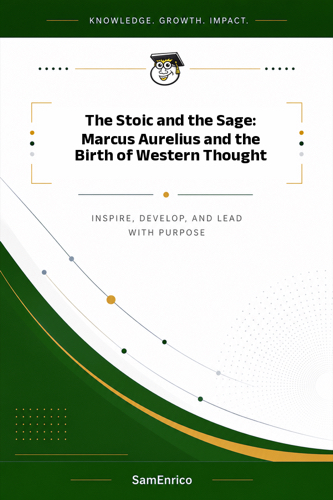 The Stoic and the Sage: Marcus Aurelius and the Birth of Western ThoughtCarrington Cassidy$11.99
 Learn to Play the RackettCarrington Cassidy$11.99
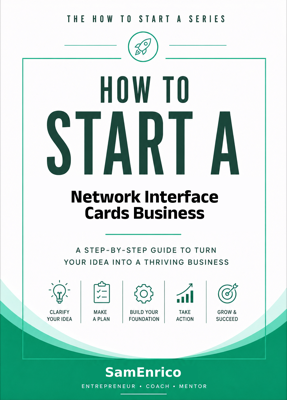 How to Start a Network Interface Cards Business (Beginners Guide)Carrington Cassidy$11.99
 Customer Support AdvocateCarrington Cassidy$11.99
 Working Capital Analysis with AICarrington Cassidy$12.99
You may also like
 Hong Kong Handover 1997Dunn Johnnie$11.99
 Zumba For Postnatal Recovery CourseNeal Christian$11.99
 Zumba for BeginnersLadner Nikia$11.99
 YouTube Comment Mining GuideHumes Pandora$12.99
 Worry Box MeditationCarlin Rudy$11.99
 Workplace Stress MeditationNguyen Lynn$11.99
 Workplace Stress and Sleep RepairHawley Ivory$11.99
 Workplace Perfectionism CureDelaney Jeffry$11.99
 Workplace Injustice Anger GuideWallen Isabelle$11.99
 Work Addiction and Burnout LinkGreenwood Ester$11.99
 Women in Yoga and WellnessBeattie Galina$11.99
 Women in Stand Up ComedyChun Evangeline$11.99