
ABCDE Method for Overwhelmed Professionals eBook
Break paralysis by labeling each task's consequenc
Break paralysis by labeling each task's consequence level from severe to none.
Formats
Free sample
Chapter 1: The Equal Weighting Trap--–- On a Tuesday morning in March, a senior marketing director named Sarah sat motionless in front of her computer. Her coffee had gone cold two hours ago. Her cursor blinked at her from an empty email draft. Behind that window, forty-seven unread messages waited. A calendar notification reminded her that a quarterly report was due in ninety minutes.
Her phone buzzed three times. She did not move.Sarah was not lazy. She was not incompetent. She had been promoted three times in six years. Her performance reviews used words like "exceptional" and "high potential." But on this Tuesday morning, and on many mornings before it, she was paralyzed.
Not because the tasks were too difficult. Not because she lacked the skills. She was paralyzed because her brain had declared everything urgent, and when everything is urgent, nothing is actionable.This book is for Sarah. It is for the project manager who cannot start the slide deck because the emails need clearing first. It is for the executive who spends forty minutes reorganizing a folder before opening the strategic plan.
It is for the overwhelmed professional who ends each day exhausted, looks at their to-do list, and realizes they did nothing that actually mattered.The problem is not that you have too much to do. That is a lie you have been told so often that you have accepted it as physics. The problem is something far more insidious, and far more fixable. You suffer from a condition this book calls Consequence Blindness—the inability to distinguish between outcomes that matter and those that don't.This chapter will diagnose that condition, name its symptoms, and give you the first tool to break its grip. By the time you finish reading, you will understand why you feel stuck, why busyness is not the same as effectiveness, and how a single question can separate what matters from what does not.The Day Everything Became a Seven Imagine a scale of consequence.
At ten is a catastrophe: a missed regulatory filing that fines your company a million dollars, a forgotten surgery that endangers a patient, a silent phone call that means your child is in the emergency room. These events are rare. They command absolute attention. They are the reason the brain evolved threat detection in the first place.At one is a triviality: a typo in an internal email that no one will notice, a slightly crooked picture frame in the conference room, a meeting agenda that uses the wrong font. These events have no measurable outcome.
They are the static of daily life.Somewhere between three and seven lies most of professional work. A report that matters but is not due until next week. A client email that requires a thoughtful response but not in the next hour. A strategic document that could benefit from another round of editing but is already good enough.Here is the problem: the overwhelmed professional lives in a world where everything has been flattened to a seven. The brain, unable to distinguish between a typo and a contract deadline, assigns the same urgency to both.
The result is paralysis. You cannot prioritize because nothing is clearly more important than anything else. You cannot act because every action feels like the wrong one.This is the Equal Weighting Trap, and it is the single greatest destroyer of professional effectiveness in the modern workplace.The trap works like this. Your brain processes incoming tasks through a primitive threat-detection system called the amygdala. This system evolved to keep you alive on the savanna, not to manage a Slack channel.
When a lion appeared, the amygdala screamed "urgent" and you ran. When a berry bush had fruit, the amygdala registered "not urgent" and you ate when you were hungry.But the amygdala cannot distinguish between a lion and an email. It cannot tell the difference between a missed deadline that costs your company ten thousand dollars and a missed formatting change that no one will notice. It treats both as threats because both trigger the same stress hormone: cortisol. And when cortisol floods your system repeatedly throughout the day, your brain stops discriminating.
Everything becomes a seven.You have experienced this. A Friday afternoon arrives. You look at your task list from Monday. You have checked off thirty items, but the one that actually mattered—the proposal for the new client, the difficult conversation with your direct report, the strategic plan for next quarter—remains untouched. You are exhausted.
You feel like you worked hard. You did work hard. But you worked hard on things that did not matter.That is the Equal Weighting Trap.The Cost of Consequence Blindness Let us be precise about what Consequence Blindness costs you. This is not a philosophical discussion about productivity. This is a mathematical accounting of your time, your energy, and your career trajectory.Time Cost: The average knowledge worker spends forty-one percent of their time on tasks that have no measurable consequence for their primary objectives.
This comes from multiple time-use studies conducted across white-collar industries. Forty-one percent. Nearly half of your workweek is spent on things that do not matter. For a forty-hour week, that is sixteen hours. For a fifty-hour week, that is twenty hours.
For a sixty-hour week, that is twenty-four hours—a full day each week spent on tasks that produce no meaningful outcome.Energy Cost: The human brain has a finite capacity for decision-making. Psychologists call this "decision fatigue." Every time you look at an email and decide whether to reply, archive, or ignore, you burn a small amount of cognitive fuel. Every time you switch between tasks, you burn more. When your brain cannot distinguish between high-consequence and low-consequence tasks, it treats each decision as equally demanding. You exhaust yourself on trivialities, leaving nothing for the work that actually advances your career.Emotional Cost: Paralysis breeds shame.
You know you should be working on the big project. Instead, you are cleaning your inbox. You know you should be preparing for the presentation. Instead, you are reorganizing your desktop. And with each small, useless task, you feel a small wave of guilt.
The guilt compounds. By the end of the week, you feel like a fraud. You are working harder than anyone you know, but you have nothing to show for it. This is not a productivity problem. This is a psychological wound.Career Cost: Promotions do not come from clearing email.
Bonuses do not come from perfecting memo formatting. Recognition does not come from attending every meeting. The professionals who advance are the ones who consistently deliver on high-consequence tasks. They are not necessarily smarter or harder working. They are simply better at distinguishing between what matters and what does not.
Consequence Blindness is not a personality flaw. It is a career ceiling.If you are feeling defensive right now, that is appropriate. No one wants to hear that half their workweek is wasted. But defensiveness is also a symptom of Consequence Blindness—the belief that everything you do must be important because you are doing it. That belief is false.
You can work hard on useless things. You can be exhausted by trivialities. You can fill your calendar with meetings…
This is the end of the free sample. Get the eBook to keep going. Buy now
About this book
Details
- Author
- Spence Marianna
- Publisher
- SamEnrico
- Language
- English
- Genre
- Non-Fiction, Self-Help
- Released
- 2026-06-08
- Pages (approx.)
- 149
- Available as
- eBook, Audiobook

Read better in the ZLOADR app
Your eBooks on your phone or tablet. Sign in with your SamEnrico account and start reading.
More by Spence Marianna
 Helena Blavatsky Theosophy GuideSpence Marianna$11.99
 The Physical Priority BoardSpence Marianna$11.99
 DBT For BPD EmotionsSpence Marianna$11.99
 Pelvic Floor for Heavy LiftingSpence Marianna$11.99
 Breath Awareness In PregnancySpence Marianna$11.99
 Whitley StrieberSpence Marianna$11.99
 Pomodoro Interval AdjustmentsSpence Marianna$11.99
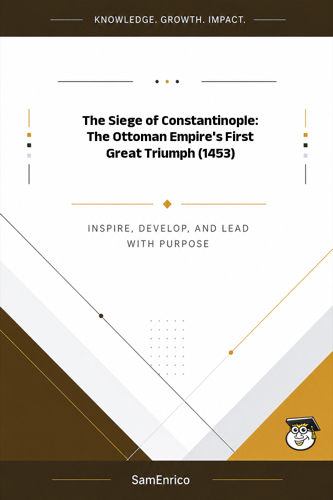 The Siege of Constantinople: The Ottoman Empire's First Great Triumph (1453)Spence Marianna$11.99
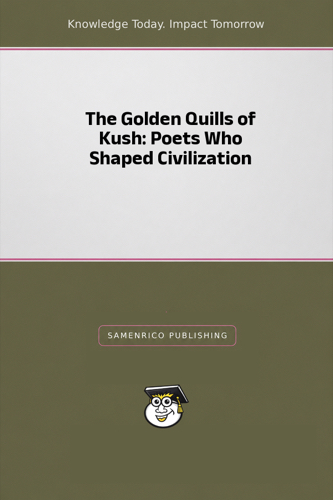 The Golden Quills of Kush: Poets Who Shaped CivilizationSpence Marianna$11.99
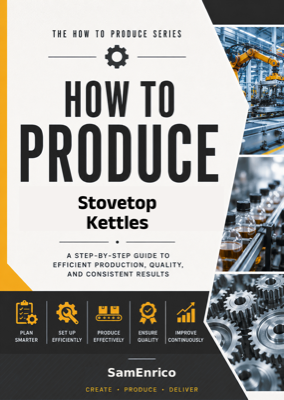 How to Produce Stovetop KettlesSpence Marianna$11.99
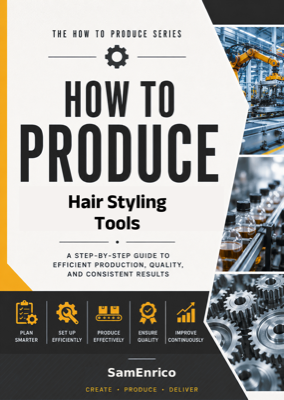 How to Produce Hair Styling ToolsSpence Marianna$11.99
 How to Become a Grinder Set-up OperatorSpence Marianna$11.99
You may also like
 Hong Kong Handover 1997Dunn Johnnie$11.99
 Zumba For Postnatal Recovery CourseNeal Christian$11.99
 Zumba for BeginnersLadner Nikia$11.99
 YouTube Comment Mining GuideHumes Pandora$12.99
 Worry Box MeditationCarlin Rudy$11.99
 Workplace Stress MeditationNguyen Lynn$11.99
 Workplace Stress and Sleep RepairHawley Ivory$11.99
 Workplace Perfectionism CureDelaney Jeffry$11.99
 Workplace Injustice Anger GuideWallen Isabelle$11.99
 Work Addiction and Burnout LinkGreenwood Ester$11.99
 Women in Yoga and WellnessBeattie Galina$11.99
 Women in Stand Up ComedyChun Evangeline$11.99