
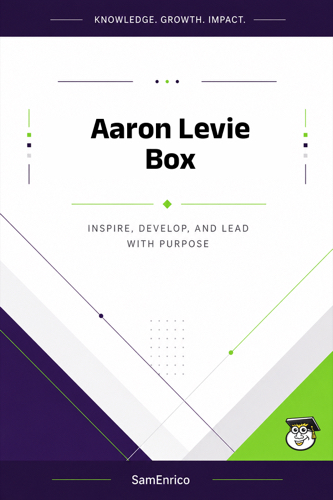
Aaron Levie Box eBook
Chronicles the enterprise cloud storage founder's
by Ginn Cathi
Chronicles the enterprise cloud storage founder's IPO journey.
Formats
Free sample
Chapter 1: The Floppy Disk Prophet--–- The red-eye from Los Angeles to New York was dark, cold, and mostly empty. Aaron Levie, nineteen years old, couldn't sleep. He was wedged into a middle seat in row twenty-something, too poor to afford the upgrade his business-class seatmate had clearly purchased. That seatmate—a middle-aged man in a wrinkled button-down—was doing something that would change the trajectory of Levie's life. He was backing up files.
One floppy disk at a time.The man had a small zippered case, the kind travelers used for toiletries. But inside this case were not toothbrushes or razors. There were floppy disks. Dozens of them. Each disk held 1.44 megabytes—roughly one high-resolution photograph today, or about three seconds of a Tik Tok video.
The man would insert a disk, wait for the grinding whir of the drive, copy a file, eject, label the disk with a felt-tip pen, and start again. He did this for two hours. Levie watched the entire process, unable to look away."Excuse me," Levie finally said. "What are you doing?"The man looked up, mildly annoyed. "Backing up my work.
I travel a lot. Can't trust the laptop.""How many disks do you have?""About two hundred. This is just for this trip."Levie did the math in his head. Two hundred disks. Two hundred dollars in media.
Fourteen hours of manual labor. And for what? A backup that could be lost, stolen, or corrupted if a disk got too close to a magnetic field.The man went back to his work. Levie stared out the window at the darkness over the Midwest. And in that moment, a question lodged itself in his brain like a splinter: Why does this still suck so much?That question would become the foundation of a company that would raise over $500 million from venture capitalists, survive a patent lawsuit, delay its IPO by eighteen months, go public at a down-round valuation, fend off activist investors, and eventually become one of the most respected enterprise software companies in the world.
All because a nineteen-year-old on a red-eye flight watched a stranger use floppy disks in 2004 and thought: There has to be a better way.The Unlikely Entrepreneur Aaron Levie was not born into technology. He was born in 1984 in Bismark, North Dakota, a city of fewer than fifty thousand people, best known for being the capital of a state most Americans couldn't find on a map. His father worked in telecommunications. His mother was a teacher. There were no venture capitalists at the dinner table.
No angel investors at the local coffee shop. No startup accelerators within five hundred miles.What Levie had instead was curiosity—the kind that breaks things. As a teenager, he taught himself basic programming by reverse-engineering websites. He built a small e-commerce site for a local retailer. He ran a dial-up bulletin board system from his bedroom, long after most people had moved on to AOL.
He was, by any reasonable definition, a nerd. But not the kind who wanted to hide in a basement and code alone. The kind who wanted to build things that other people would actually use.When Levie arrived at the University of Southern California in 2003, he brought that curiosity with him. He enrolled as a business major, not computer science. The distinction matters.
Levie has always been less interested in the how of technology than the why of human behavior. He can code—barely. He has never been the best engineer in any room he has ever entered. What he has instead is a gift for identifying friction: the small, maddening inefficiencies that people have learned to tolerate but never learned to love. The floppy disk man was not a one-off observation.
He was a pattern."Most people see the world as it is," Levie would later tell a Stanford audience. "Entrepreneurs see the world as it could be. And then they refuse to shut up about it."The Poker Table and the Business Plan The founding story of Box is usually told as a dorm room fairy tale: two college dropouts, a brilliant idea, a cold email to a billionaire, and then—poof—a company. That version is not wrong, but it is incomplete. The reality is messier, weirder, and far more interesting.The other half of the founding duo was Dylan Smith.
Smith was also a USC student, also a dropout, also from a non-technical background. But where Levie was manic, funny, and prone to rapid-fire monologues, Smith was quiet, analytical, and possessed of a peculiar talent: he was very, very good at online poker.In the mid-2000s, online poker was experiencing a gold rush. The 2003 World Series of Poker had been won by an amateur who qualified through an online satellite tournament, and suddenly millions of Americans believed they, too, could turn a small deposit into a fortune. Most of them lost their money. Smith did not.
He had the statistical discipline to play winning poker—not the flashy, all-in-for-drama style of television, but the boring, methodical, fold-80-percent-of-hands approach that actually works over the long term. By the time he met Levie, Smith had accumulated approximately $20,000 in tournament winnings.That $20,000 would become the company's first funding round.The two students began meeting in USC's Leavey Library, a brutalist concrete building that smelled of old coffee and desperation. Levie would pace. Smith would type. They argued about the product: should it be a consumer backup tool?
A file-syncing service? A collaboration platform? The answer, initially, was "yes to all of the above," which is another way of saying "none of the above." The earliest version of Box was a mess—a clunky web interface that let users upload files and share links, with none of the elegance of Dropbox or the power of Google Drive. It was, by Levie's own admission, "embarrassing to show to anyone."But they showed it anyway. They showed it to classmates.
They showed it to professors. They showed it to anyone who would sit still for five minutes. And they listened to what people said. That listening—the willingness to hear "this is terrible" and ask "why?"—would become the company's secret weapon.The Cold Email That Changed Everything By early 2005, Levie and Smith had a prototype, a handful of users, and approximately $12,000 left of Smith's poker winnings. They were running out of runway before they had ever left the ground.
They needed money. But neither of them knew any venture capitalists. Neither of them had a rich uncle. Neither of them had a network that extended beyond the USC campus.So Levie did what he has always done when faced with a locked door: he looked for a window.He had been reading about Mark Cuban, the billionaire who had sold Broadcast.com to Yahoo for $5.7 billion in 1999. Cuban was not a traditional investor.
He was loud, opinionated, and famously accessible—he answered his own emails. Levie found Cuban's email address through a combination of Google searches and educated guesses. Then he wrote.The email was short. Blunt. Almost rude in its directness.Subject: Help Mark,We're building a company that lets people access their files from anywhere.…
This is the end of the free sample. Get the eBook to keep going. Buy now
About this book
Details
- Author
- Ginn Cathi
- Publisher
- SamEnrico
- Language
- English
- Genre
- Non-Fiction, Biography, Startup
- Released
- 2026-06-08
- Pages (approx.)
- 126
- Available as
- eBook, Audiobook

Read better in the ZLOADR app
Your eBooks on your phone or tablet. Sign in with your SamEnrico account and start reading.
More by Ginn Cathi
 Chiropractor Patient Load StressGinn Cathi$11.99
 Disrespect Trigger GuideGinn Cathi$11.99
 Aging Planning HandbookGinn Cathi$11.99
 Healing From Eating Disorders Body Image GuideGinn Cathi$11.99
 Pinnacles DisappearancesGinn Cathi$11.99
 Antarctic Traverse SoloGinn Cathi$11.99
 Beginner Meditation For KidsGinn Cathi$11.99
 The Martian Surgeon: Dr. Christian Barnard’s Heart Transplant RevolutionGinn Cathi$11.99
 The Iron Discipline: Frederick the Great and the Birth of the Prussian War MachineGinn Cathi$11.99
 The Mineral Guide to AluminiumGinn Cathi$11.99
 How to Start a Crop Drying and Disinfecting for Primary Market Business (Beginners Guide)Ginn Cathi$11.99
 JEE Advanced Alternating CurrentGinn Cathi$12.99
You may also like
 Hong Kong Handover 1997Dunn Johnnie$11.99
 Zumba For Postnatal Recovery CourseNeal Christian$11.99
 Zumba for BeginnersLadner Nikia$11.99
 YouTube Comment Mining GuideHumes Pandora$12.99
 Worry Box MeditationCarlin Rudy$11.99
 Workplace Stress MeditationNguyen Lynn$11.99
 Workplace Stress and Sleep RepairHawley Ivory$11.99
 Workplace Perfectionism CureDelaney Jeffry$11.99
 Workplace Injustice Anger GuideWallen Isabelle$11.99
 Work Addiction and Burnout LinkGreenwood Ester$11.99
 Women in Yoga and WellnessBeattie Galina$11.99
 Women in Stand Up ComedyChun Evangeline$11.99