
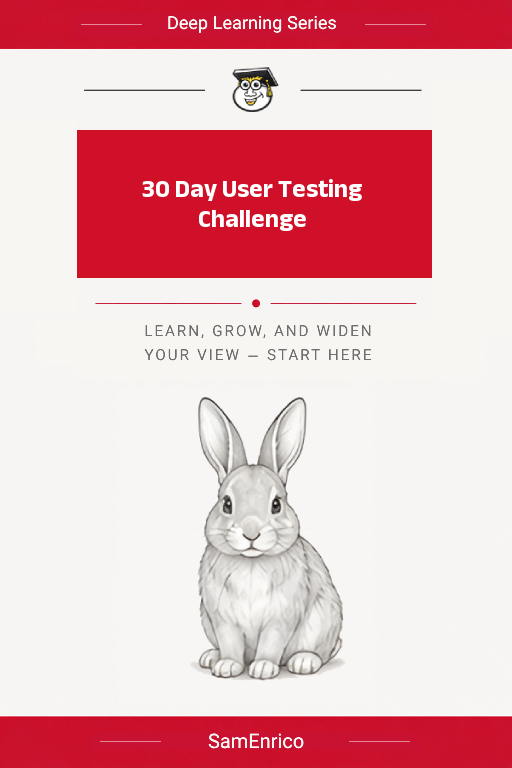
Non-FictionSide Hustle ArchitectChallenge
30 Day User Testing Challenge eBook
Completes 30-day challenge to earn first 1000 test
Completes 30-day challenge to earn first 1000 testing websites, with daily action plan and progress tracking.
Formats
Free sample
Chapter 1: The Fresh Eyes Advantage--You do not need a degree in user experience to get paid for testing websites. You do not need a portfolio of previous work, a certification from a fancy institute, or even a single day of formal training. What you need is something far simpler and far more valuable: you need to be a normal human being who gets frustrated when things do not work.That sentence sounds like a sales pitch. It is not. It is the result of analyzing thousands of tester scorecards from platforms like User Testing, Userlytics, and Try My UI.
The data tells a surprising story: the testers who receive the highest ratings from clients are rarely the ones with UX degrees or years of experience. Instead, they are people who talk constantly, describe their confusion honestly, and never try to pretend they know something they do not.This chapter will dismantle every excuse you have ever told yourself about why you cannot do this. It will expose the single biggest mistake that keeps beginners earning nothing, and it will hand you a psychological framework that transforms your daily digital habits into a marketable skill. By the time you finish reading, you will have written a three-sentence document that serves as your professional manifesto. More importantly, you will believe that you are already qualified.Let us start with a story about a man who failed his way into a six-figure testing career.The Tester Who Could Not Stop Apologizing Marcus was a delivery driver who spent his evenings scrolling through Reddit.
He had no college degree. His resume listed exactly two jobs: pizza delivery and warehouse sorting. He applied to User Testing because a You Tube video promised quick cash, and he needed money for his daughter's asthma medication.His first test was a disaster.The task was simple: "Find the price of a one-way flight from New York to Chicago on May 15th." Marcus clicked the departure date, clicked the return date by mistake, panicked, clicked back, clicked the wrong airport code, and then sat in silence for seventeen seconds. When he finally spoke, he said, "I'm sorry, I'm not good at this."He received a one-star rating and no payment.Marcus tried again the next day. Same result.
He tried a third time, and this time he did something different: he got angry. The website had a pop-up that would not close. He yelled at his screen, "Why is this stupid thing still here? I clicked the X three times!" He submitted the test expecting another rejection.Instead, he received a five-star rating and a note from the client: "Excellent feedback. Please test our next version."What changed?
Marcus stopped trying to be a good tester and started being an honest user. He stopped apologizing for his confusion and started describing it. The client did not need a polished expert. They needed someone who would tell them that their pop-up was infuriating.Marcus went on to complete over four hundred tests in the next twelve months. He never learned a single line of code.
He never read a UX textbook. He simply mastered the art of thinking aloud while being authentically himself.The No-Experience Paradox Here is the paradox that confuses almost every beginner: user testing platforms do not actually want experts. They want naive users. The word "naive" here is not an insult. In usability research, a naive user is someone who has never seen the website or app before.
They bring fresh eyes. They click things in the wrong order. They get lost. They try to use the search bar when the designer intended them to use the menu.An expert, by contrast, has learned to work around bad design. A UX designer who tests a checkout flow might instinctively know that the "Continue" button is probably at the bottom right, even if it is hidden.
They might click it without hesitation, never realizing that a normal user would scroll up and down three times looking for it. The expert's muscle memory hides the very problems the client needs to find.This is not speculation. It is baked into the grading rubrics of every major testing platform. When clients rate testers, they are not scoring you on whether you completed the task quickly. They are scoring you on three specific criteria:Did you talk continuously?
Silence is the number one reason testers receive low ratings. A tester who stops talking for ten seconds looks like someone who has given up, even if they are just thinking.Did you describe what you saw and felt, rather than interpreting what the designer intended? The best testers say things like "I expected the search bar to be at the top right, but it is not there." The worst testers say things like "The design choice here seems inconsistent with standard navigation patterns." The first statement is honest. The second is pretending to be an expert.Did you avoid trying to "help" the client by designing solutions? When a tester says "You should change this button to green," they have stopped testing and started consulting.
Consultants charge hundreds of dollars per hour. Testers get paid for observation, not prescription. The moment you propose a fix, you have introduced bias. The client wants to know what broke, not how you would fix it.Notice that none of these criteria require technical knowledge. They require honesty, continuous speech, and emotional awareness.
That is it.The Fresh Eyes Resume Before you read another sentence, I want you to open a blank document or grab a piece of paper. At the top, write this heading: "My Fresh Eyes Resume."Now, answer three questions. Each answer should be one sentence.First: What do you do online every single day? Be specific. Do not say "I use the internet." Say "I order groceries from Instacart every Tuesday," or "I reset my password at least twice a week because I can never remember it," or "I return Amazon packages so often that the UPS driver knows my name."Second: What is the last website or app that made you genuinely angry?
Describe the moment. "The captcha on Ticketmaster made me re-verify four times," or "My bank's mobile app logged me out while I was transferring money."Third: What is a digital task you find consistently confusing? "I never know where to find the unsubscribe link in marketing emails," or "Every time I book a flight, I accidentally select the wrong return date."Congratulations. You have just written a resume that is more valuable to testing platforms than most UX portfolios. Every one of those statements is a statement of qualification.
The person who gets frustrated by password resets is exactly the person a client wants testing their login flow. The person who hates Ticketmaster's captcha is the perfect tester for a ticketing startup.The Two Tiers of Testing: Why "Expert" and "Specialist" Are Not the Same Thing Some readers will feel a ping of confusion right now. If platforms do not want experts, why do some testers earn sixty or ninety dollars per test while others earn only ten? Does that not prove that expertise is valuable?The answer requires…
This is the end of the free sample. Get the eBook to keep going. Buy now
About this book
Details
- Author
- Wicks Dominique
- Publisher
- SamEnrico
- Language
- English
- Genre
- Non-Fiction, Side Hustle Architect, Challenge
- Released
- 2026-06-01
- Pages (approx.)
- 139
- Available as
- eBook, Audiobook

Read better in the ZLOADR app
Your eBooks on your phone or tablet. Sign in with your SamEnrico account and start reading.
More by Wicks Dominique
 Navigating Roommate ConflictsWicks Dominique$11.99
 Voice Actor Commercial KingWicks Dominique$11.99
 Handling Quit Day Withdrawal SymptomsWicks Dominique$11.99
 The Meditation Lucid GuideWicks Dominique$11.99
 Teen Goal Setting Self EsteemWicks Dominique$11.99
 The Silk Road Heist: The Smugglers of the Arabian ProhibitionWicks Dominique$11.99
 S Corporation vs C CorpWicks Dominique$12.99
 Understanding X-linked Mental Retardation Associated With Marxq2Wicks Dominique$17.99
 How to Become a LobbyistWicks Dominique$11.99
 The 1918 Influenza: Pandemic ParallelsWicks Dominique$11.99
You may also like
 Hong Kong Handover 1997Dunn Johnnie$11.99
 Zumba For Postnatal Recovery CourseNeal Christian$11.99
 Zumba for BeginnersLadner Nikia$11.99
 YouTube Comment Mining GuideHumes Pandora$12.99
 Worry Box MeditationCarlin Rudy$11.99
 Workplace Stress MeditationNguyen Lynn$11.99
 Workplace Stress and Sleep RepairHawley Ivory$11.99
 Workplace Perfectionism CureDelaney Jeffry$11.99
 Workplace Injustice Anger GuideWallen Isabelle$11.99
 Work Addiction and Burnout LinkGreenwood Ester$11.99
 Women in Yoga and WellnessBeattie Galina$11.99
 Women in Stand Up ComedyChun Evangeline$11.99