
Non-FictionBusiness BriefBuild To Suit
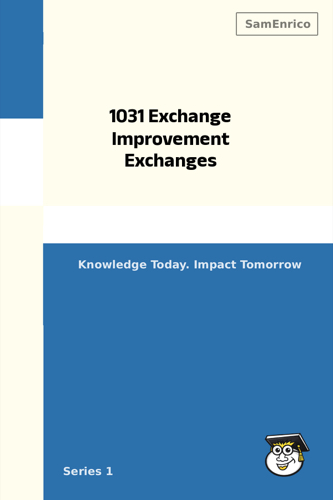
1031 Exchange Improvement Exchanges eBook
Use exchange funds for renovations through build t
Use exchange funds for renovations through build to suit agreement.
Formats
Free sample
Chapter 1: The Valuation Trap--Most real estate investors discover the hard truth about 1031 exchanges only after they have already signed the sales contract on their relinquished property. They sit across from their Qualified Intermediary, flush with cash from a successful sale, and explain their vision: "I want to buy a piece of land for one million dollars and build a new retail center for another million. I have two million in exchange funds. This should be perfect."Then the Qualified Intermediary delivers the bad news. "You cannot do that," they say.
"Not with a standard exchange."The investor stares back in confusion. After all, they are reinvesting every dollar from the sale. They are not taking any cash out. They are buying property of equal or greater value. What is the problem?The problem is a subtle but devastating quirk in the Internal Revenue Code known as the "equal or greater value" rule combined with the timing requirements of Section 1031.
Under the standard rules, every dollar of exchange proceeds must be used to acquire replacement property at the closing table. Cash that is set aside for future renovations never touches real property on the closing date. That cash becomes taxable "boot" – ordinary capital gains tax due in the year of the exchange.This chapter reveals the fundamental flaw in using standard 1031 exchanges for development projects. It explains why selling high and buying low – the traditional mantra of real estate investing – actually works against you when you want to build or renovate. Most importantly, it introduces the solution that the remaining eleven chapters of this book will teach you to master: the Improvement Exchange, also known as the Build-to-Suit or Construction Exchange.The $2 Million Nightmare: A Case Study Let me walk you through a concrete example.
It will hurt to read this, but that pain is necessary. Understanding exactly how the standard rules fail is the first step toward mastering the solution.Sarah is a real estate investor. She sells an apartment building for $2 million. Her adjusted basis in that building is $500,000. If she does nothing, she owes capital gains tax on $1.5 million – roughly $375,000 to the IRS plus state taxes.
She wants to defer that tax using a 1031 exchange.Sarah finds a perfect replacement property: a vacant parcel of land in a growing commercial corridor. The land costs $1 million. She plans to build a 10,000 square foot retail center on that land at a cost of $1 million. Total investment: $2 million. Exactly equal to her sale proceeds.Sarah calls her Qualified Intermediary and says, "I want to do a 1031 exchange.
Buy the land for $1 million at closing, and use the remaining $1 million to pay contractors over the next six months as construction progresses."The Qualified Intermediary sighs. They have heard this question hundreds of times. "I'm sorry," they say, "but that is not permitted under the standard 1031 rules.""Why not?" Sarah asks. "I'm reinvesting every dollar."Here is why. Under Treasury Regulation Section 1.1031(k)-1, the replacement property must be "identified" within 45 days and "received" within 180 days.
But "received" means taking legal title to property that already exists. Cash held by the Qualified Intermediary to pay for future construction does not count as "property received" on the closing date.When Sarah's exchange closes, she will receive title to the land – worth $1 million. The other $1 million remains in the Qualified Intermediary's account. Under the tax law, that $1 million is treated as cash boot received by Sarah on the day of the closing. She owes capital gains tax on that $1 million immediately.The math is brutal.
Sarah's gain on the sale was $1.5 million. She is deferring tax on $500,000 (the value of the land she received) and paying tax on $1 million (the cash that will later become construction). She owes roughly $250,000 in taxes she never expected to pay. Her construction budget just took a 25 percent hit before a single shovel touched the dirt.This is the Valuation Trap. It is the single most common mistake made by investors attempting to use 1031 exchanges for development projects.
And it is entirely avoidable.The Equal or Greater Value Rule: A Closer Look To understand why the Valuation Trap exists, we need to examine the mechanics of Section 1031 more carefully.Section 1031 allows an investor to defer capital gains tax when they exchange one investment property for another "like-kind" property. The theory is simple: you have not really sold anything; you have merely changed the form of your investment. The tax is deferred until you eventually sell for cash.The statute imposes three critical requirements:First, the 45-Day Identification Rule. Within 45 days of selling your relinquished property, you must identify in writing the replacement property you intend to acquire. This identification must be unambiguous and delivered to a qualified party – typically your Qualified Intermediary.Second, the 180-Day Receipt Rule.
You must close on the replacement property within 180 days of the sale of your relinquished property. There are no extensions. Day 181 means the exchange fails.Third, the Equal or Greater Value Rule. You must reinvest all of your net sale proceeds into replacement property. If you receive any cash back – any "boot" – that cash is taxable in the year of the exchange.The Equal or Greater Value Rule is the killer for improvement projects.
The rule looks at the value of the property you receive at closing – not the value of the property you will eventually build. If you buy land for $1 million and hold $1 million in cash for construction, the IRS sees that as receiving only $1 million in replacement property. The other $1 million is boot.But wait, you might ask. What if I buy the land for $2 million and then build nothing? That would satisfy the equal or greater value rule.
But that defeats the purpose of the exchange. You want to build. You want to force appreciation through renovation and development. The standard 1031 exchange simply does not accommodate that goal.Or so it seems.The Bloomington Coca-Cola Case: Why You Cannot Take Title Early Before we introduce the solution, we need to examine one more trap – the trap that the Bloomington Coca-Cola Bottling Company fell into, and the trap that created the need for the Improvement Exchange structure in the first place.The case of Bloomington Coca-Cola Bottling Co. v.
Commissioner is taught in every advanced tax course on 1031 exchanges. The facts are straightforward. The taxpayer sold its existing bottling plant and wanted to exchange into a new facility. The new facility was not yet built. So the taxpayer did what seemed logical: they bought the land and took title personally.
Then they used exchange funds to pay for construction on that land.The IRS audited the exchange and disallowed it completely. The Tax Court agreed with the IRS.Why? Because the taxpayer took title to the land before the construction was completed. Under the tax law, once the taxpayer held title, they had "constructive receipt" of the exchange funds. The moment the taxpayer controlled the land, any cash spent to improve that land was treated as cash boot received by the taxpayer.The court's reasoning is worth quoting in part: "The taxpayer cannot receive the benefits of ownership of the replacement property before the exchange is complete.
Taking title before construction gives the taxpayer the power to control the exchange funds indirectly, which is the equivalent of…
This is the end of the free sample. Get the eBook to keep going. Buy now
About this book
Details
- Author
- Corrigan Taneka
- Publisher
- SamEnrico
- Language
- English
- Genre
- Non-Fiction, Business Brief, Build To Suit
- Released
- 2026-06-09
- Pages (approx.)
- 143
- Available as
- eBook, Audiobook

Read better in the ZLOADR app
Your eBooks on your phone or tablet. Sign in with your SamEnrico account and start reading.
More by Corrigan Taneka
 Distraction Proofing Your BrainCorrigan Taneka$11.99
 Ex Spouse Death Complicated GriefCorrigan Taneka$11.99
 Treehouse Sanctuary GuideCorrigan Taneka$11.99
 Memory for NursingCorrigan Taneka$11.99
 Navy Corpsman Iwo JimaCorrigan Taneka$11.99
 Morning Routine For CreativesCorrigan Taneka$11.99
 Industrial Warehouse Investment StrategyCorrigan Taneka$11.99
 Job Search Time BlocksCorrigan Taneka$11.99
 Night Wolves: The Soviet Saboteurs of Operation GreifCorrigan Taneka$11.99
 The Troll King's Last Stand: A Forgotten Saga of CamelotCorrigan Taneka$11.99
 The Ghost of Station X: The Secret Codebreakers of Bletchley ParkCorrigan Taneka$11.99
 The Complete Guide to Half Assed Weight LossCorrigan Taneka$11.99
You may also like
 Hong Kong Handover 1997Dunn Johnnie$11.99
 Zumba For Postnatal Recovery CourseNeal Christian$11.99
 Zumba for BeginnersLadner Nikia$11.99
 YouTube Comment Mining GuideHumes Pandora$12.99
 Worry Box MeditationCarlin Rudy$11.99
 Workplace Stress MeditationNguyen Lynn$11.99
 Workplace Stress and Sleep RepairHawley Ivory$11.99
 Workplace Perfectionism CureDelaney Jeffry$11.99
 Workplace Injustice Anger GuideWallen Isabelle$11.99
 Work Addiction and Burnout LinkGreenwood Ester$11.99
 Women in Yoga and WellnessBeattie Galina$11.99
 Women in Stand Up ComedyChun Evangeline$11.99